

China Completes 1GW Chip-Only Data Center, Weighs Export Ban
Beijing weighs blocking AI model and chip IP exports as a local firm powers a 1GW data center entirely on domestic chips.
BusinessChina’s Push for Domestic Chips and a Review of AI Export Controls
On July 20, two pieces of news came out about China’s AI development and its technology controls.
The first: Z.AI had completed a 1-gigawatt (GW) data center built entirely on Chinese-made chips — not a single Nvidia chip in the mix. The second: reports that the Chinese government is reviewing export controls to block core AI model and chip technology from leaving the country.
One story shows confidence — “we can build this ourselves.” The other is a move to lock the technology in — “now we’ll stop it from getting out.” They might look like unrelated headlines, but I see them as connected. I read this as China protecting technology it developed on its own and positioning it as leverage in negotiations. I’d also argue that U.S. export restrictions themselves gave China a stronger incentive to invest in domestic chip development in the first place.
Two Bits of News on the Same Day
Let’s start with the data center. According to Bloomberg, this facility—completed by Z.AI (formerly Zhipu AI)—runs at roughly 1GW of capacity. The report compared 1GW to enough electricity for about 750,000 households. That comparison shifts depending on per-household power consumption, so it’s not a fixed conversion that applies everywhere. Z.AI is reportedly operating several computing clusters bundling more than 10,000 chips each, and this infrastructure is being used to train the next generation of GLM¹ models.
The key detail is that it was built entirely with Chinese-made chips. With the US blocking exports of Nvidia’s high-performance chips to China, Z.AI filled that gap with domestic accelerators. In fact, Z.AI had already announced earlier this year that it trained a model using only Huawei hardware. If that earlier move was an experiment to confirm “it can be done,” this 1GW center feels closer to a declaration: “we’re going to keep running at this scale.” The core of this report is that large-scale infrastructure for developing top-tier models was built using domestic chips—it doesn’t mean every model requires 1GW.
The second piece of news from the same day concerns restrictions on transferring technology abroad. The Financial Times reported that China’s Ministry of Commerce is consulting with major AI and semiconductor companies while considering tightened export controls. There are broadly three areas under review: transferring core technology abroad—things like AI model weights² and algorithms; transferring AI chip IP designed by Chinese firms and advanced semiconductor technology abroad; and Western acquisitions (M&A) of Chinese AI firms, or attempts to extract their technology that way.
On one side, there’s hard evidence of building “without Nvidia.” On the other, there’s a message: “now we’re going to stop this from leaving.” I don’t think these two scenes are unrelated. Becoming able to train models on self-built infrastructure, and then moving to keep that technology locked within its borders—these two developments follow one another in sequence.
China’s Domestic Chip and Model Investment Grows After Export Controls
To make sense of this picture, we need to rewind a few years. The original storyline was simple: the US was blocking exports of advanced chips and equipment to China, and China was scrambling to keep from falling behind. It was a measure designed to constrain China’s access to cutting-edge chips and equipment.
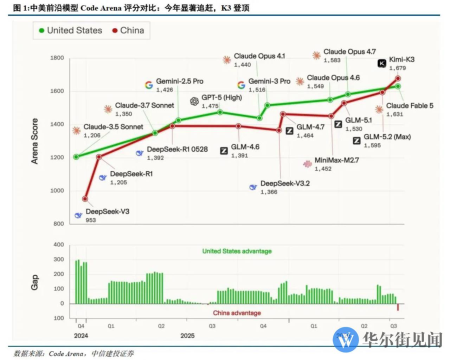
These constraints also gave China a reason to accelerate its own development. Huawei pushed forward with its Ascend³ accelerators, and companies like Cambricon and Alibaba followed suit. On the model side, a string of systems emerged that were judged to be near world-class—DeepSeek, Moonshot AI’s Kimi, and Z.AI’s GLM. One inflection point in particular was the shock DeepSeek sent through the market when it reportedly achieved top-tier performance at a fraction of the cost. It cracked the conventional wisdom that “frontier models are impossible without astronomical spending and the latest Nvidia chips.” Z.AI’s new data center is physical evidence that this self-sufficiency drive has moved beyond “experiment” to “actual infrastructure capable of training frontier models.”
 Of course, we need to be honest here. This doesn’t mean Chinese-made chips have caught up to Nvidia. Multiple analyses suggest Chinese accelerators still lag behind Nvidia’s latest generation in performance-per-watt⁴. So to achieve the same amount of training, they need more chips and more power. Beyond compute chips, memory (HBM) and the networking technology that connects chips are critical bottlenecks. What’s more, the data center report itself rests on a single anonymous source, so the exact chip types and scale remain unverified. This calls for a bit of caution rather than taking it at face value.
If the reporting is confirmed, it becomes an important case study showing that large-scale training can run on domestic accelerators. But that’s distinct from the claim that every component of the supply chain can be made without imports. And this isn’t the first time China has used export controls as a policy tool. It has already tightened and loosened exports of raw materials essential to semiconductors and defense—gallium, germanium, rare earths—using them as leverage. In fact, late last year it eased some of the controls it had previously tightened, using restrictions as a bargaining chip by alternately strengthening and relaxing them. This latest report raises the possibility that the same playbook could extend to AI models and chip technology. When it comes to the impact of US regulations on China’s tech development, we need to weigh both sides—the constraints they impose and the drive toward self-sufficiency they create.
The English draft looks accurate and complete. No Hangul characters, all numbers preserved (80%, 50–60%, 27th), heading count matches, image matches, no footnotes/links to check. Only minor polish needed.
The US is also treating compute capacity as a national strategic asset
So far this might sound like China is playing defense with regulation. But the US is moving the same way, from the opposite direction.
US Treasury Secretary Scott Bessent has said in multiple recent appearances that the US will come to control 80% of the world’s AI compute capacity. That means pushing the current 50–60% share up to 80%. He went further, calling AI leadership a “national strategy we must never lose,” and even said, “If we lose in AI, it’s game over.” Markets read this as a signal that the government would back Nvidia and cloud companies’ astronomical capital expenditures (CapEx) at the national level.
As someone who’s worked with data, let me add a note here. There’s no officially recognized statistic for “global share of AI compute capacity.” That means there’s no agreed-upon standard for what exactly 80% is a share of, or how it would even be measured. So this number is less a “measured fact” than a “political target.” But I’d argue that being a target actually makes it more significant, not less. The fact that a country’s Treasury Secretary would publicly declare compute-capacity share a national strategic goal is itself a signal that AI infrastructure has shifted from a “market problem” to a “state problem.”
Put the two together and the picture snaps into focus. China is reviewing restrictions on exporting model weights and chip IP overseas, while the US Treasury Secretary is setting a high compute-capacity share as a national goal. What used to be a one-sided regulatory posture is now becoming a structure where both sides block each other’s technology exports using the same logic.
This matters for semiconductor companies in Korea, Japan, and Taiwan too. When I assess these companies’ competitiveness, I think we need to also watch how long the process and yield gap with Chinese firms holds up. China’s announcement alone doesn’t mean that gap has closed, but whether domestic chips can handle the required work could become the new benchmark for comparison.
The English draft looks accurate, complete, and faithful to the Korean source. No corrections needed.
China’s Attempt to Distinguish API Services from Technology Transfer, and Korean Companies’ Response
What strikes me most about this round of export-control review isn’t what China is blocking — it’s what it’s leaving open. According to reports, Beijing is leaning toward continuing to allow AI models to be served overseas through APIs or the cloud. What it wants to block, by contrast, is the export of model weights and chip IP.
 An API works by sending requests to the provider’s server, so it depends entirely on the terms of service and whatever access is granted. Getting hold of the weights or the design, on the other hand, gives you far more room to run or modify the model yourself — though how you’re allowed to use it still hinges on licensing and regulation. Downloading the material doesn’t mean the intellectual property becomes yours. In effect, China is drawing a line between renting out a service and handing over the underlying technology — turning right back on the US the very playbook Washington has used against China all along.
So what does this mean for us — for companies in particular? I think the assumption of a single, unified global AI supply chain is coming to an end. The world is splitting into a US stack and a China stack, and mixing the two freely is getting harder by the day. That changes the question companies need to be asking. It’s no longer “which model performs best?” but “which stack am I relying on right now, and do I have a fallback if it gets cut off?” As I wrote in an earlier column, the direction each country — China and the US — has chosen already looks set.
(Memory) America Locks Down, (Models) China Opens Up… What Will Korea Choose?At the ICML (International Conference on Machine Learning), which wrapped up in Seoul last week, I exchanged greetings with researchers from around the world. One oddly recurring itinerary caught my eye: quite a few of them said that once their Seoul schedule ended, they were heading straight to Shanghai. The reason was the World Artificial Intelligence Conference (WAIC), which opened on July 17. It…Let me make this concrete. Right now, countless startups around the world take open Chinese models like DeepSeek or GLM and build their services on top of them, because they’re cheap and they perform well. But if China starts tightening access to the weights of its future frontier models, a company that built its business on top of one could wake up one day to find it can’t get the next version. Companies that leaned entirely on US models instead carry the mirror-image risk on the other side. That’s exactly why you’re hearing the phrase “sovereign AI⁵” so much more often these days. And it’s not just technology at stake here. This round of controls even extends to blocking Western acquisitions of Chinese AI companies. In other words, the goal isn’t just to keep the technology in — it’s to keep the companies and people who created it inside the border, too.
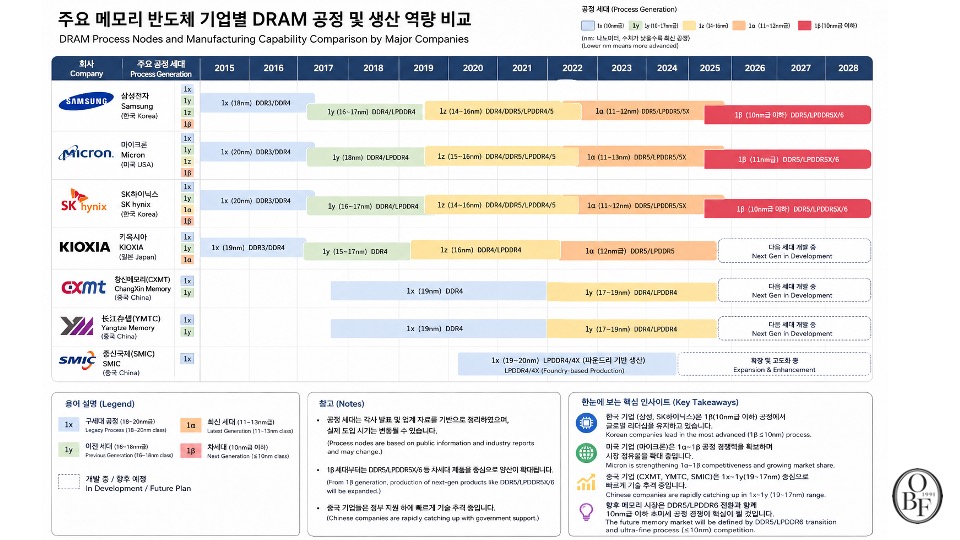
This is where Korea’s position gets interesting. I mentioned earlier that China’s biggest bottleneck is memory — specifically HBM. And the companies that make HBM best in the world are none other than SK Hynix and Samsung Electronics. Korean-made HBM is essential to US AI infrastructure and is exactly the field China is trying to become self-sufficient in. That gives Korean firms bargaining power as suppliers — but it also means they’re exposed to export controls and the ups and downs of the US-China relationship.
One more thing worth adding: it’s still an open question whether this control regime will run as smoothly as intended. Chinese AI companies themselves weren’t exactly thrilled about it. Whether it’s DeepSeek or Z.AI, they want more overseas users and revenue, and tightening exports would hold back their own global expansion. In fact, they reportedly conveyed concerns to the government that overly strict regulation would hurt their competitiveness. The tension between a government that wants to lock things down and companies that want to go global will end up determining just how tight the controls actually get.
Looking at the draft against the source, it’s a faithful and well-structured translation. I’ll do a close check for accuracy.
Managing Risk at the September US-China AI Talks
At this point, the conclusion seems to be pointing in one direction: the two camps building walls and going their separate ways. But a story Reuters ran today has a different flavor. The US and China are reportedly coordinating to hold a government-to-government AI meeting in September — a follow-up to the Trump-Xi summit last May — with the US side to be led by none other than Treasury Secretary Bessent.
Even as competition continues, negotiations to reduce risk are still possible. What’s on the table is “risk management”: the military use of frontier AI, cyberattacks targeting critical infrastructure, and the misuse of powerful open-source models. Experts even suggest that the biggest achievement of the first meeting won’t be some grand agreement, but simply “agreeing on what a ‘frontier AI model’ actually is.”
If “frontier model” still sounds vague, here’s a concrete example. According to the report, China plans to put Anthropic’s Mythos model on the agenda for this meeting. Mythos is so capable — able to autonomously find security vulnerabilities and write exploit code — that Anthropic never released it publicly, keeping it available only to a small number of vetted partners. The publicly released Fable 5 is essentially Mythos with its most dangerous capabilities stripped out. So here’s the situation: a company voluntarily withheld its most powerful model from public release, and now a foreign government wants to name that exact model on the agenda of intergovernmental talks. It’s hard to find a clearer illustration of AI being treated as a national security matter.
My read is that both countries intend to keep competing while still hashing out shared standards on the military and cyber risks of AI. The mere fact that this meeting is happening doesn’t mean the tech supply chain is reuniting, nor does it confirm that the split between the two camps is final. There’s one more detail worth noting: the person leading this meeting isn’t a tech regulator — it’s the same Treasury Secretary Bessent who declared “80%.” Having someone who handles treasury and sanctions lead an AI meeting is a signal that AI is being treated not as an ordinary commodity, but as a matter of national economic security.
Oswarld’s Lens
I think if you read this purely as a story about tech competition, you miss the point.
There’s a pattern I keep running into when I build go-to-market strategy. Market outcomes are often decided not by product performance, but by who controls the supply. No matter how good the technology is, whoever holds the supply can neutralize it overnight if they choose to. So I see these two pieces of news not as another scene in a performance race, but as the inflection point where AI models and chips shift from being “products” to being “strategic assets.”
Put alongside Bessent’s “80%” remark, this stops being one country’s defensive move. It’s a structure where each side uses the other’s actions to justify tightening its own restrictions further. China’s tightened controls become the argument for further U.S. restrictions, and U.S. restrictions can become the justification for China’s push toward self-sufficiency and its own tightened controls. One side’s defensive measure becomes the other’s pretext for screwing regulation down further. What worries me is that once this reaction cycle starts, neither side finds it easy to be the first to say “let’s ease up.”
It’s true that Chinese chips still can’t match Nvidia. But the important point in this news isn’t the performance ranking. What matters is whether China can train and run its models on domestic chips alone if the supply of U.S. chips is cut off. China has judged that it can, and that’s why it has now moved to block the export of model weights and chip IP. This is my own interpretation, but I believe self-sufficiency will become a far more important indicator going forward than performance rankings. And when CXMT lists next week, China’s level of memory self-sufficiency will come into much sharper focus too.
Closing
Here’s the summary.
First, the two pieces of news from July 20th are connected. China has apparently concluded that it now has AI technology worth protecting from leaving its borders — and I think U.S. export controls are themselves one of the factors that pushed China toward this self-sufficiency drive.
Second, the U.S. has also set a goal of securing 80% of the world’s AI computing capacity, and the two countries are now coordinating a government-to-government AI dialogue for September. Both sides tightened their own controls first, and now they’re moving into a phase of jointly setting the rules for those controls.
Third, the question worth asking isn’t “which model is best,” but “which stack am I actually relying on right now?”
Next time, I’ll take a closer look at what role Korea’s HBM can actually play between these two stacks.
So — how much is your company or project currently leaning on one stack or the other (whether U.S. models and chips, or Chinese ones)? Have you already thought through a backup plan in case that supply gets cut off, or are you still at the “surely that won’t happen” stage? Let me know in the comments — I’ll feature the most interesting cases in the next issue.
📨 If you have a colleague who’s curious about the U.S.-China AI standoff, feel free to forward this along.
Keep the perspective, not the noise.
We choose one consequential shift and trace what sits beneath it, every other day.
Confirm once to finish subscribing.
Already a subscriber? Sign in to join the conversation


References & Further Reading
Primary sources
- Financial Times, “China considers tighter export controls on AI models and chips”, 7/2026. ··· This is the primary source for the export control review. What’s being blocked and what’s being opened up is the core evidence for today’s piece.
- Bloomberg, “Z.AI Completes Giant Data Center With Chinese Chips to Train AI”, 7/20/2026. ··· News of a 1GW data center built entirely with Chinese-made chips. Worth reading with the caveat that it’s based on anonymous sources.
- Wallstreetcn (华尔街见闻), “Bessent: The US will soon control 80% of the world’s AI compute”, 7/2026. ··· The source for the US side’s declaration of “compute sovereignty.” Worth noting, though, that there’s no officially recognized statistic for measuring “compute market share.”
- CNBC (citing Reuters), “U.S., China to hold AI talks in September, Reuters sources say”, 7/21/2026. ··· Reports on the push for the first official US-China AI talks in September. The detailed agenda and dates are still being worked out, so treat this as “proposed items” rather than settled fact.
Background
- Tom’s Hardware, “China’s chip champions ramp up production… but HBM and fab production capacity are towering bottlenecks”. ··· Good for understanding why China can manufacture chips but still gets bottlenecked on memory (HBM).
- CSIS, “Beyond Rare Earths: China’s Growing Threat to Gallium Supply Chains”. ··· Shows that this round of “AI export controls” didn’t come out of nowhere — it’s a continuation of a trend that started with raw-material controls.
- TechCrunch, “Anthropic releases Claude Fable 5, a version of its Mythos model”, 6/9/2026. ··· Background on what the Mythos model — floated as a talks agenda item — actually is, and why Anthropic was reluctant to release it.
Looking at this fragment, I compared it against the Korean source and found it to be an accurate, faithful translation with no issues to fix.

Glossary
¹ GLM: This is a family of large language models developed by Z.AI (formerly Zhipu AI). Along with DeepSeek and Kimi, it’s considered one of China’s leading frontier models.
² Model weights: These are the “bundles of numbers” an AI model acquires through training. Since the model’s actual capability is essentially encoded in these weights, handing them over lets the recipient run that exact model themselves. That’s why weights are the primary target of export controls.
³ Huawei Ascend: This is Huawei’s family of AI accelerator chips, built to replace Nvidia GPUs. It’s currently regarded as the leader in China’s domestic AI chip market.
⁴ Performance per watt: This metric measures how much computation you get out of a given amount of electricity. The lower this number, the more power and chips you need to accomplish the same task.
⁵ Sovereign AI: This refers to the trend of countries trying to build AI capabilities—models, chips, data, infrastructure—that they control themselves, without being at the mercy of other nations. It’s come up far more often lately, as countries increasingly treat AI like energy: a national security asset.
Related issues
Same Frontier Model, Different China Sales Rules
OpenAI, Google, and Anthropic draw different lines on serving Chinese firms' overseas units with AI.
SocietyWhy Companies Are Quietly Choosing Chinese AI Models
Airbnb's Brian Chesky praised Qwen's speed and cost, and open-weight models are reshaping how developers weigh adoption.
AI & TechChina's Papers Are Up, So Why Aren't Citations?
Research output and international citation are not the same measure, and the gap reveals what citation data can and cannot show.
AI & Tech
Your take shapes the next issue
What resonated most in this issue, or where has your experience been different?