

AI Skills Aren't Enough Without Good Taste
People keep asking me what to do in the AI era, and I keep coming back to judgment, not just tool skills.
SocietyQuestions I Keep Getting Asked in Lectures
Lately, as I travel around giving lectures, I hear the same question everywhere—from college students and teenagers to junior employees and executives.
“AI can do so much now—so what should we be doing?”
The usual answer is: learn the fundamentals, or learn how to use AI tools. That’s necessary, but I don’t think it’s enough on its own. You still need to be able to decide what kind of result you actually want, and to judge which of the outputs you get is good.
What I want to emphasize is aesthetic sense, or taste. I don’t mean simply which genre you happen to like. I mean the ability to recognize strengths and shortcomings, decide what to choose, and explain why.
The Judgment That Remains After You’ve Learned the Tool
Every time a new tool comes out, learning to use it takes time. Ideally, that learning goes toward improving your work. But if you know a tool’s features inside out and still haven’t decided what you actually want to make, learning the tool better won’t fix that.
Take AI image generation as an example. You can quickly learn how to type in the name of a particular style. But figuring out which features of that style actually suit this particular project, and what needs to change in the result, is a different problem.
Writing is no different. Sentences flowing smoothly doesn’t automatically make for a good explanation. Something readers need to know might be missing, or a sentence might sound impressive while its meaning stays vague. Whoever receives the output needs to be able to spot that.
This is why I say cultivating taste takes time. It requires an accumulated process of viewing many works and outputs, comparing them, and revising your own judgment. Learning from other people is part of that process too.
As Content Multiplies, What Should We Choose?
In 2025, Merriam-Webster chose “slop” as its Word of the Year—a term for low-quality digital content mass-produced with AI. Simply having used AI doesn’t put a piece of content in this category. Merriam-Webster
Graphite’s 2025 research observed a point at which, in a sample of newly published English-language articles, pieces classified as AI-generated outnumbered those classified as human-written. This isn’t a count of every piece of writing on the internet—it’s an estimate produced by running a detector over a collected sample of articles. And classifying whether AI was used is not the same as evaluating the quality of the writing. Graphite’s research and methodology
Kapwing looked at the first 500 Shorts recommended to a brand-new YouTube account and classified 104 of them as AI slop. That roughly 21% figure is the result from this one test feed—it doesn’t mean the same share holds across every user’s feed, or across YouTube’s videos as a whole. Kapwing’s 2025 survey
None of these figures prove that human taste is superior. The problem I’m thinking about here is choice. As there’s more to watch, we also need a standard for judging what’s worth spending our time on.
Why I Seek Out Content From People With Clear Taste
When I listen to podcasts, what draws me in isn’t just the content but the speaker’s perspective, their jokes, even the moments they hesitate. Even when covering the same topic, the story changes depending on what the speaker considers important.
Even if a recommendation system does a great job picking content that suits my taste, I’m still the one who has to decide whether to accept that recommendation. I also get to choose whether I want more of the familiar, or whether I want to encounter something unfamiliar but intriguing.
Julie Zhuo’s piece, written after a conversation with Ivan Zhao, is worth reading alongside this. Zhuo raises the possibility that AI could even learn to recognize good output. At the same time, she draws attention to the will to decide what you’re acting for. When AI Has Better Taste Than You
Zhuo’s piece is a counterargument worth weighing whenever we talk about the importance of taste. Regardless of that possibility, I still think cultivating your own taste over a long period matters. There’s value in being able to explain, in your own words, what matters to you and what result would satisfy you.
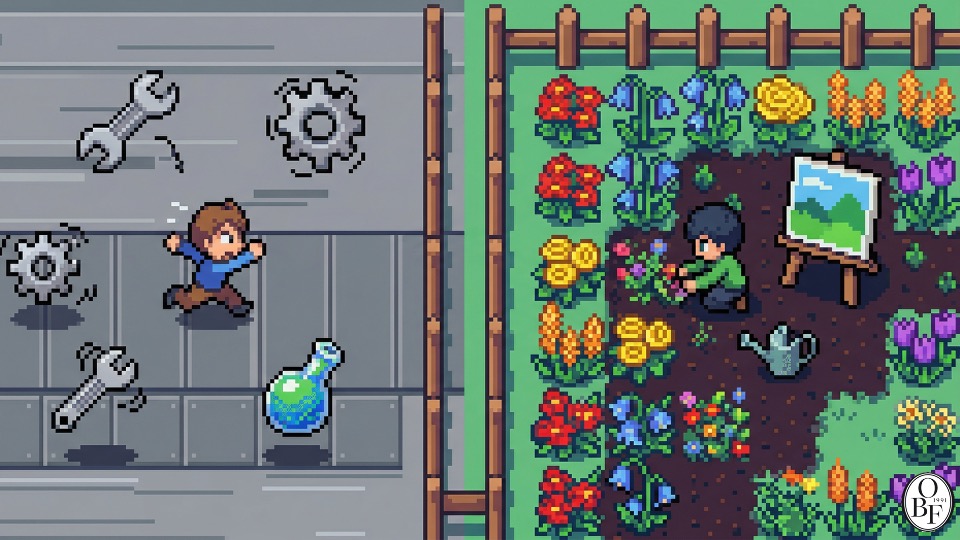
Oswarld’s Lens
What catches my attention is the attitude of pouring time and effort into one thing to a degree that looks excessive to everyone else. Someone who has worked hands-on with something for a long time notices even the smallest differences in the result. They can explain not just what to change, but why something should be left exactly as it is.
It reminds me of the 2025 track “Dolimpan” (“Spinning Wheel”), a collaboration between Mushvenom and Sinbaram Lee Bak-sa, a veteran trot singer known as “Dr. Lee.” What pleased me about this collaboration was seeing Dr. Lee’s distinctive music and character put to use in a new project—proof that a style you’ve held onto for a long time can still meet the music of another generation. Official music video
Holding onto your own taste for a long time doesn’t guarantee success for everyone. Still, I think it’s worth spending some of the time we pour into learning trendy tools on directly figuring out what we actually like.
That might mean lingering over a work at a museum that catches your eye, picking out a piece of writing you like at a bookstore, or going to see a building you’ve been curious about in person. Rather than just memorizing what critics say is good, I hope you’ll think about exactly what it was that caught your eye.
The judgment you build up that way also gets used when you work with AI—it lets you describe what you want more specifically, choose among outputs, and point out what’s missing. I hope we treat deciding what counts as good as just as important as knowing how many new tools we’ve mastered.
Keep the perspective, not the noise.
We choose one consequential shift and trace what sits beneath it, every other day.
Confirm once to finish subscribing.
Already a subscriber? Sign in to join the conversation


References
- Merriam-Webster, 2025 Word of the Year: Slop
- Graphite, 2025 Study on the Share of AI-Generated English Articles
- Kapwing, AI Slop Report, 2025.11.28
- Julie Zhuo, When AI Has Better Taste Than You, 2025.06.24
- Mushvenom, “Dolimpan” Official Music Video, 2025.08.21

Kwangseob Ahn is a professor in the Department of Business Administration at Sejong University and lead consultant at INLEVEL9. At the university, he teaches statistics and data analysis courses such as business data management and business analytics, while in industry he leads GTM strategy and AI strategy consulting, designing the intersection of technology and business. He has published an academic paper on HEMA, a memory architecture for AI conversation systems, and runs Daily Arxiv, a project that curates global AI papers every day. He completed a master’s program at Korea University’s Graduate School of Technology Management and holds a KMBA. He is the author of the book 《Those Who Outsource Their Thinking: Homo Brainless》.

Related issues
China Now Grants PhDs for Bridges and Welding, Not Papers
China now lets bridge and welding engineers submit their work, not a thesis, for a PhD—here's what that reveals about proving expertise.
SocietyAmazon's 1 Million Robots: What Actually Changes at Work
Robot counts and hourly costs alone don't explain the shift in hiring—Amazon's automation and Digit's warehouse rollout show why.
AI & TechAI Made Tasks Faster. So Why Am I Still Working Late?
AI can save time on one task while quietly adding new work elsewhere—here's what the Jevons paradox and recent studies suggest you track.
Business
Your take shapes the next issue
What resonated most in this issue, or where has your experience been different?