

Perplexity's Gross Margin vs. Its Overall Losses
I look at how Perplexity classifies costs, converts free users, and expands features—and why staying power, not just paid conversion, matters most.
BusinessA company can post positive gross profit and still lose money overall
In a recent All-In interview, Perplexity AI CEO Aravind Srinivas explained that the company earns positive gross profit on every sale it makes. He also noted, in the same breath, that the company as a whole isn’t yet profitable.
Gross profit is revenue minus cost of goods sold. Subtract everything else from there—R&D, sales and administrative expenses—and you get operating profit or loss. So it’s entirely possible to have positive gross profit while the company overall runs at a loss.
What I found myself wondering was what exactly Perplexity counts as cost of goods sold. Serving AI answers even to free users isn’t free—it costs money to run the models and the servers behind them.
Working in GTM strategy, I’ve often had to look at customer-level profitability and company-wide profit and loss as two separate questions. Adding paying customers can improve the bottom line, but the cost of acquiring those customers and the cost of continued development can grow even faster. With Perplexity, too, I wanted to look at cost classification, paid conversion, and the product’s underlying usage value all together.
What’s Actually Inside That Gross Margin Number

Setting aside the recent interview, it’s worth digging into past reporting on Perplexity’s financials. A 2025 report from The Information covered how 2024 costs were categorized. Without distinguishing this timeline, past figures can end up being read as if they were current performance.
According to Contrary Research, which summarized that report, of Perplexity’s 2024 AI model and infrastructure spending, $33 million in costs for supporting free and trial users was classified as R&D expense rather than cost of goods sold. The point being made is that when you read the 60% gross margin figure, you need to look at this classification alongside it.
When free-user support costs are booked as R&D expense, they’re excluded from the gross profit calculation. But they still get counted as an expense when calculating operating profit or loss. Gross margin shifts depending on the classification, but the money the company actually spent doesn’t disappear.
Public reporting alone isn’t enough to conclude the accounting treatment was improper. Still, comparing gross margins across AI companies requires matching the scope of costs and the accounting period. And annualized metrics like ARR1 need to be read as distinct from actual annual revenue.
Looking at the draft, it matches the Korean source well structurally and in meaning. All numbers, footnotes, images, and headings match. No Hangul remains. The translation is accurate and natural. Only minor polish needed.
Growing Free Users to Cash In on Conversion
When I look at a business like this, Notion comes to mind. Notion offered the value of organizing documents and tasks scattered across multiple tools into one place. Perplexity is trying something similar: it uses search and external retrieval to generate answers (RAG)2, and bundles the use of multiple models to reduce the burden3 of switching between tools.
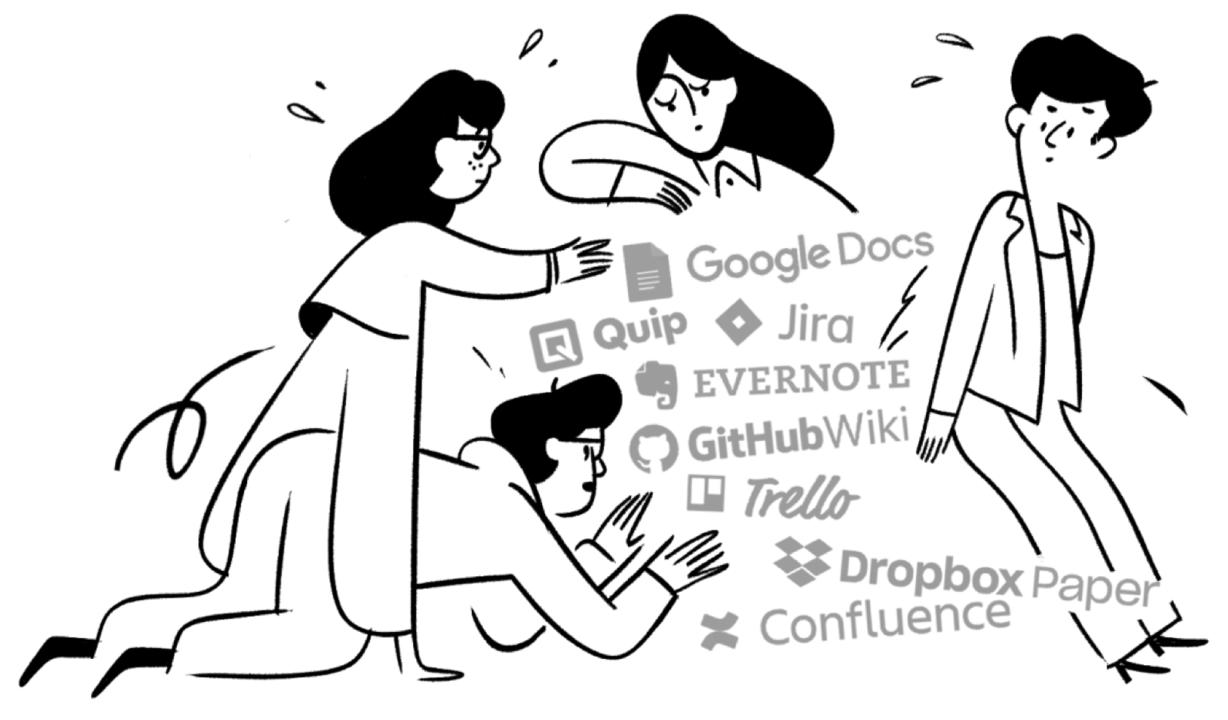
In a model that gathers free users and converts a portion of them into paying customers, you need to break the process down into stages.
In the free-usage stage, you have to weigh the cost of providing the service against its effect. When free users learn the product and recommend it to others, it helps growth. On the other hand, the cost of serving them keeps accruing even if it never leads to paid conversion or referrals. In May 2020, Notion removed the block limit on its free personal plan, widening the scope of use.
Paid conversion needs to be tracked on the same basis. In September 2024, Notion announced it had surpassed 100 million users. But simply dividing the total user count by an estimate of paying customers from a different source doesn’t tell you the actual conversion rate from free to paid. It’s more accurate to track how much users who signed up in the same period ended up paying afterward.
Once the customer base grows, you have to look at retained revenue and costs together. As subscribers increase, model usage fees and customer support costs rise in tandem. You can’t assume that the path Notion took to grow will produce the same cost structure and revenue in an AI search service.
To judge Perplexity’s growth stage, you’d need monthly active users (MAU)4 and paid-user counts measured on a consistent basis, plus retention after paid conversion. Placing external estimates from different points in time side by side and calculating a conversion rate from them can lead you astray.
Building and executing GTM strategies like this is literally what I do for a living. In fact, Notion was one of my clients. I’ve talked about this experience in talks I’ve published on YouTube and Speaker Deck, so you can watch them for free.
Does adding more features make the reason to use a product clearer?
When a product gains new features, the first thing I look at is what users can now do more easily. If more choices just make it harder to understand how something fits into your own work, they won’t necessarily translate into actual use.
What I found important about the Notion experience was that users could structure their workspace their own way. Documents, databases, and collaboration features could all be connected to fit each person’s work. I think this usage experience helped explain the product’s value.
Perplexity is expanding its feature set with the Comet browser, shopping, and email support. I’m curious how much this expansion actually improves the core search experience. New features need to reinforce the same underlying purpose — only then does the reason to keep using the product stay clear.
For instance, if a user describes it as “makes it easy to find answers while checking sources,” the benefit lands immediately. If the browser and shopping features make that same experience easier, the connection feels natural. But a description that just lists feature names doesn’t tell users what they actually gain.
I think Perplexity needs to make the strengths it built in search more explicit. Rather than how many more features it has than competing services, what could actually persuade users is how much time it saves them in finding answers and verifying sources.
I’m looking at Computer, which handles tasks across multiple models, through the same lens. Simply calling it an “agent” doesn’t explain why a customer would choose it. It needs to show what tasks it can be trusted with, how accurate the results are, and how much double-checking is still left to the user. I’m skeptical that the current round of feature expansion sufficiently explains that difference.
Oswarld’s Lens
Honestly, I felt uneasy listening to Srinivas’s interview. Coming at this from a GTM strategy perspective, those remarks sounded to me like they were meant to reassure investors. Beyond the claim that gross profit is positive, I wanted to see whether paid revenue could scale to a level that covers both free usage and development and operating costs.
On the product strategy side, three things worry me.
Legal disputes and costs around content usage. The New York Times and Dow Jones, among others, have filed lawsuits against Perplexity. The BBC is a case where legal action was threatened over unauthorized use, without an actual suit being filed. A filed lawsuit and a warning shouldn’t be treated as the same stage of risk. I see not just how the company handles litigation, but how content licensing terms and costs get settled, as a critical variable for the business.
There’s also a shift in strategy around advertising revenue. Perplexity began experimenting with ads in 2024, but reports in February 2026 said it was dropping ads and making subscriptions its core business. If this choice reflects a priority on trust in the answers it gives, then making subscribers feel enough value to keep paying becomes even more important.
I also question whether the case for choosing Perplexity over competing products is being made clearly enough. Search plus source citation is a feature other AI services are strengthening too. I think Perplexity needs to show, for specific questions or tasks, where it produces better results than the alternatives. A blanket claim that one model is best for all users doesn’t really answer that question.
In my experience, building product strategy requires pinning down concretely why users come back. At Notion, the focus was on the experience of organizing your workspace your own way. At Perplexity, I think the experience of finding answers while verifying sources could play that role. I want to see whether the new features actually make that advantage stronger.
Closing
Personally, when Perplexity billed itself as the “answer engine,” I could clearly sense what kind of company it was trying to be. Now its direction has become harder to grasp, and my assessment leans negative. Still, I hope it becomes a product that better delivers on the strengths I originally expected from it.
A statement that gross profit is positive isn’t enough to judge the profitability of a company as a whole. You need to look at what costs are being counted in cost of revenue, and at total operating expenses including free users.
With products too, you need to look beyond the number of features to the actual reasons people use them. You need an answer to what job users are coming back to do, and whether that job matters enough to justify keeping a paid subscription.
When reading the financials of AI services, it helps to check the definition of gross margin, the cost line items, and operating profit or loss together. From there, looking at paying-customer retention and cost per use lets you think more concretely about how growth will affect the company’s bottom line.
Keep the perspective, not the noise.
We choose one consequential shift and trace what sits beneath it, every other day.
Confirm once to finish subscribing.
Already a subscriber? Sign in to join the conversation


References & Further Reading
- All-In, Four CEOs on the Future of AI, 2026.03.23. The Perplexity CEO interview starts at 32:58.
- Notion, Easing Limits on the Free Personal Plan, 2020.05.19.; 100 Million of You, 2024.09.03. Company announcements on free-tier policy and user scale.
- Search Engine Land, Perplexity stops testing advertising, 2026.02.18. Reporting on the halt of ad testing and the shift to a subscription-first strategy.
- The Information, “What’s Helping Perplexity’s 60% Gross Profit Margin”, May 2025. Reporting on the cost classifications that shape Perplexity’s gross margin calculation.
- Sacra, “Perplexity Revenue, Valuation & Funding”, 2025. The most systematically organized research on Perplexity’s financials, business model, and competitive landscape.
- Contrary Research, “Perplexity Business Breakdown & Founding Story”, 2025. A report analyzing the cost-classification controversy and publisher lawsuits from a business-structure angle.
- Tomasz Tunguz, “Gross Profit per Token”, December 2025. A piece comparing AI companies’ gross margins on a per-token basis. It benchmarks valuation against gross profit, so read it as distinct from revenue multiples.
- Contrary Research, “Notion Business Breakdown & Founding Story”, 2025. A report analyzing Notion’s platform strategy and growth trajectory — useful for comparing business models against Perplexity.
- TechCrunch, “AI Startups’ Margin Profile Could Ding Their Long-Term Worth”, January 2024. An analysis of why AI startups’ gross margins are structurally lower than those of SaaS companies.

Footnotes
-
ARR (Annual Recurring Revenue): a metric that annualizes recurring revenue as of a given point in time. It differs from revenue actually recognized over the year or revenue guaranteed going forward. ↩
-
RAG: a method of retrieving relevant external material before generating an answer and feeding it to the model. Even when material is referenced, the accuracy of the output still needs to be verified separately. ↩
-
Tool switching: moving back and forth between multiple apps or screens while working. Each switch can require re-locating your materials and re-orienting yourself to the task at hand. ↩
-
MAU (Monthly Active Users): the number of unique users who meet a defined usage condition within a month. What counts as “usage” varies by service. ↩
Related issues
Meta Accused of Targeting Teens' Emotions in Ads
A whistleblower's Senate testimony claims Meta flagged teens' insecure moments for advertisers—so what about adults?
BusinessCan 1,000 Fans Really Pay Your Bills?
Kevin Kelly's famous formula skips the fine print on profit margins, repeat buyers, and new customer flow.
BusinessMultitasking Practice Doesn't Erase the Mental Bottleneck
A German study trained people on two tasks for up to 12 days and still found interference at the response-selection stage.
Business
Your take shapes the next issue
What resonated most in this issue, or where has your experience been different?