

3,800 Hours: How a BCI Restored an ALS Patient's Voice
A brain implant let an ALS patient speak nearly 2 million words at home over two years, without researchers present.
AI & Tech3,800 Hours, and 2 Million Words
Training Robots with Brainwaves? Why China and the US Are Suddenly Pouring Money InI covered research that uses brain signals to train and control machines.Back in March, I sent out a newsletter called “Training Robots with Brainwaves?” It looked at technology that records human brainwaves and uses them as training data for robots. A paper published in Nature Medicine in June 2026 covers a different application of BCI—one aimed at helping people communicate. It’s a record of electrodes implanted in the brain giving voice back to someone who had lost the ability to speak.
Casey Harrell, an ALS1 patient and climate activist, uses a brain-implanted device to help him speak and operate a computer. Over roughly two years of independent use at home, the research team reported more than 3,800 hours of use, about 2 million words, and an average speaking rate of 56 words per minute. What stands out isn’t just the BCI’s2 performance, but the fact that it could be used in everyday life without researchers present.
3,800 Hours for a Man Who Lost His Voice
Casey Harrell’s story starts in July 2023. David Brandman, a neurosurgeon at UC Davis, implanted four microelectrode arrays into his left precentral gyrus3. 256 electrodes in total. What they do is simple: read, in real time, the electrical signals generated in the brain’s motor cortex when Harrell “tries” to speak.
ALS has paralyzed his mouth muscles so he can’t actually produce sound, but his brain is still sending commands to speak. The electrodes capture these commands, and machine-learning software decodes the patterns phoneme by phoneme, converting them into text. That text is then rendered as speech through a voice synthesizer cloned from recordings of Harrell’s voice before his ALS onset. His daughter barely remembers what her father originally sounded like, but thanks to this device, she can hear him read her books aloud.
Here are the core findings from the paper, published in Nature Medicine in June 2026:
- 3,800+ hours of independent home use (without researcher supervision)
- 183,000 sentences generated, roughly 2 million words
- 99%+ word accuracy in controlled tests
- 92% of sentences produced in daily life rated by Harrell as “mostly correct” or better
- Average speed of 56 words per minute (comparable to slow conversational speech)
- A test vocabulary of over 125,000 words
The two accuracy figures can’t be directly compared, since they use different units and methods of evaluation. And putting the device to real use requires more than decoding accuracy alone—startup procedures, calibration, and error handling all matter too. In Harrell’s case, once a caregiver connects two docking ports to the computer each morning, he can then use the system alone, continuously, for 12+ hours. He writes emails, browses the web, and keeps up a full-time job as a climate activist. Over time, the research team has added features like a privacy mode and a profanity filter—the latter designed to stop decoding errors from producing swear words while Harrell talks with his daughter. These are the kinds of details that rarely surface in a controlled lab setting. They only emerge when someone is actually living with the device every day.
The BrainGate2 clinical trial that Harrell is part of has been running for more than 20 years. The first 17 years focused on a “point-and-click” approach—moving and clicking a cursor using brain signals—before pivoting to speech decoding in recent years. Brandman, the lead researcher, put it this way: for years, BCIs existed only as proof-of-concept devices confined to controlled labs, but now they’ve crossed that threshold. He compares where BCIs stand today to pacemakers in the 1950s. Early pacemakers back then depended on external power sources. Seventy years later, pacemakers have become a routine medical device that can be implanted through an outpatient procedure.
Clinical Trial Enrollment Is Growing Too
In 2024, a research team led by Michelle Patrick-Krueger (then at the University of Houston) published a review cataloguing implanted BCI trials identified between 1998 and 2023. The tally: 21 research groups, 67 volunteers in total. That’s the count of participants in BCI trials aimed at communication, motor control, and tactile restoration — not a count of every patient who’s ever had electrodes implanted in the brain for other purposes.
But according to Mariska Vansteensel, a BCI researcher at Utrecht University Medical Center, that number has more than doubled since 2024. A report from June 2026 put the estimate at roughly 150 people. This isn’t a confirmed figure re-tallied using the same methodology as the earlier review.
Both companies and governments are driving this surge.
Start with the companies. Neuralink announced that, as of January 2026, it had implanted chips in 21 people. Its first patient, Noland Arbaugh (29, quadriplegic), moves a cursor, plays games, and posts on social media using thought alone. Neuralink has signaled plans to scale up production in 2026 and shift toward a nearly fully automated surgical procedure, and its R1 surgical robot has reported a single-electrode insertion time of 1.5 seconds along with an expanded surgical reach. Claims about the robot’s surgical reach shouldn’t be read as a success rate across the entire patient population.
Synchron, which takes a transvascular approach, threads a stent-shaped electrode (the Stentrode) into a brain vein via catheter — no skull-opening required. It raised a $200 million Series D in November 2025 and is preparing an FDA pivotal trial for 2026. Precision Neuroscience, which places electrodes on the surface of the brain, and CorTec, which is developing a fully implantable wireless BCI, are also running clinical trials.
In China, medical device approvals have moved forward alongside industry-cultivation plans. This is a case where the regulatory groundwork covered in the March issue has actually turned into a product approval.
On March 13, 2026, China’s NMPA (National Medical Products Administration) approved NEO, made by Shanghai-based Neuracle Technology. Chinese authorities announced it as the world’s first invasive BCI medical device approved for commercial sale. NEO is a coin-sized wireless device that rests on the dura mater4 rather than penetrating brain tissue. It’s intended for patients aged 18 to 60 with cervical spinal cord injury and resulting quadriplegia who meet approval criteria around injury location, residual function, and condition stability, and it works by using a pneumatic glove to assist hand-grasping movements. The supporting materials report 4 feasibility implants and 32 multicenter confirmatory implants, up to 18 months of follow-up, and zero serious device-related adverse events. Because the population and follow-up period are limited, this doesn’t mean long-term safety has been fully established.
The National Healthcare Security Administration (NHSA) announced that it had assigned a medical insurance classification code two days after approval, on March 15. A classification code doesn’t mean insurance coverage and reimbursement levels are settled for every patient. Three months later, on June 11, Neuracle filed for an IPO on Shanghai’s STAR Market, targeting proceeds of ¥2.5 billion (~₩345 billion). Of that, ¥1.54 billion is earmarked for BCI research and ¥410 million for production facilities.
Neuralink’s implants were, at the time, still at the clinical-trial stage, while NEO has been approved in China for a specific hand-function-assistance purpose. Because the functions involved and the regulatory frameworks differ, it’s hard to make a simple comparison of which technology is further along. What is clear is that in China, approvals, classification codes, and corporate fundraising are proceeding one after another.
What We Still Don’t Know: Why BCI Sometimes Stalls
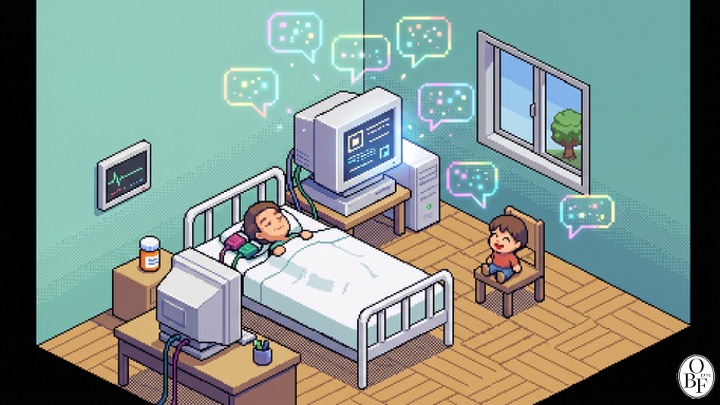
Looking only at the results so far, it might seem like BCI is about to become a routine medical device. But there are still unresolved problems.
In some patients, BCI control became harder to maintain as their disease progressed. The cause hasn’t been fully explained yet.
Most BCI trials to date have involved patients with spinal cord injuries. These patients can’t move their limbs, but in many cases their facial expressions and speech remain intact. Data on ALS patients is comparatively much scarcer.
ALS is a disease in which motor neurons progressively deteriorate, and both where symptoms start and how they progress vary from person to person. Simply being unable to move your limbs doesn’t qualify as locked-in syndrome. Some patients remain fully conscious while losing the movements needed to communicate, eventually reaching complete locked-in state (CLIS), where even eye movement becomes unusable. There have been reported cases where existing BCI control broke down once patients reached this state.
Why this happens isn’t clear yet. There are several hypotheses: that visual impairment cuts off the feedback loop, that goal-directed cognition itself changes, that the pattern of evoked potentials5 shifts. But none of these has been confirmed. A 2022 paper in Nature Communications reported a successful case of BCI-based communication in a CLIS patient — but that’s a single case.
This is also why Casey Harrell’s record stands out. A long-term, at-home use case like his shows the potential for BCI to support independent communication in ALS patients. But as the research team themselves acknowledged, one success story doesn’t mean it applies to every ALS patient. How neural signals change as the disease progresses, and how BCI might adapt to those changes — these are questions that can only be answered with more volunteers and longer studies.
Oswarld’s Lens
In March, I covered technology that uses brain signals to train robots; this time, I looked at cases where they assist communication. Since the purposes differ, I felt we need to scrutinize the responsibilities around data and devices just as specifically.
In robot learning, what matters is who uses neural data and under what consent. In medical BCIs, what matters is whether patients can choose and control the device, and who bears responsibility for cost, maintenance, and failures. The question I raised in March — “whose brainwaves are these?” — leads this time to questions of patient choice and long-term support.
From my experience building go-to-market strategies, there’s always the same pattern at the moment a technology leaves the lab for the market: acquiring the first real user is the hardest and most important step. That’s exactly why the experience of a participant like Casey Harrell, who used the device for a long stretch of daily life, matters so much. 3,800 hours of real-world usage data is evidence that’s hard to obtain through controlled experiments alone. Pacemakers, too, went through years of refinement before reaching their current form of use. BCIs will likewise need to solve problems of portability, stability, and maintenance — but whether they’ll spread at the same pace is still an open question.
Closing
First, Casey Harrell’s 3,800 hours is a record showing that BCIs can move past lab demonstrations and become tools used daily at home, without a researcher looking over the user’s shoulder.
Second, estimates suggest that more participants are now enrolled in implantable BCI clinical trials, and in China, a product designed to assist hand movement has received approval. That said, the scope of these surveys and the intended uses of these products differ, so numbers and approval status alone can’t tell us which technology is superior.
Third, we still need more research on how signals change as disease progresses and on long-term stability of use. Confirming whether one patient’s results can be replicated in others remains an open question.
Do you think BCI technology will stay confined to being a “medical device,” or will it become an everyday interface like the smartphone? Leave a comment with your take.
Keep the perspective, not the noise.
We choose one consequential shift and trace what sits beneath it, every other day.
Confirm once to finish subscribing.
Already a subscriber? Sign in to join the conversation


References & Further Reading
Primary sources
-
UC Davis, Announcement of Harrell’s long-term independent-use study, 6.15.2026.
-
China’s NMPA, Announcement of approval for a hand motor-function assistive BCI, 3.13.2026.
-
China’s NHSA, Announcement assigning NEO a medical insurance classification code, 3.22.2026.
-
Card, N. S. et al., “Long-term independent use of an intracortical brain–computer interface for speech and cursor control”, Nature Medicine, 2026.
-
Patrick-Krueger, M. et al., “The state of clinical trials of implantable brain–computer interfaces”, 2024. — A review cataloguing implantable BCI clinical trials for specific applications identified from 1998 through 2023. This is the paper that gives us the baseline of 21 groups and 67 people.
-
MIT Technology Review, “Brain-computer interface trials are taking off”, 6.19.2026. — An article that pulls together the surge trend from 67 to 150 patients along with the current state of major companies and academic teams.
Background
- MIT Technology Review, “China has approved the world’s first invasive brain-computer chip — here’s what’s next”, 6.1.2026. — An in-depth piece on the background and significance of the Neuracle NEO approval.
- Paradromics, “China’s Recent BCI Developments & What They Mean for the U.S.”, 4.30.2026. — An analysis, from the perspective of a U.S. BCI company, of China’s strategy for seizing an institutional head start. It makes clear just how much faster China’s approval-insurance-capital-markets pipeline moves.
- Nature, “At-home brain implant gives man with motor neuron disease his daily life back”, 6.15.2026. — Nature’s news team’s writeup of the Harrell case, including expert commentary on the possibility of signal degradation with long-term use.

Footnotes
-
ALS (Amyotrophic Lateral Sclerosis, geun-wichuksung cheuksak-gyeonghwajeung): a neurodegenerative disease that progressively destroys motor neurons. It affects limb movement, speech, swallowing, and breathing, with the site of onset and progression pattern varying from person to person. Also known as Lou Gehrig’s disease. ↩
-
BCI (Brain-Computer Interface): technology that reads electrical signals from the brain and relays commands to a computer. This is a different application of the same technology introduced in the March newsletter for robot training. ↩
-
Precentral Gyrus (jeonjungsim-irang): the region of the cerebral cortex that sends voluntary motor commands. The motor cortex responsible for speech is located here, which is why speech BCIs mainly read signals from this area. ↩
-
Dura Mater (gyeongmak): the outermost of the three membranes surrounding the brain. Neuracle’s NEO places its electrodes on top of this membrane, so it does not directly penetrate brain tissue. ↩
-
Evoked Potential (yubal jeonwi): an electrical signal generated by the brain in response to a specific stimulus (sound, light, touch, etc.). It’s one of the core signals BCIs use to read a user’s intent. ↩
Related issues
Check Client Logos Before Signing That GEO Contract
Before trusting 'guaranteed exposure' pitches, here's how to verify the evidence and contract terms behind them.
AI & TechChina's Papers Are Up, So Why Aren't Citations?
Research output and international citation are not the same measure, and the gap reveals what citation data can and cannot show.
AI & TechOpenAI's PlantTalk Gives Houseplants a Voice
PlantTalk turns a plant's sensor readings into spoken commentary, raising questions about why we bond with talking objects.
AI & Tech
Your take shapes the next issue
What resonated most in this issue, or where has your experience been different?