

OpenAI's PlantTalk Gives Houseplants a Voice
PlantTalk turns a plant's sensor readings into spoken commentary, raising questions about why we bond with talking objects.
AI & TechWhat if a sensor could speak your plant’s condition out loud?
There’s a project called PlantTalk that OpenAI published on GitHub. A webcam and sensors monitor a potted plant’s condition, and an AI narrates it in the voice of a plant character. It’s not a device that reads a plant’s thoughts or feelings.
When I first looked at it, the repository had 99 stars on GitHub. It hadn’t attracted much attention, but I found the way it delivers sensor data genuinely interesting. I was curious how the experience would differ — seeing the same pot’s condition as numbers versus hearing it spoken aloud.
People sometimes give objects names or personalities and end up feeling a kind of closeness to them. PlantTalk is a case worth examining through that lens. Whether every user would come to treat a plant character as a relationship partner is still an open question.
🌱 How a Potted Plant Learns to Talk
The way PlantTalk works is simpler than you’d think.
A webcam observes the plant’s current state, while a soil moisture sensor and a light sensor connected to an Arduino measure the humidity of the soil and the amount of light. This data is passed to OpenAI’s Realtime API1, and ChatGPT responds in a human voice, speaking as if it were the plant.
For instance, based on the observation that the soil is dry, it can be made to say, “I think I need some water.”
This is a structure where the AI puts sensor readings into words. It shouldn’t be assumed to know a watering history it never actually observed. The main components are as follows.
- Webcam + Vision API: visually analyzes the plant’s leaf color and degree of drooping
- Arduino sensors + serial communication: transmits soil moisture and light readings in real time
- Realtime API: handles two-way voice conversation in real time It works without an Arduino too, but in that case you’re relying on the webcam alone, and accuracy drops considerably. OpenAI itself notes in the README that you need the sensors to get meaningful data.
The README explains that you can get started with just a laptop, but the full build with sensors included is a project for experienced makers. You can also get setup and wiring guidance through Codex. How much time and difficulty the actual build takes will depend on your hardware experience.
Users can set the plant’s name, personality, and voice. The same observed data can be expressed differently depending on the character. Ambient Mode is a full-screen conversation view. It’s worth distinguishing between this screen-switching feature and the claim that the plant decides on its own to speak up.
So PlantTalk is closer to an interface that dresses up a monitoring tool—one that simply displays sensor readings—with a character and a voice.
The Intimacy Created by Voice and Character
To understand this kind of interface, it helps to look at research on anthropomorphism and attachment to AI.
Anthropomorphism2 is the tendency to attribute emotions, intentions, or personality to non-human things. Think of naming your car or feeling sorry for a robot vacuum cleaner — that’s the idea. But how strongly people react this way varies a lot by person and situation.
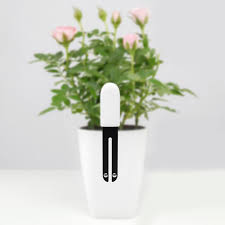
Dialogue and responsiveness can be cues that make us sense personality in an object.
A paper published in Frontiers in Psychology in February 2026 proposed a theoretical model explaining attachment to AI. It describes three stages: expectations about function, emotional evaluation of interactions, and the formation of a stable perception of the AI. This is a hypothesis synthesizing existing research — including work on parasocial relationships3 — not an experimentally confirmed process that every user necessarily goes through.
Applying this model to PlantTalk is a plausible interpretation, but it would need separate validation with actual product users.
Showing soil moisture as a number and having a character say it needs water can produce different experiences. The latter might feel friendlier, but some people will still prefer numbers or simple alerts. Having a voice conversation doesn’t automatically produce attachment.
Research analyzing plants’ electrical signals is a separate field altogether. A preprint by Gloor released in June 2025 reported 97% accuracy in classifying human emotion labels from voltage signals collected around plants. But a classification result on a specific dataset is not evidence that plants understand human emotions. It’s a claim that needs independent replication and scrutiny of how measurement conditions affect results — and it operates on different principles than PlantTalk does.
Research also continues into how plants respond to stimuli and exchange substances through roots and fungal networks. Describing this as an “internet of plants” or intentional collective defense calls for caution. Some studies have found that certain claims about mycorrhizal networks have been exaggerated relative to the actual evidence. Research on plant signaling and human-made conversational characters shouldn’t be treated as the same phenomenon.
PlantTalk is a project that connects observations — webcam footage, soil moisture, light levels — to AI, which then puts them into words. Adding more sensors can expand the information conveyed, but the expressions the AI adds and the actual measured values still need to be kept distinct.
Getting People to Actually Check Sensor Data
The idea of monitoring plant status with sensors isn’t new at all. There are hundreds of Arduino-based soil moisture sensor projects on GitHub alone, and smart flowerpot products have launched repeatedly. Products like Parrot Flower Power, Xiaomi Flora, and PLANTY had their moment in the spotlight.
For these products to stay in use, they need to do more than just provide readings—they need to help users easily understand and act on them. That said, there’s no evidence establishing that any specific smart pot product disappeared from the market simply because users stopped checking the dashboard.
Even when a sensor collects plenty of data, if users can’t grasp what it means, it’s hard to put that data to use in actual care. Pairing a low soil-moisture reading with an interpretation—like whether the plant needs water right now—could help. Still, we can’t generalize from this to claim that all devices, from smartwatches to sleep trackers, get abandoned for the same reason.
PlantTalk is one attempt to deliver this kind of information through spoken conversation.
Instead of just displaying a humidity number, it explains the plant’s current condition in words and lets the user ask follow-up questions. This could reduce the effort of checking on things. On the other hand, if the responses run long or contradict what the user actually observes, it could become annoying. Whether it genuinely makes care easier and leads to sustained use is something that needs actual user evaluation.
What interests me is that when AI speaks as a plant character, people may feel a sense of closeness to it. Whether that closeness actually helps with plant care, or just ends up as an entertaining demo, is still something to be confirmed.

The approach of connecting sensor information to AI could apply to other objects too. But PlantTalk mainly offers observation and spoken explanation. That puts it in a different category of function and risk from Physical AI4—the kind that directly controls physical action, like robots or self-driving cars. It’s more accurate to see this as a small-scale case of linking off-screen information into conversation.
Oswarld’s Lens
PlantTalk is a project that combines existing voice APIs with sensor technology. What caught my attention wasn’t the novelty of any individual technology, but how it changes the way users encounter information.
That’s because it lets you check an object’s status through conversation, not just numbers and alerts.
In my work building corporate strategy, I’ve seen how the same technology can produce very different customer reactions depending on how it’s used. So I look not only at what a feature does, but at how users understand and actually use it. PlantTalk interests me from that same angle.
Delivering sensor data through voice isn’t new. But adding generative AI makes it much easier to tailor explanations to a user’s specific question while keeping a consistent character voice. The next thing to figure out, I think, is how much that actually helps real users.
When designing a friendly character, I’d want the interface to clearly distinguish between what the AI generated and what the sensor actually observed. Excessive emotional dependency on AI is a separate research question, but there’s no reason to assume that simply chatting with a plant character leads directly to that outcome.
What matters to me is a conversational design that’s transparent about what was measured versus what was inferred. A tool people keep using long-term needs both warmth and accuracy.
Closing
PlantTalk is a project that gives voice to your plant’s monitoring data, explaining out loud what it’s observing. What I found fascinating is that changing how the same data gets delivered can change what users pay attention to, and how they act. I’d love to test that possibility against real-world care outcomes and actual user experience.
Is there something in your home you’d like to talk to? Whether it’s a plant, a fridge, or a car, tell me in the comments what object you wish had a voice.
Looking at this fragment, everything checks out well—no Hangul characters remain, numbers are preserved, glossary terms are correctly applied, and structure matches exactly (headings, footnotes, links, images all align with the source).
Keep the perspective, not the noise.
We choose one consequential shift and trace what sits beneath it, every other day.
Confirm once to finish subscribing.
Already a subscriber? Sign in to join the conversation


References & Further Reading
Primary sources
- OpenAI, “PlantTalk — Give your houseplants a voice with ChatGPT”, GitHub, 2026. : This is where today’s newsletter starts. I recommend reading the README and browsing the project structure yourself.
- Cong Shu, Kaisheng Lai & Lingnan He, “Human-AI attachment: how humans develop intimate relationships with AI”, Frontiers in Psychology, February 11, 2026. : A theoretical paper proposing a three-stage hypothesis for how AI attachment forms. Section 3 lays out the model.
- Gloor et al., “Plant Bioelectric Early Warning Systems: A Five-Year Investigation into Human-Plant Electromagnetic Communication”, arXiv, June 2025. : A preprint arguing a link between voltage signals around plants and human emotion labels. This is a claim that needs independent verification, and it is not the technical basis for PlantTalk.
Background
- Karst et al., Positive citation bias and overinterpreted results lead to misinformation on common mycorrhizal networks in forests, Nature Ecology & Evolution, 2023. : A paper examining the interpretation and overstatement found in mycorrhizal network research.
- Science Times, “Do Plants Really Communicate? Studies Reveal Hidden Chemical, Electrical & Acoustic Signals”, February 2026. : A general-audience roundup of research into chemical, electrical, and acoustic communication between plants.
- MarketScale, “Physical AI, embodied robotics, and agentic systems headline manufacturing’s mid-2026 intelligence push”, June 2026. : A recent article on how the Physical AI trend is being applied across industry.

Footnotes
-
Realtime API: A bidirectional voice conversation interface provided by OpenAI. Unlike traditional text-based APIs, it lets AI respond in real time by voice when you speak into a microphone — a natural conversation, much like a phone call. ↩
-
Anthropomorphism: The psychological tendency to attribute human traits — emotions, intentions, personality — to non-human things. Classic examples include naming a robot vacuum or calling your car “she.” ↩
-
Para-social relationship: A concept originally coined to describe the one-sided intimacy TV viewers feel toward broadcasters. In the AI era, it’s increasingly applied to relationships with chatbots and voice assistants. ↩
-
Physical AI: A technology trend in which AI moves beyond software screens to sense and act in the physical world through sensors, robots, and IoT devices. Gartner and NVIDIA, among others, have named it a key trend for 2026. ↩
Related issues
Why Childcare Cost Charts Don't Match What Parents Feel
Net childcare cost subtracts subsidies from facility fees, but that's not the whole parenting bill.
AI & TechHow Android Phones Warn You Before an Earthquake Hits
Phone sensors detect quakes already underway and alert users seconds before the strong shaking arrives.
AI & TechEY, KPMG, Deloitte Reports Hit by Fake Citations
Independent audits found many hallucinated or garbled citations in three Big Four AI reports, raising questions about verification.
AI & Tech
Your take shapes the next issue
What resonated most in this issue, or where has your experience been different?