

How Android Phones Warn You Before an Earthquake Hits
Phone sensors detect quakes already underway and alert users seconds before the strong shaking arrives.
AI & TechThe Alert That Arrived Before the Strong Shaking
On June 24, a series of major earthquakes struck northern Venezuela. The US Geological Survey put the magnitudes of the two quakes at 7.2 and 7.5.
Right after the quakes, people online began sharing stories of receiving alerts on their Android phones. Some users said the notification arrived 3 to 5 seconds before they felt the strong shaking. These are individual accounts, so it’s not safe to assume everyone got that much lead time. And this isn’t a case of predicting an earthquake before it happens. It’s an early warning system: it detects an earthquake that has already occurred and alerts people in other areas before the strong shaking reaches them.
Venezuela does have its own seismic monitoring network, run by FUNVISIS (Fundación Venezolana de Investigaciones Sismológicas, the national seismological research foundation). But monitoring earthquakes and sending early warnings to residents’ phones are two separate jobs. Instead of relying on dedicated seismometers, Google built a system that detects earthquakes using the sensors already inside Android phones and sends out the alerts from there.
🔔 The P-wave your phone’s rotation sensor picks up
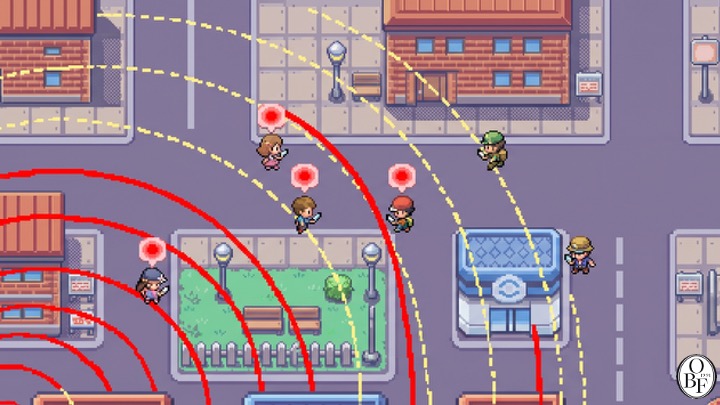
When an earthquake strikes, several kinds of waves radiate outward. Among them, the P-wave1 arrives before the S-wave2. By exploiting the difference in speed between the two, it’s possible to send a warning before the stronger shaking hits. The damaging shaking itself involves not just the S-wave but also surface waves that travel along the ground.
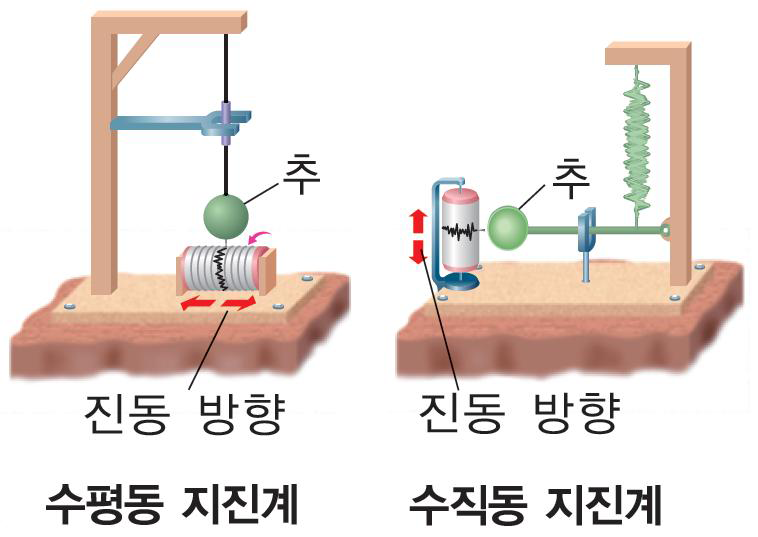
Traditional earthquake early-warning systems3 detect the initial waves using dedicated seismometers. ShakeAlert, used on the US West Coast, is a prime example. Because it requires densely installed monitoring stations plus continuously running communication networks and analysis systems, rolling it out across a wide area demands substantial budget and time.
Google instead put to use the accelerometer4 already built into smartphones. It’s the same sensor used for screen rotation and step counting, but it can also detect ground shaking. A single phone is less precise than a dedicated seismometer, but by analyzing signals sent together from many phones in the same area, the system can determine whether an earthquake is actually happening.
When a stationary Android phone detects vibration that looks like it could be an earthquake, it sends its approximate location and sensor signal to Google’s servers. The server then checks whether similar signals are coming in from other nearby phones. This cross-checking across multiple devices prevents a false alarm from being triggered just because one phone was dropped or picked up vibration from a construction site.
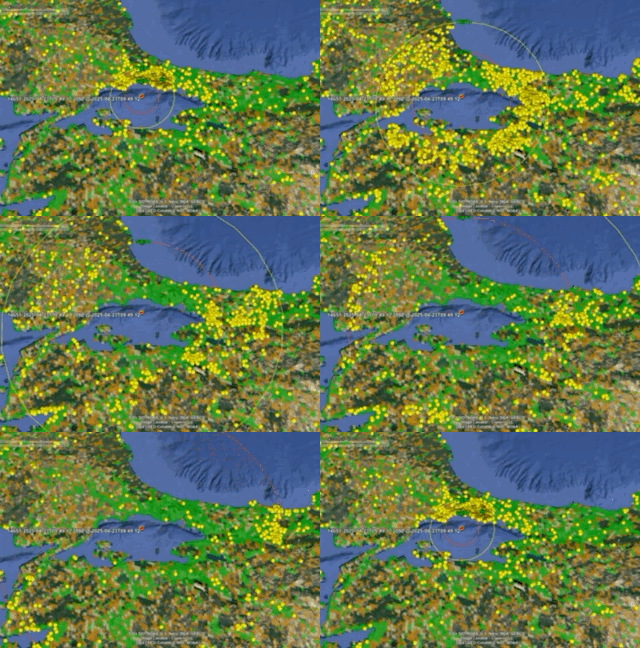
After the server estimates the earthquake’s location and magnitude, it sends alerts to the areas expected to experience shaking. There are two tiers of alert. Relatively weak shaking triggers a “Be Aware” notification, while strong shaking triggers a “Take Action” alert that takes over the full screen and plays a loud sound. The Take Action alert rings even if Do Not Disturb is on.
The reason an alert can arrive before the shaking does is that communication signals travel faster than seismic waves. Still, detection, analysis, and transmission all take time. If you’re close to the epicenter, you might receive the notification after you’ve already felt the shaking — or not receive one at all. How much lead time an early warning buys you depends on the region and the earthquake. If you do get a few seconds, you can use them to drop, protect your head and neck, and hold on under a sturdy nearby table.
📊 What the Operational Record Shows: Achievements and Limits
In July 2025, researchers from Google, UC Berkeley, and Harvard published the system’s operational results in Science. The paper analyzed roughly three years of data, while the accompanying Google research blog also presented cumulative figures spanning about four years. Because the aggregation periods differ, the numbers need to be read separately.
Google’s blog reported a cumulative total of more than 18,000 detected earthquakes, with roughly 790 million alert notifications sent for more than 2,000 of them. Smartphone-detection-based alerts began in New Zealand and Greece in 2021, expanding to 98 countries by the end of 2023.
The researchers estimated that the population able to receive early warnings grew from about 250 million in 2019 to roughly 2.5 billion. They attributed much of this growth to the expansion of Android-based alerts. It’s worth noting that this figure of 2.5 billion is an estimate of the population that can receive alerts — it does not mean 2.5 billion smartphones are actively transmitting sensor data.
Of the 1,279 alert-triggering earthquakes tallied in the paper through the end of March 2024, there were 3 false alarms. Two were misclassified thunderstorms, and one arose when many phones vibrated simultaneously upon receiving a notification, which was mistakenly interpreted as an earthquake. The median absolute error in initial magnitude estimates fell from 0.50 to 0.25 as operations improved. Still, for major earthquakes above magnitude 7.5, the system continued to underestimate the true magnitude.
About 1.55 million users responded to a user survey, and 85% of them said the alert was very helpful. However, the response rate was only about 0.38% of the notifications surveyed. This result reflects the assessment of those who responded — it is not a direct measure of overall user satisfaction or of any reduction in casualties. Still, it’s meaningful that respondents who received strong alerts reported taking protective actions, such as dropping down and covering their heads.
The 2023 Türkiye earthquake also exposed the system’s limits. A magnitude-7.8 earthquake was initially estimated at 4.5, and even later revisions only reached as high as 4.9. What was delivered to roughly 510,000 devices was merely a weak “Be Aware” alert. Presenting this case simply as a success story for major-earthquake warning would obscure the severe magnitude underestimation involved. When a second major earthquake struck about 9 hours later, roughly 4 million notifications were sent out.
Google reported that during a magnitude-6.7 earthquake in the Philippines in November 2023, the first alert was sent 18.3 seconds after the quake began, reaching about 2.5 million devices. Depending on the region, this gave people anywhere from a few seconds to considerably longer to react. For a magnitude-6.2 earthquake in Türkiye in April 2025, the first alert reportedly went out just 8 seconds after the event, delivering more than 11 million notifications. These operational records and user responses are worth examining — but the number of alerts sent should never be read directly as the number of lives saved.
⚖️ The Advantages of Using Existing Devices — and Who’s Responsible for Running Them
Building out a dedicated observation network means installing sensors and setting up communication and analysis systems from scratch. The smartphone approach uses devices and networks people already have, which cuts down on the burden of deploying new dedicated equipment.
That doesn’t mean it’s free, though. Someone still has to run servers, refine algorithms, check for false alarms, and keep security and communications running. Cutting installation costs by leveraging existing assets is one thing; running a disaster alert system reliably is a separate challenge entirely.
The more widely this approach gets adopted, the more we need to look at who’s operating it, how performance varies by region, and what standards govern data handling.
The first issue is dependence on a private company. If a country relies heavily on one platform’s alerts, that company’s service coverage and policy changes end up shaping disaster response too. The paper published its analysis data and code, but that’s not the same as opening up the entire operational system. Governments need to evaluate performance independently and keep other warning channels in place.
The second issue is unevenness in observable coverage. In areas with few smartphones or poor connectivity, it’s hard to gather enough signal. Saying the service operates in 98 countries doesn’t mean it works at the same level in every region of each of those countries.
The third issue is trust in how data gets handled. Receiving alerts requires location settings and data connections to stay on. Phones participating in detection send an approximate location and signal when they register a suspicious tremor. Describing this as a system where every phone constantly sends precise location data to a server would be inaccurate. Still, users deserve to know exactly what information is stored, for how long, and for what purpose.
Oswarld’s Lens
When I’m building a technology strategy, I often look at ways to repurpose resources that already exist. That’s why I found it striking how phones already in circulation had their sensors put to work for disaster alerts.
One of the first questions I ask when mapping out a GTM strategy is, “What can we use from what the customer already has?” In actual consulting work, I sometimes tell clients that adopting an LLM isn’t automatically the right answer. Depending on the problem, automating a task with VBA or leveraging existing sensors and algorithms can be the better fit. I read Google’s case the same way — a result of asking what could be done with existing devices before rolling out new equipment.
At the same time, I worry this could weaken governments’ incentive to invest in their own observation networks. However convenient Google’s alerts may be, a disaster response system that a state runs and takes responsibility for is still necessary. Korea, too, has been improving its observation network and earthquake early-warning system. The 26 seconds mentioned in connection with the 2016 Gyeongju mainshock refers to the time between when the Korea Meteorological Administration first detected the quake and when it issued the early warning — not the time it took for the disaster text alert to reach every resident.
I think it’s better to run dedicated observation networks and smartphone alerts in tandem. On the US West Coast, ShakeAlert — built on a dedicated seismic network — makes the call on whether an earthquake is happening, and Android simply delivers that alert to users. That’s a different role from the Android approach used in other countries, where the phone’s own sensors detect the quake. It’s a case that shows you can preserve public accountability for the observation network while still tapping a private platform’s delivery power.
Closing
Smartphone accelerometers aren’t precise enough to replace dedicated seismometers, but pooling signals from many devices can still power early warnings. It’s a good example of repurposing existing resources for new technology—and also a system that must keep improving after failures like underestimating a major earthquake.
In disaster alerts, ongoing operation and verification matter as much as convenience. Governments and platforms need to clearly define what each is responsible for, so that even when warnings work well, no one becomes overly dependent on a single source.
Android’s earthquake alert feature isn’t available in every country or on every device. Where it is supported, you can check it under “Safety & emergency” in your device settings. Note that this is a different feature from the Korea Meteorological Administration’s disaster text message settings, so be sure not to confuse the two.
Keep the perspective, not the noise.
We choose one consequential shift and trace what sits beneath it, every other day.
Confirm once to finish subscribing.
Already a subscriber? Sign in to join the conversation


References & Further Reading
Primary sources
- Richard M. Allen et al., “Global earthquake detection and warning using Android phones”, Science, Vol. 389, pp. 254-259, 2025. : This paper analyzes about 3 years of operational data and a user survey.
- Google Research Blog, “Android Earthquake Alerts: A global system for early warning”, 2025.7. : An accessible breakdown of the Science paper’s key findings, with visuals.
- Science Editorial, “Google alerts offer quick, cheap earthquake warnings”, 2025. : Science’s own coverage of the paper, including outside expert assessments.
Background
- Korea Meteorological Administration Online Earthquake Science Museum, “Earthquake Early Warning” : Useful for understanding how Korea’s P-wave-based early warning system works.
- Wikipedia, “Earthquake early warning system” : A broad overview of the history and current state of earthquake early warning systems worldwide.
- United States Geological Survey, 2026 Venezuela Earthquake Sequence record : A summary of the magnitude 7.2 and 7.5 earthquakes that struck on June 24.
- International Federation of Digital Seismograph Networks, Venezuelan National Seismic Network VE : Information on the existing observation network operated by FUNVISIS.
- Google Android Help, Be prepared for emergencies : Lets you check supported regions and settings for earthquake alerts.

Footnotes
-
P-wave (Primary wave): The first wave to arrive after an earthquake occurs. Early warning systems use it for initial detection. It is not a precursor phenomenon that occurs before the earthquake. ↩
-
S-wave (Secondary wave): A wave that travels more slowly than the P-wave and can cause strong shaking. The degree of damage is also affected by surface waves and ground/building characteristics. ↩
-
Earthquake Early Warning (EEW): A system that rapidly detects an earthquake that has already occurred and alerts people before strong shaking arrives. The available lead time varies by location and earthquake, and warnings may come too late near the epicenter. ↩
-
Accelerometer: A sensor that measures an object’s acceleration, or change in velocity. In smartphones, it’s used for screen rotation, step counting, and game controls, but it can also detect ground vibrations. ↩
Related issues
EY, KPMG, Deloitte Reports Hit by Fake Citations
Independent audits found many hallucinated or garbled citations in three Big Four AI reports, raising questions about verification.
AI & TechGoogle Applies to Release 64 Million Mosquitoes in the US
Google filed a US permit to release up to 64 million male mosquitoes over two years, using Wolbachia-based sterile insect technology.
AI & TechNature Launches a TikTok Account to Explain Science
Short videos force tough choices about what context and caveats survive when research meets a 15-second format.
AI & Tech
Your take shapes the next issue
What resonated most in this issue, or where has your experience been different?