

Canceling Amazon Prime Took Four Pages and Six Clicks
The FTC's Amazon Prime case exposed a design built to make canceling harder than signing up—could AI absorb that burden instead?
SocietyCanceling Was Harder Than Signing Up
The old Amazon Prime cancellation process that the US FTC flagged as a problem required four pages, six clicks, and fifteen choices. Inside the company, employees reportedly called it “the Iliad”—a nod to Homer’s famously long epic. I covered Adobe’s dark pattern lawsuit earlier, and in the Amazon case too, the central issue was a design that made canceling harder than signing up.
Stanford economist Neale Mahoney and Chad Maisel of the Groundwork Collaborative, in a February 2026 report, called these everyday frustrations the “Annoyance Economy.” Add up the time and money spent waiting on customer service lines, processing insurance paperwork, and dealing with hidden fees, and they estimate US households bear a burden of at least $165 billion a year.
Reading this report, I found myself wondering how much of that burden AI could shave off if it handled subscription cancellations or refund requests on consumers’ behalf. Some of the repetitive button-clicking and explaining the same thing over and over seemed like tasks you could hand off.
The Time and Money Lost to Friction
The report’s total is an estimate compiled from multiple sources. It includes not just money actually spent, but also wasted time converted into dollars using average wages. For example, the value of time U.S. workers spend on medical administrative tasks is put at $21.6 billion a year, while the ten fees analyzed come to $90 billion a year. Since these figures convert very different kinds of burden into dollar terms, they shouldn’t all be read as cash paid directly to companies or losses from failed cancellations.
There’s also research examining why people keep paying for subscriptions. A 2023 paper by Liran Einav, Benjamin Klopack, and Mahoney1 analyzed payment data from ten subscription services. Cancellations spiked sharply in months when a customer’s card was replaced, forcing them to actively decide whether to renew. Compared to a hypothetical scenario in which consumers carefully evaluate every renewal, the researchers estimated that inattention and inertia boosted revenue for these services by anywhere from 14% to over 200%. This isn’t an experimental finding that revenue rose by that much specifically because cancellation screens were made harder to navigate.
In September 2025, Amazon settled with the FTC for a total of $2.5 billion (~₩3.5 trillion) — $1 billion in civil penalties and $1.5 billion in consumer refunds. The FTC cited internal documents showing employees were aware of unwanted sign-ups and convoluted cancellation processes. The settlement also required that canceling be made as easy as signing up.
Not all of this friction is deliberate. Some of it stems from outdated systems or convoluted administrative rules. Still, when sign-up is made effortless while cancellation is made difficult, customers who intended to leave may keep paying — and that gap is exactly the kind of incentive companies respond to.
The burden isn’t only financial. In a 2019 survey cited in the report, roughly one in four respondents said they had delayed or given up on medical care because of administrative hassles like scheduling or insurance issues. Simply put, people can end up going without care they need, just because finishing the paperwork is too hard.
The screens designed to make you postpone canceling
A common way this pressure gets built into web screens is the dark pattern2.
Some services make the cancel button hard to find, repeatedly show you what you’ll lose by canceling, or make you confirm the same decision multiple times. Anyone who doesn’t have the bandwidth to deal with it right now finds it easy to put off. A study presented at the 2025 ECCE conference also found that when participants were shown a complicated cancellation process, their trust and usability ratings dropped. That said, it was an exploratory study with just 34 participants comparing cancellation videos from two services, so the difference can’t be generalized to every subscription service.
If an AI presses the buttons on your behalf, the time you personally spend clicking through these steps can shrink. But the verification, the need to connect with a live agent, or the service’s own back-end processing don’t disappear automatically just because AI is involved.
In October 2024, the FTC finalized its “Click-to-Cancel” rule, requiring cancellation to be as easy as sign-up. But in July 2025, a federal appeals court struck the rule down, citing problems in the rulemaking process. The FTC reopened public comment in March 2026, but there’s no telling what rule will be finalized, or when. That doesn’t mean every enforcement action under existing law has vanished, either.
I think the rules need to improve, but alongside that, we also need better tools that consumers can actually use right now.
When AI Does the Work Instead
An AI agent is software that uses tools to carry out tasks based on a user’s instructions. Capabilities like Anthropic’s Computer Use—reading a screen and clicking buttons—already exist. Hook this up to subscription management, and it can help find the cancellation path and fill in whatever’s needed.
If a service offers a cancellation API3 or CLI4, requests can be sent without ever touching a screen. If no such channel exists, the AI has to operate the web interface instead. Either way, it needs authority to act on the user’s behalf and an access method the service actually permits. AI can’t invent a cancellation path that doesn’t exist.
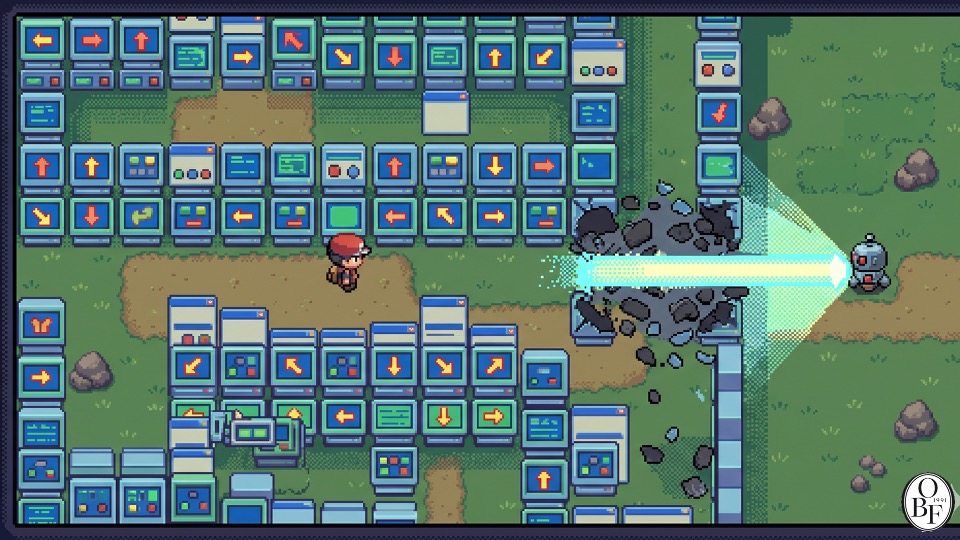
AI doesn’t procrastinate out of annoyance the way people do. But it can misread a screen, confuse a “cancel” button with a “keep subscription” button, or mistake an intermediate step for completion. That’s why what matters isn’t a log saying a button was clicked, but a feature that confirms the cancellation actually went through and whether the next billing cycle is really cancelled.
If a service offers machine-usable cancellation functions, unnecessary screen navigation can be cut down. Still, even API requests require authentication, confirmation of contract terms, and verification of the outcome. The screen disappearing doesn’t mean the whole procedure disappears with it.
RPA, the existing category of business-process automation tools, can already use APIs as well as screen manipulation. Adding AI on top may make it more flexible in responding to screen changes or different wording, rather than just reproducing a fixed procedure. But it can also introduce errors precisely because it’s making a judgment call each time. So what matters isn’t the fact that AI was bolted on—it’s the actual cancellation success rate and how errors get handled.
Oswarld’s Lens
What I see as especially problematic is a design that keeps making the customer spend time on the process even after they’ve clearly stated they want to leave. Companies can propose better terms, but once that offer is declined, the cancellation process shouldn’t keep dragging on.
An agent that acts on the user’s behalf has the potential to lighten this burden. I think official functionality that connects to the service will become essential here.
Ideally, once the user grants permission, the agent requests the cancellation, and the service clearly returns the effective date and any remaining charges. That would be far easier to verify than hunting for a button on a different screen every time. But this requires companies to actually offer such functionality and accept requests made on the user’s behalf.
Companies may well restrict automated access. Some restrictions exist to prevent account takeover or unauthorized cancellation, so a block can’t automatically be assumed to be an attempt to obstruct cancellation. Still, a verified customer should have easy access to a legitimate channel for canceling.
To say AI has solved the subscription-cancellation problem, a service’s processing procedures and consumer-protection rules would need to work in tandem with it. I expect agents to help drive this shift, but I don’t think technology can substitute for regulation.
Closing
There’s a page I put together back in 2023 called The Secrets of UI/UX. It got shared a lot at the time, and I also saw cases of people lifting the content wholesale and using it in books and paid courses. I figured it was information anyone could find online, so I didn’t push back. Still, seeing something I’d put together myself get used that way left a bitter taste that’s stuck with me.
Reading this report made me rethink what kind of design gets built on top of knowledge about user psychology. The same knowledge can build a screen that helps someone make a good choice, or one that keeps them paying for something they never wanted.
I think AI is no different. It can handle requests on a consumer’s behalf, but it can just as easily sit inside a company’s customer service line, feeding people the same answer over and over and eating up their time.
What I want is a tool that actually finishes the job the user asked for. If someone asked to cancel a subscription, that starts with clearly telling them whether the cancellation went through and whether any further charges remain.
By that standard, an agent’s value isn’t measured by how fast it clicks through steps — it’s measured by how much work it actually takes off the user’s plate.
Keep the perspective, not the noise.
We choose one consequential shift and trace what sits beneath it, every other day.
Confirm once to finish subscribing.
Already a subscriber? Sign in to join the conversation


References & Further Reading
Primary sources
- Chad Maisel & Neale Mahoney, “Taking on the Annoyance Economy”, Groundwork Collaborative, February 2026. : The core data behind today’s newsletter comes from here. The line-item cost breakdown is especially useful.
- Liran Einav, Benjamin Klopack, Neale Mahoney, “Selling Subscriptions”, NBER Working Paper, August 2023. : This paper uses billing data and subscription-renewal modeling to estimate how consumer inattention and inertia affect revenue.
- FTC, Announcement of $2.5 billion settlement with Amazon, September 25, 2025. : This lays out the settlement terms covering fines, refunds, and sign-up/cancellation procedures.
- FTC, Call for public comment on negative-option rule, March 2026. : This shows the scope of comments being sought on whether to revise the rule and what alternatives are on the table.
Background
- “Dark patterns in subscription service cancellation processes”, Proceedings of the 36th EACE Conference, 2025. : An experimental study on how dark patterns affect user trust and usability.
- Anthropic, Computer Use launch announcement, October 22, 2024. : This introduces the capability of an AI viewing a screen and operating a mouse and keyboard.
- Annie Lowrey, “America’s Annoyance Economy Is Growing”, The Atlantic, February 2026. : An article on the relationship between consumer frustration and AI.
- Kwangseob Ahn, 101 Psychological Effects You’ll Use Someday, June 1, 2023. : Attribution is required and non-commercial use is permitted; if you intend to use this commercially or to adapt it, please notify the author in advance. Among the usage cases I’ve come across, the one who honored this condition was Donggeun Cho, known online as “Jocoding.”

Footnotes
-
An NBER Working Paper is a paper released by the National Bureau of Economic Research, a U.S. economic research institution, to share its findings. The fact that it’s published in this format doesn’t mean it has passed peer review at an academic journal. ↩
-
Dark Pattern: A UI/UX design technique meant to deceive users or steer them into unintended actions. Common examples include hiding the cancel button or making it harder to unsubscribe than to sign up. ↩
-
An API (Application Programming Interface) is an interface that lets one piece of software call another software’s functions. To perform a cancellation, that function and the necessary access permissions need to be made available. ↩
-
CLI (Command Line Interface): A way of operating a computer using text commands. Instead of mouse clicks, you type commands directly with the keyboard. ↩
Related issues
FAA Uses Xbox Imagery to Recruit Air Traffic Controllers
I look at what the FAA's gamer-focused recruiting push reveals about America's air traffic controller shortage.
SocietyWhen AI Agents Negotiate, the Model Changes the Price
In Anthropic's internal test, Opus negotiated better prices than Haiku, yet users rated satisfaction almost the same.
SocietyWhy Meta Is Expanding AI Tools for Small Businesses
Meta is rolling out a company-wide initiative to help small businesses adopt AI using its existing merchant and ad infrastructure.
Society
Your take shapes the next issue
What resonated most in this issue, or where has your experience been different?