

What Apple Store Staff Faced Launching Vision Pro
Apple flew hundreds of staff to Cupertino for secret training, but Vision Pro sales still fell short.
BusinessWhat the Vision Pro Launch Revealed About Apple Stores
At an Apple Store, you can try a product with a staff member’s help. What a customer needs explained is different when they’re upgrading a familiar iPhone versus buying a device they’ve never seen before. For something like Vision Pro, where you first have to learn how to wear it and operate it, staff guidance matters even more.
In January 2024, ahead of the Vision Pro launch, Apple flew hundreds of store employees to its Cupertino headquarters for training. According to a book excerpt Noam Scheiber published in WIRED, staff signed non-disclosure agreements and had to seal their phones in signal-blocking bags. Security was strict enough that employees who tried the device first couldn’t even tell colleagues about it in advance.
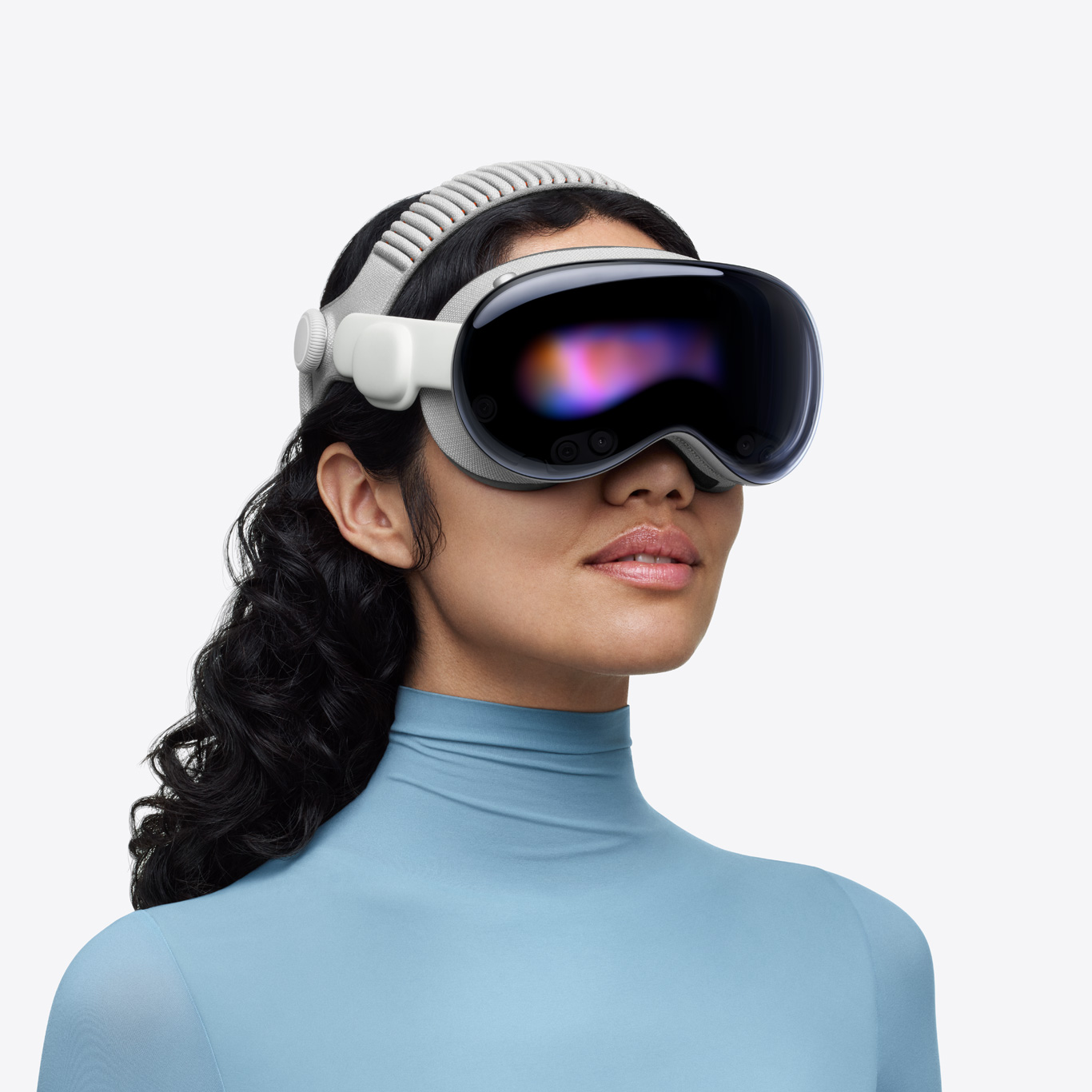
Megan Lee, one of the trained employees, said she was floored the first time she put the headset on. At least to her, it felt like a product worth introducing to customers.
But sales after launch fell short of expectations. WIRED cites estimates putting 2024 sales below 500,000 units. Apple itself never disclosed an official sales figure.
The high price, the weight, and the lack of apps to actually use were the reasons people hesitated on Vision Pro. Alongside those factors, this piece looks at how store staff prepared and where they ran into trouble. The testimony of a few employees can’t fully explain weak sales on its own, but the process by which customers first encounter a product is worth examining.
As it happens, on April 20, 2026, Apple announced that John Ternus will become CEO starting September 1. Rather than leaving the company, Tim Cook will shift into the role of board chairman. With this leadership change approaching, it’s also a good moment to look back at how the role of Apple’s stores evolved during Cook’s tenure.
The store that started as a space to teach the product
When Apple opened its own stores in 2001, some doubted it would work. Why, skeptics asked, would a company need dedicated retail just to sell its already-expensive products?
In a video released before the stores opened, Jobs explained that a large portion of the store space was devoted to teaching people how to use the products. The goal wasn’t just to hand merchandise to customers who already knew Apple well — it was to get unfamiliar customers to understand the devices and actually try them out.
A former HR executive quoted in WIRED also emphasized the role of employees. Jobs and Ron Johnson, who led the retail business, reportedly paid close attention to benefits and hiring, and were wary of relying on temporary staff. The thinking was that how employees experienced the company would carry through to how they treated customers.
There was also the One to One program, which offered personalized training for $99 a year. Employees interviewed for the piece recalled that this kind of training helped build relationships with customers. That said, no figures were presented showing the program’s profitability or its effect on customer retention.
What Employees Say About Changes in Training and Sales Pressure
Tim Cook became CEO in August 2011, before Jobs passed away. Before that, he’d been the one running Apple’s supply chain and operations, helping cut inventory and costs.
Apple’s services business also grew significantly under Cook. In fiscal year 2024, services revenue was roughly $96.2 billion, up 13% year-over-year, accounting for about 25% of total revenue. Gross margin was 73.9% for services and 37.2% for products. These figures reflect revenue minus cost of goods sold for each segment — they’re not net margins or a measure of individual stores’ profitability.
Cost management at the retail stores has, at times, caused friction. John Browett, who became head of retail in 2012, tried to cut hours and staffing. Apple later acknowledged this was a mistake, and Browett left the company the same year he joined.
Even after leadership changed hands again, some employees say training time has shrunk while pressure to hit sales numbers has grown. Here’s what WIRED reported employees experienced:
- One long-tenured employee described how the 3 weeks of in-person training she once received was replaced with 1 week of computer-based training. This isn’t a documented finding that every store’s curriculum changed identically at the same point in time — it’s one employee’s account.
- One to One was discontinued, and Apple introduced Today at Apple, a free group-training program. Some employees felt the sessions leaned more toward sales and marketing.
- At the Towson store, testimony indicates that when the employee who had run training was reassigned to sales, the number of training sessions dropped too.
Under Deirdre O’Brien, who succeeded Angela Ahrendts in 2019, accounts describe stronger pressure to hit metrics like new-phone activations, accessory sales, and AppleCare+ enrollments. Employees describe this as a shift away from evaluations centered on customer satisfaction.
One employee in Kansas City expressed frustration at feeling pressured to pitch AppleCare+ repeatedly during a single transaction. The exaggerated figures quoted in the article shouldn’t be read as an official, mandatory company policy — what’s actually confirmed is the sales pressure the employee felt.
Vision Pro Demos Required Practice and a Real Fit
The February 2024 launch of Vision Pro demanded new work from stores. The experience couldn’t end with simply displaying the product and explaining its features.
Staff had to select the right component for each customer’s face and help them wear the device correctly. A poor fit could leave the display blurry or the experience uncomfortable. They also had to teach customers how to navigate using their eyes and hands. Memorizing a script is one thing; noticing and solving a customer’s actual problem is another.

Apple laid out a preparation plan that included training and demo practice time. But according to employees who spoke to reporters, some stores struggled to get enough practice in as planned.
There are cases where staffing levels and training time affected the actual customer experience.
At one store in Columbus, testimony describes video appearing blurry even during staff training because employees couldn’t fit the device properly. At another store, staff reportedly found the demo script hard to memorize, so after launch they read from an iPad instead. These cases shouldn’t be generalized into a claim that every Apple Store failed at demos.
Employees also had limited everyday opportunities to use the device themselves. The base U.S. launch price was $3,499, and employees who spoke to reporters said that even with a 25% discount, buying one themselves felt like a stretch. Eric Brown, an employee at the Towson store, explained that with iPhone or iPad, he has plenty to say to customers because he uses them daily.
Three issues emerge from this testimony: whether staff had enough time to practice, whether they could help when problems arose during fitting or operation, and whether they had a chance to use the product themselves and understand customers’ questions. There’s no basis for assuming that temporary staff are inherently less skilled, or for concluding that employment type caused weak sales.
Some store employees recalled that running the demo repeatedly still didn’t lead to sales. This experience illustrates difficulties on the ground, but it isn’t a controlled comparison isolating price, product characteristics, and visitors’ purchase intent. Nor can we conclude that better training alone would have made the product sell well.
Oswarld’s Lens
Reading this story, I was reminded of a problem I’ve seen firsthand in GTM strategy work. Teams often prepare product features in painstaking detail, but don’t spend nearly enough time thinking through what sales reps need to explain, or where customers are likely to get stuck. I’d argue that the last mile1 this piece describes—the final stretch where customers actually encounter the product—needs to be part of the launch plan from the start.
It’s tempting to compare this to the early Apple Watch experience. But the Watch launched in 2015, which means it belongs to the Cook era, just like Vision Pro. If you’re trying to contrast Jobs’s management style with Cook’s, you’ve already gotten the timeline wrong.
WIRED reported that employees wore the Watch themselves and relayed customer feedback, and that this hands-on experience helped shape the eventual emphasis on health and fitness features. Vision Pro’s situation was different—direct purchase and everyday use were both harder. The two products differ in price, use case, and target market, so you can’t chalk up the gap in sales performance to employee training alone.
That said, it’s worth interrogating the assumption2 that a good enough product will sell itself. If customers don’t understand the features, or if they hit friction during their first experience, they may never get to feel the benefits the development team actually built in.
When you cut training time, you need to ask what costs disappear and what tasks become harder as a result. Rather than fixating on overall store margins, I think it’s more directly useful for a product launch to check how well-prepared staff are to resolve customer questions. Apple’s high services profitability doesn’t, by itself, prove that cutting back on in-store training was the right call.
Closing
I still see Apple in a positive light as a company. The iPhone, Mac, and Services businesses all grew during Cook’s tenure, and the Apple Watch and AirPods both launched during this period too. As an Apple shareholder, I’m genuinely grateful to Cook. So I don’t want to turn this piece about the stores into a verdict on his entire tenure as CEO. I think it’s possible to acknowledge his achievements while still examining, separately, what’s gotten harder on the ground.
Vision Pro was updated in October 2025 with an M5 chip model. Setting aside the performance improvements, we should also look at whether employees are getting the practice time they need and whether customer-support resources have kept pace. Improving the technology and helping first-time users are two different tasks, each requiring its own preparation.
Employee demands have also surfaced through union activity. The Towson store in the US became the first Apple retail location in the country to unionize, in 2022, and reached its first collective bargaining agreement in 2024. That said, this can’t be explained solely by the Vision Pro launch or by any one executive’s policies.
There have also been reports that Apple is developing smart glasses. No product or launch timeline has been officially announced yet. If Apple does release a new wearable device, I hope it first identifies what customers find unfamiliar and what kind of support employees will need.
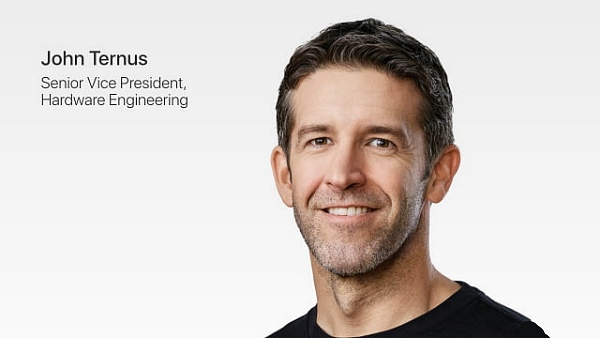
John Ternus, named as the incoming CEO, is a hardware engineer who joined Apple in 2001. Before Apple, he worked at Virtual Research Systems. He has extensive product development experience, but that background alone doesn’t tell us how store training or staffing policy will change.
I’m less interested in what executives majored in and more in what actually changes in practice. Do employees get enough hands-on time with new products before launch? Do customer complaints reach the development team? Is the quality of explanation and training checked alongside sales figures?
If your organization is preparing to launch a new product, don’t stop at producing explainer materials — actually run through a demo with the staff who will be facing customers. It’ll help surface the exact point where customers first get stuck.
Looking at the draft, everything appears correctly translated with no Hangul remaining, numbers preserved, and structure matching. Let me verify once more carefully—all headings, links, footnotes, and the image match the source.
Keep the perspective, not the noise.
We choose one consequential shift and trace what sits beneath it, every other day.
Confirm once to finish subscribing.
Already a subscriber? Sign in to join the conversation


References & Further Reading
Primary sources
-
Noam Scheiber, “How the Vision Pro Rollout Inflamed Tensions at Apple”, WIRED, April 7, 2026. : An excerpt from the book Mutiny, containing employee testimony on the Vision Pro launch and store operations.
-
Tripp Mickle, After Steve: How Apple Became a Trillion-Dollar Company and Lost Its Soul, William Morrow, 2022. : A book tracing Apple’s cultural shifts after Jobs. Offers deep context for the Brouwet episode.
-
Apple, FY2024 Consolidated Financial Statements. : Contains revenue and cost-of-revenue figures for the Services and Products segments.
-
Apple, Tim Cook’s transition to Executive Chairman and John Ternus’s appointment as CEO, April 20, 2026.
-
Apple, Vision Pro upgraded with the M5 chip, October 15, 2025.
Background
- Walter Isaacson, Steve Jobs, Simon & Schuster, 2011. : A biography covering Jobs’s life and his stewardship of Apple.
- IDC, “Apple Vision Pro Won’t Cross 500,000 Sales in 2024”, Bloomberg, 2024. : A sales forecast published in July 2024 for that year. Should be distinguished from confirmed sales figures.
- IAM CORE, “First U.S. Unionized Apple Retail Store Workers Ratify Historic Labor Agreement”, 2024. : Details the specifics of the collective bargaining agreement at the Towson store.
- Jeonghyun Lee, “Apple Glass to launch in 4 styles, differentiating with camera design”, ZDNet Korea, 2026. : A report on rumored smart glasses development and launch prospects. Not an official Apple product announcement.

Footnotes
-
Last Mile: Originally refers to the final leg of delivery logistics. In this piece, it’s used to describe the touchpoints—sales pitches, in-store experience, customer service—where customers come to understand and use a product. ↩
-
The assumption that a good product sells itself: This is the assumption the piece critiques. It means that factors like price, distribution, and customer education—alongside product quality—can also shape a purchase decision; it isn’t the name of a specific academic theory. ↩
Related issues
Hormuz Tolls and a 428-Year Maritime History
Reports of Iranian tolls in Hormuz recall Denmark's centuries-old Sound Dues and the legal regimes governing global straits and canals.
BusinessLegal AI Startup Harvey Hits $11 Billion Valuation
As law firms adopt AI that cuts document-review time, how will they split the savings with clients under hourly billing?
BusinessFrom Wuxia's Ming Cult to Persian Fire Religion and Oil
A wuxia fan's curiosity about the Ming Cult leads to Manichaeism, Persian fire worship, and Iran's oil history.
Business
Your take shapes the next issue
What resonated most in this issue, or where has your experience been different?