

Hormuz Tolls and a 428-Year Maritime History
Reports of Iranian tolls in Hormuz recall Denmark's centuries-old Sound Dues and the legal regimes governing global straits and canals.
BusinessReading the Reports of Strait of Hormuz Tolls
In April 2026, reports emerged that Iran was demanding around $1 per barrel from oil tankers transiting the Strait of Hormuz, seeking payment in cryptocurrency. Statements from an Iranian export association official even pointed to Bitcoin. Accounts conflicted on whether tolls were being levied on every vessel and which payment methods were actually accepted, making it difficult to conclude that a uniform regime was in place across the board.
Critics immediately challenged the legality of the toll, arguing that it infringed on the freedom of international navigation. Hormuz is a vital international sea lane running between Iran and Oman. According to the U.S. Energy Information Administration (EIA), petroleum shipped through the strait in 2024 accounted for roughly 20% of global petroleum consumption and more than a quarter of all seaborne petroleum trade.
Reading the news got me wondering whether states had charged tolls to pass through international straits in the past. The quintessential precedent is Denmark’s Sound Dues (Øresundstolden). Instituted in 1429 and abolished in 1857, the levy lasted for 428 years. I want to examine that history first, and then compare it to the rules governing Hormuz today.
The draft looks accurate and complete. Output:
Denmark collected tolls in the Øresund Strait for 428 years
Denmark wasn’t the only country that demanded taxes or permits for passage through a strait. Ships entering the Black Sea through the Dardanelles Strait1 were also historically subject to control by neighboring powers. That said, the system varied by era and route, and not every strait in the world charged tolls.
Denmark’s Eric of Pomerania began levying a toll on foreign ships passing through the Øresund Strait2 in 1429. This strait between Denmark and Sweden was a major route for Baltic Sea trade. It wasn’t the only way into the Baltic, but it was a position that many ships used.
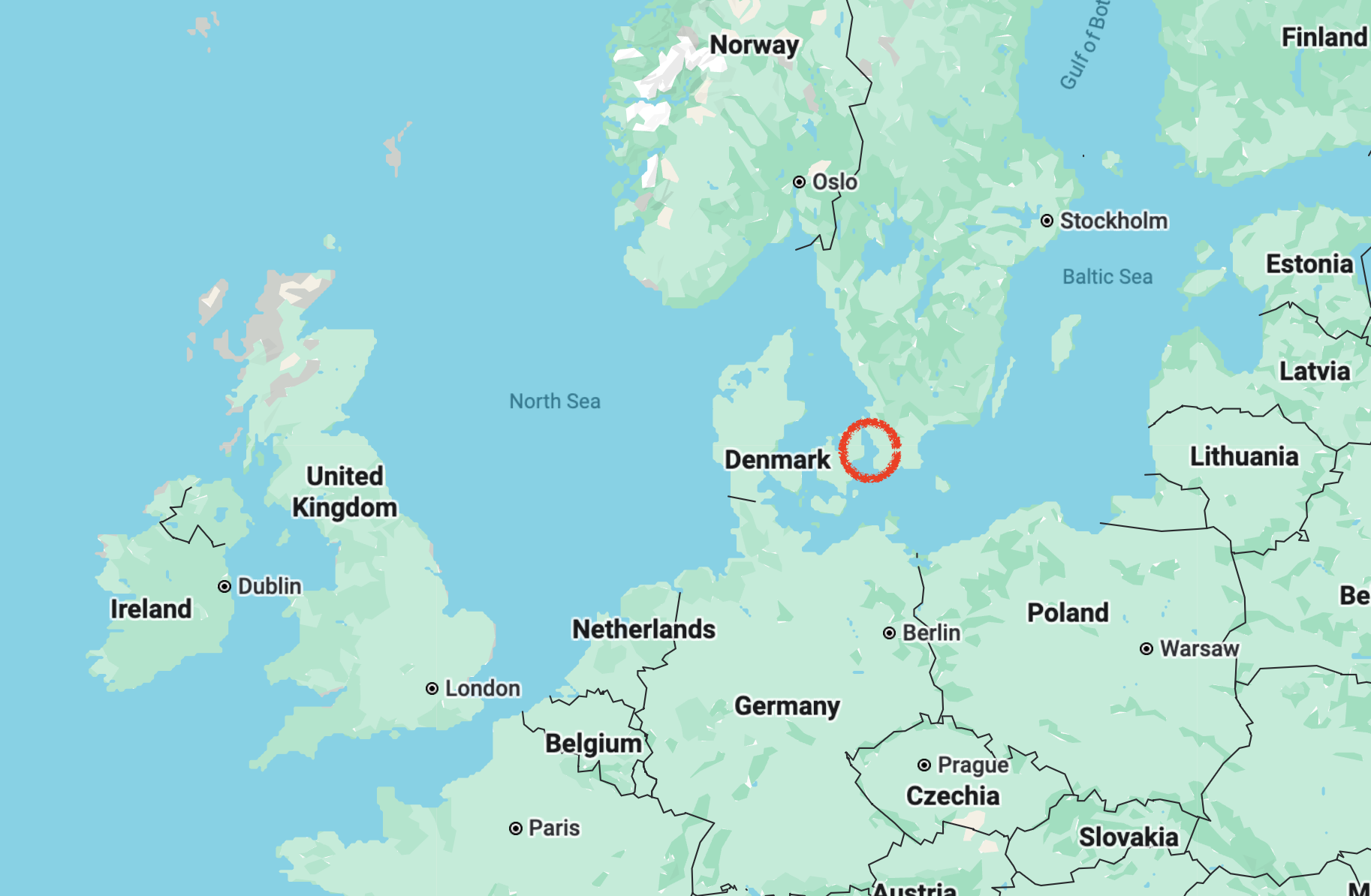
Ships had to declare at Helsingør and pay the toll there. Records survive listing cargo, port of departure, and destination, and researchers today use them to study trade patterns of the era. About 1.8 million passage records survive from between 1497 and 1857.
The Øresund toll was a major source of revenue for the Danish crown. Kronborg Castle3 in Helsingør served as the fortress controlling this route. It’s a case where a position that let you closely control a route was directly tied to the ability to collect taxes.
Grotius and the Case for Freedom of the Seas
In 1609, Dutch jurist Hugo Grotius published Mare Liberum, or “The Free Sea”4. He argued that no single nation could monopolize the seas to block other countries’ navigation and trade.
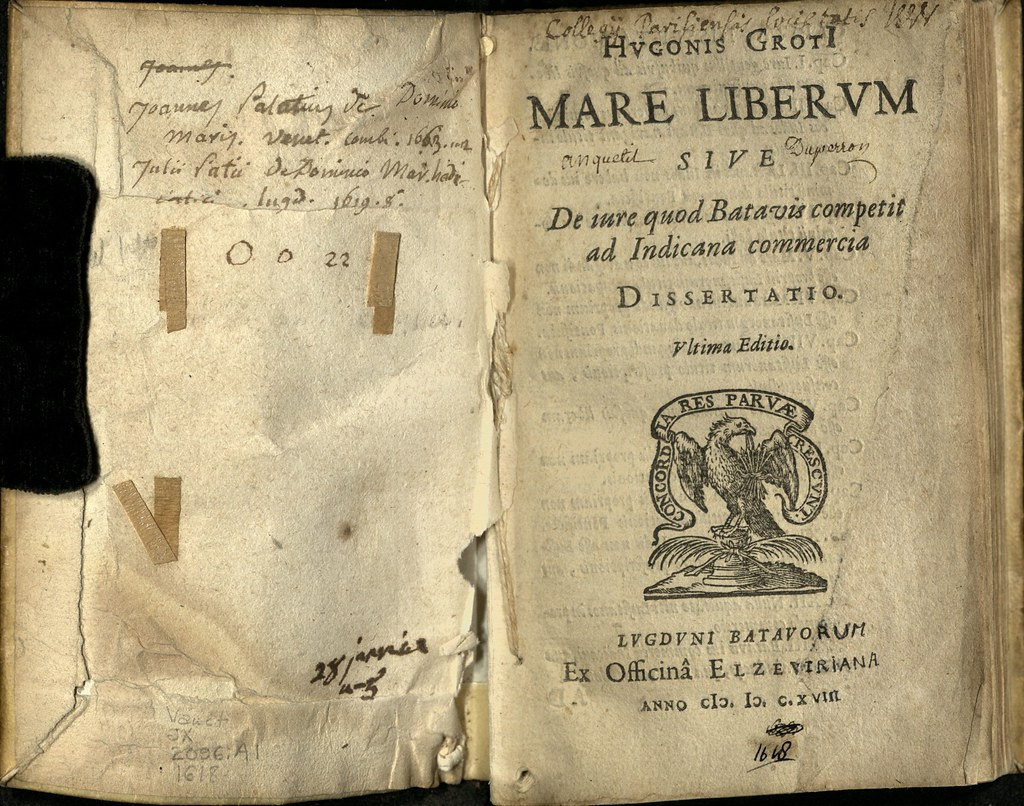
This argument was tied to Dutch trading interests at the time. It grew out of an effort to justify the Dutch seizure of the Portuguese merchant ship Santa Catarina in 16035. Grotius argued that Portugal had no right to monopolize trade routes and commerce with the East.
The book went on to shape legal debates over freedom of the seas for centuries. But its publication didn’t make national tolls disappear overnight. Denmark, for one, kept collecting the Oresund toll.
By the 19th century, pressure to abolish the toll grew among major trading nations. Having to stop, declare cargo, and pay a fee cost ships not just money but time. For Denmark it was a vital source of revenue; for countries using the strait, it was simply a cost of trade.
The 1857 Copenhagen Convention had multiple countries pay Denmark a lump-sum compensation in exchange for abolishing the strait toll. The United States struck a separate agreement with Denmark as well. A country that had long insisted on its right to keep collecting the toll, and the countries that used the route, settled on compensation in exchange for abolition.
This agreement marked a landmark moment in ending tolls on the Danish straits. But 1857 wasn’t a treaty that banned all fees on every natural strait worldwide in one stroke. Even today, toll disputes over other straits have to be examined case by case, under whatever treaties and international law apply there.
Canals and international straits play by different rules
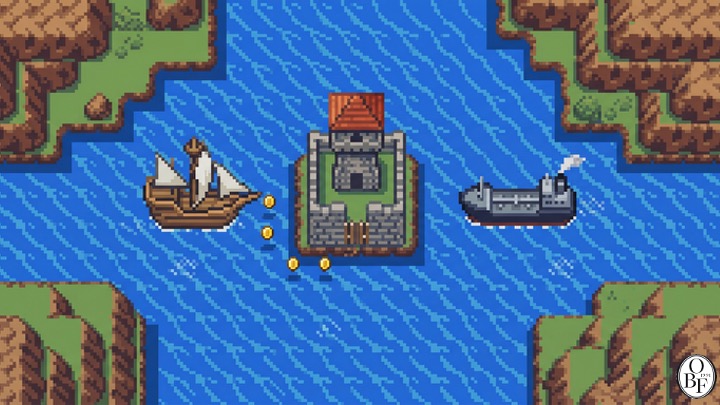
The Suez and Panama canals still charge tolls today. That might lead you to wonder: why can’t Hormuz collect fees the same way?
The starting point is the difference between a canal—an artificial waterway—and a strait, which forms naturally. A legal assessment has to weigh territorial sovereignty, the treaties governing each waterway, and navigation rights together.
The Suez Canal, opened in 1869, is an artificial channel cut through Egyptian territory. The Panama Canal is likewise infrastructure carved out of land. Both canals require construction and ongoing maintenance and operation, and both charge tolls under their own separate treaties and operating rules. Those fees can’t simply be transposed onto the conditions for passing through a natural strait.
The Suez Canal Authority’s own figures show the scale of this revenue. Revenue in 2023 was about $10.25 billion, but in 2024, as regional conflict cut traffic, it fell 61% to roughly $3.99 billion. These are revenue figures, so they need to be distinguished from profit after costs.
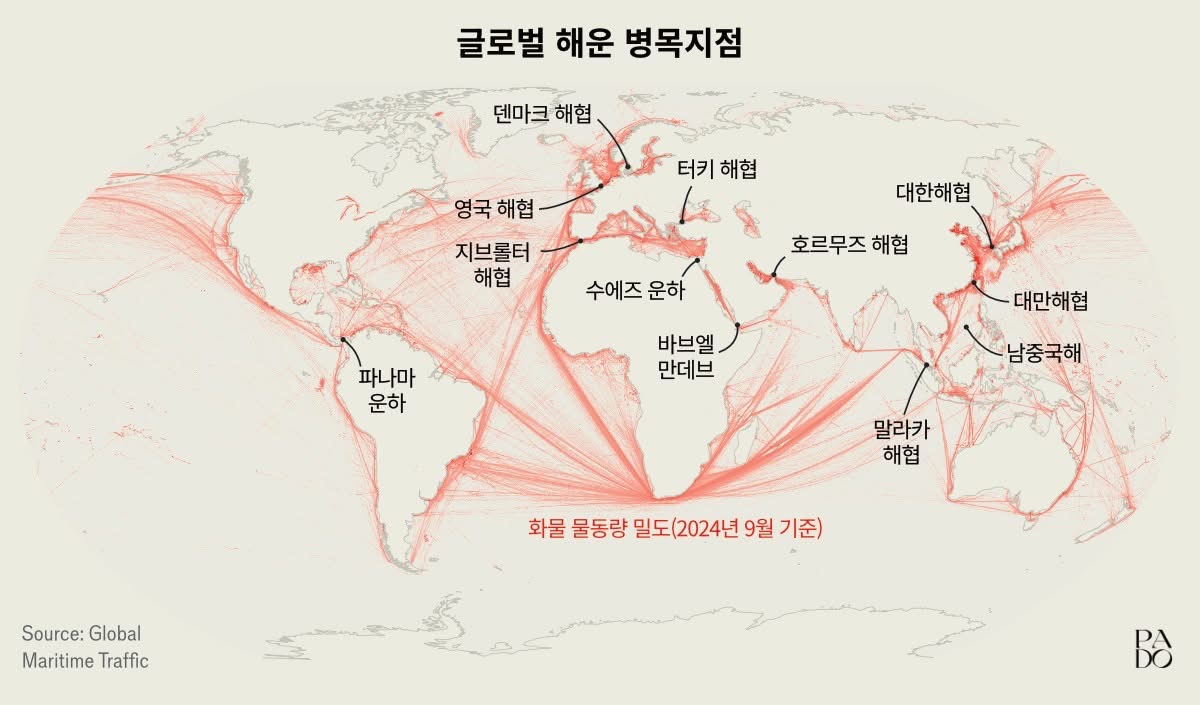
For straits used in international navigation, the transit passage rules of the UN Convention on the Law of the Sea (UNCLOS)6 matter most. Article 38 establishes the right of transit passage, while Article 44 sets the principle that states bordering a strait must not impede or suspend it. Article 26, on innocent passage through territorial waters, likewise bars charging vessels a fee for the mere act of passing through, while separately allowing charges for specific services actually rendered.
Measures that would require payment to pass through Hormuz run into criticism for conflicting with this freedom of navigation. Simply renaming the charge doesn’t resolve the problem of restricting free passage.
Turkey’s Bosphorus and Dardanelles straits operate under a distinct regime: the 1936 Montreux Convention7. That treaty guarantees freedom of passage for merchant vessels while also setting out fees, laid out in an annex, for services like sanitation, lighthouses, and rescue operations. So it would be inaccurate to describe this as some kind of workaround—dressing up a transit tax as a service fee.
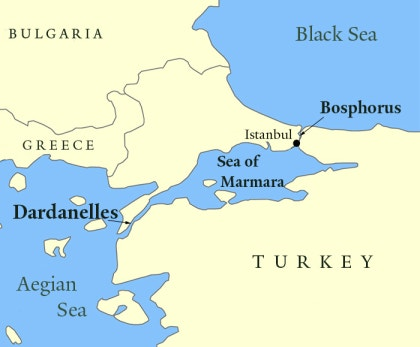
Hormuz has no special treaty like Montreux. Its geography is also different: Iran borders it to the north, Oman to the south. Even if the two countries were to reach an agreement, that wouldn’t give them free rein to alter the international-law navigation rights of other nations’ vessels.
What changes if payment comes in crypto
Whoever demands a toll has an interest in securing revenue and controlling the shipping lane. But calculating expected revenue is one thing; confirming how much was actually collected is another.
In an 8 April 2026 report, TRM Labs laid out how Iran’s Islamic Revolutionary Guard Corps (IRGC) had, starting in mid-March, demanded up to $2 million from certain vessels. It noted that yuan, Bitcoin, and USDT were all mentioned as possible payment methods. The report also flagged what remained unconfirmed — the full text of the unpublished bill and exactly who would be collecting the money.
Crypto payments can move funds quickly without passing through US correspondent banks, which makes them useful to sanctioned actors. But that doesn’t make the sanctions disappear. Blockchain transactions can be traced, and issuers of some stablecoins can freeze addresses.
Chainalysis estimated Iran’s crypto transaction activity in 2025 at roughly $7.8 billion. The figure suggesting that IRGC-linked activity accounts for about half of that is an estimate for the fourth quarter of that year alone. It does not represent toll revenue or the Iranian government’s crypto holdings. The same report’s view that stablecoins could become the main payment method is likewise a forecast, distinct from any confirmed collection record.
Whether the countries involved have even joined the relevant treaty is itself part of the legal dispute. Neither the US nor Iran is a party to UNCLOS, and Iran, at the time of signing, stated its own position on the scope of the right of transit passage. This means the analysis has to look beyond treaty provisions to customary international law as well. The mere fact that a country hasn’t ratified the convention doesn’t mean it can freely impose tolls.
Oswarld’s Lens
Watching this story unfold, I kept thinking back to Denmark’s history of sound dues. There’s a real parallel: if you control a narrow shipping lane that many vessels must pass through, you can shape global trade far beyond what your own economic weight would suggest.
But the two cases aren’t the same kind of arrangement. Denmark’s sound dues operated for a long time under the treaties and balance-of-power politics of their era, while today’s Hormuz dispute layers modern maritime law, armed conflict, and financial sanctions on top of each other. This isn’t simply the old story with gold coins swapped out for Bitcoin.
What strikes me about the 1857 settlement is the question of who bore the cost of abolition. The nations that relied on the strait compensated Denmark for its lost revenue in order to secure the end of the toll. That doesn’t mean the same kind of compensation is the answer today—but it does show that turning a principle into an operating reality requires reconciling competing interests.
Thinking about this from a business-strategy angle, it also raises the question of what companies can actually do when a critical shipping route gets blocked. The response depends heavily on whether alternative routes exist, and how much time and cost a detour adds. And the mere existence of one alternative doesn’t instantly erase the importance of the original route.
Legal legitimacy and the practical guarantee of safe passage need to be examined together. The issues in this story become much clearer once you separate out three distinct questions: does anyone have the right to charge a toll, what agreements and measures are needed for ships to pass safely, and who ultimately bears the cost.
Closing
Reading the Hormuz coverage, I found myself wondering how exactly the money is being demanded, and on what basis anyone could claim the right to collect it. Digging into the sources, I realized that historical transit tolls, today’s navigation rights, and reports of actual collection were all being blended together.
Denmark’s abolition of its transit toll was a historical settlement specific to one particular route, while today’s Hormuz question has to be judged against the international law currently in force. And even when a per-barrel fee or projected annual revenue is cited, whether that amount was actually collected is a separate question that needs its own verification.
Going forward, when I read news on this topic, I plan to keep three things distinct: announcements that a toll was demanded, confirmation that a ship actually paid it, and legal assessments of the situation. Just separating out these three threads seems like it would go a long way toward making sense of coverage that keeps shifting.
The draft looks accurate and complete—no Hangul remains, all numbers match, headings/footnotes/links/images correspond exactly to the source. No changes needed.
Keep the perspective, not the noise.
We choose one consequential shift and trace what sits beneath it, every other day.
Confirm once to finish subscribing.
Already a subscriber? Sign in to join the conversation


References & Further Reading
Primary sources
-
Financial Times, Fees for seas: a history of taxing waterways, Financial Times, 2026.4. : The original article covering the international-law issues surrounding Iran’s Hormuz toll.
-
TRM Labs, “Iranian Crypto Tolls in Strait of Hormuz”, 2026.4. : An analysis, as of April 8, 2026, summarizing reporting on the toll collection, the payment methods involved, and what remains unconfirmed.
-
Chainalysis, “Iran’s Strait of Hormuz Crypto Toll”, 2026.4. : As of April 10, 2026, this analyzes the reporting and Iran’s crypto activity, and forecasts the possible use of stablecoins.
-
United Nations, UN Convention on the Law of the Sea. : See Article 26 on passage through territorial waters and Part III on international straits.
-
Republic of Türkiye Ministry of Foreign Affairs, Implementation of the Montreux Convention.
-
EIA, Oil transit through the Strait of Hormuz, June 2025. : Distinguishes 2024 transit volumes from their share of global trade and consumption.
-
Government of Egypt, Suez Canal Authority’s 2025 Day of Excellence celebration and performance report.
-
National Library of the Netherlands, Introducing Mare Liberum.
Background
- Hugo Grotius, Mare Liberum (“The Free Sea”), 1609. : A 1609 work on the freedom of the seas.
- Oxford, Having Fun with a Unique Source: The Sound Toll Registers Online. : Introduces the Øresund Sound Toll registers and their use in research.
- “Copenhagen Convention of 1857” — a UN document covering, among other things, the convention abolishing tolls on the Danish straits.

Footnotes
-
The Dardanelles: a Turkish strait connecting the Aegean Sea and the Sea of Marmara. Together with the Bosphorus, it forms the sea route into the Black Sea. ↩
-
The Øresund Strait: the strait between Denmark and Sweden, and a major route for Baltic Sea trade. ↩
-
Kronborg Castle: a castle in Helsingør, Denmark, that served as the fortress controlling the Øresund route. It’s also known as the setting for Shakespeare’s Hamlet. ↩
-
Mare Liberum: a work published by Grotius in 1609. It argued against any single nation’s monopoly over the seas and asserted the freedom of navigation and trade. ↩
-
The Santa Catarina incident: an event in 1603 in which the Dutch seized a Portuguese merchant ship. The legal argument justifying this seizure became the starting point for Mare Liberum. ↩
-
UNCLOS: the UN Convention on the Law of the Sea, adopted in 1982 and entered into force in 1994. It covers territorial waters, exclusive economic zones, and navigation; neither the United States nor Iran is a party to it. ↩
-
The Montreux Convention: a 1936 treaty governing passage through the Turkish Straits. It applies different rules to merchant vessels and warships, with separate provisions for wartime and other special circumstances. ↩
Related issues
Legal AI Startup Harvey Hits $11 Billion Valuation
As law firms adopt AI that cuts document-review time, how will they split the savings with clients under hourly billing?
BusinessFrom Wuxia's Ming Cult to Persian Fire Religion and Oil
A wuxia fan's curiosity about the Ming Cult leads to Manichaeism, Persian fire worship, and Iran's oil history.
BusinessJury Verdict Holds Meta, Google Liable for App Design
A $6 million verdict against Meta and Google raises real questions about design liability, but it doesn't rewrite the rules for every platform.
Business
Your take shapes the next issue
What resonated most in this issue, or where has your experience been different?