

China Builds the Models, the Cloud Sends the Bill
Chinese AI labs earn a tenth of their rivals' revenue yet trade at up to 163 times it—open weights explain the gap.
BusinessRevenue Is a Tenth, So Why Is the Valuation Multiple So High?
Hi Reader, on September 17 the US research firm Rhodium Group put out a single number worth sitting with. Add up the annualized run-rate revenue (ARR)1 from the AI model businesses of seven Chinese companies — DeepSeek, Moonshot AI, Z.ai, MiniMax, Alibaba, ByteDance, and Kuaishou, which runs the video-generation AI Kling — and you get roughly $10.7 billion. That’s a little over 10% of OpenAI ($40 billion) and Anthropic ($65 billion) combined.
If this were just a revenue gap, it wouldn’t be surprising. What catches my attention is the valuation. By Rhodium’s own estimate, DeepSeek is valued at 163 times its ARR, and Moonshot at 50 times. OpenAI trades at 34 times, Anthropic at 21 times. The companies earning less are being priced far more richly per dollar of revenue. Rhodium itself writes that, for now, DeepSeek’s and Moonshot’s valuations relative to revenue look stretched.
It would be easy to read this as “Chinese AI is a bubble” and leave it there. But the report has one more line worth following: it points to open-weight strategy as a reason Chinese models struggle to monetize. What happens in the gap between a model spreading widely and that model actually making money — that’s the thread I want to pull today.
$10.7 Billion Is a Sum of Different Months
Let’s start with what the number is actually made of. ARR is last month’s revenue multiplied by 12. It’s a common shorthand for fast-growing companies, but the result can swing wildly depending on which month you happen to pick. In Rhodium’s table, the reference month differs from company to company.
| Company | ARR | Reference Month |
|---|---|---|
| ByteDance | $4 billion | July |
| Alibaba | $2.4 billion | August |
| Z.ai (API business) | $1.6 billion | August |
| Moonshot AI | $1 billion | August |
| MiniMax | $0.8 billion | August |
| DeepSeek | $0.5 billion | June |
| Kuaishou (Kling) | $0.5 billion | March |
Add these up and you get $10.8 billion, which rounds to the reported $10.7 billion. But Kuaishou’s figure is from March and DeepSeek’s from June. Given how fast usage of Chinese models has grown off the low base at the start of the year, this total may well understate where things actually stand now. Coverage of Rhodium’s analysis has flagged this same limitation.
Z.ai shows just how fast things are moving. Its actual revenue for the first half of the year was ¥953.9 million — a bit over $130 million, assuming ¥7.1 to the dollar. But the latest ARR the company told investors on September 16 was $1.8 billion, and it raised its year-end ARR forecast from $2.4 billion to $3.0 billion. A gap this large between six months of actual revenue and “last month times 12” tells you revenue has been bunching up in just the past few months — and it also tells you a single ARR figure isn’t enough to judge a company by.
One more thing. Revenue is usage times price. By benchmarks from Artificial Analysis, the flagship models from OpenAI and Anthropic cost more to run the same tasks than Chinese models do. So 10% of the revenue doesn’t mean 10% of the usage. Chinese models have been sold cheap, and some of that usage never even passed through the developer’s own books. That’s where the next part of this story begins.
The Moment You Download It, the Seller Changes
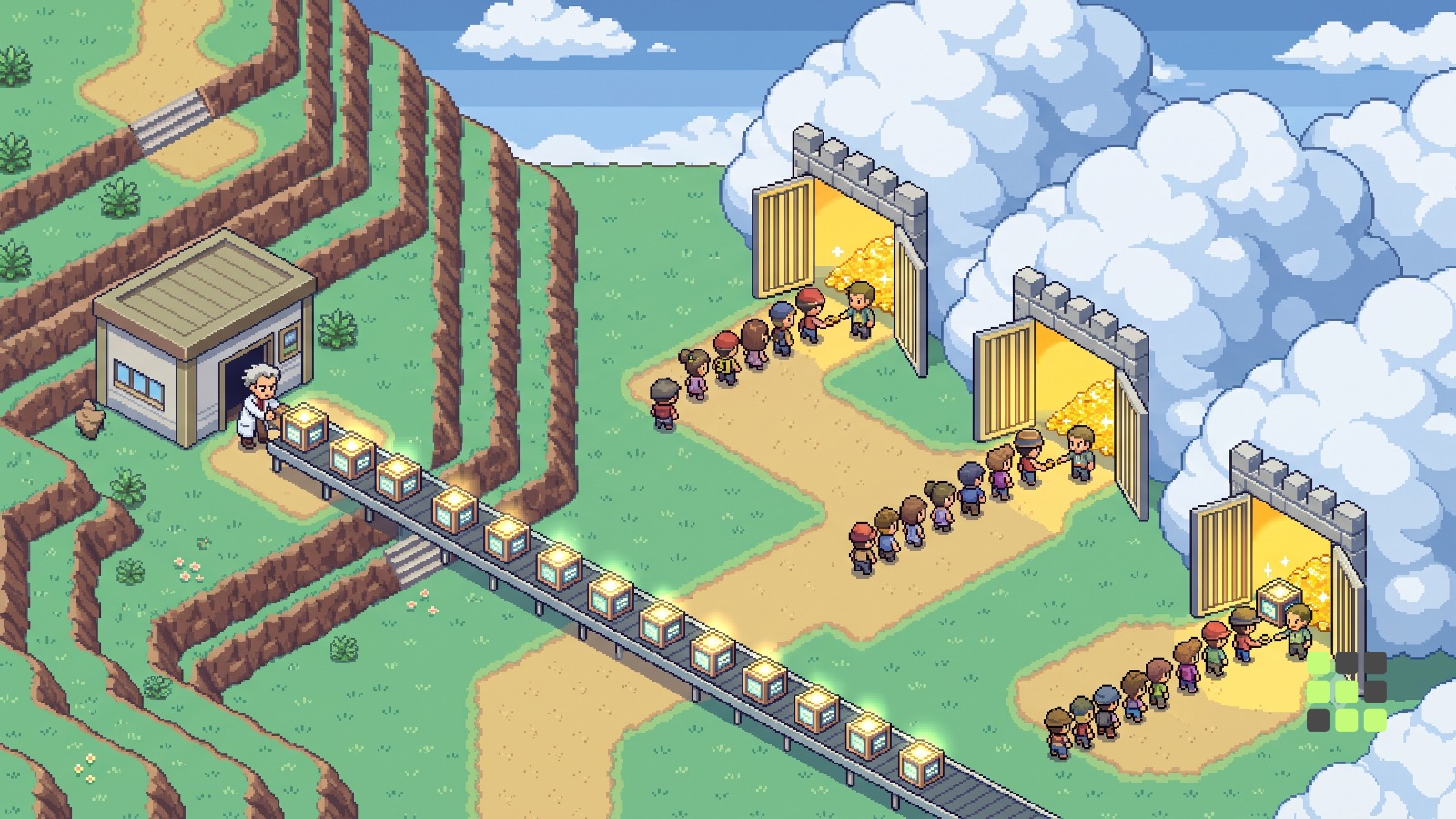
Open-weight2 models release their weight files publicly. Anyone with the right hardware can download and run them. This is exactly where the problem Rhodium points to arises. A third-party cloud provider can host the model and sell access to it without paying the original developer a cent.
In the August 5 letter (issue 178), I talked about how Kimi K3’s weights alone exceed 1.5 terabytes — too large for most companies’ servers to run. Everyone has the freedom to download it, but the ability to actually run it stays with the clouds and the big players. This report shows the revenue side of that same picture. If only a handful of major clouds can properly run the model, those are also the ones sending the bill to customers. The model gets built by a Chinese lab, but the customer relationships and the revenue pile up with whoever owns the infrastructure.
Harvey’s Tenet, which I covered in the August 22 letter (issue 208), is a similar scene. America’s largest legal AI company built its own model on top of Kimi K3 in just two months. It was a vivid demonstration of how capable Chinese models have become — but nothing has been disclosed about whether any of that translated into revenue booked by Moonshot.
So Chinese labs are changing course. According to Rhodium, Moonshot and Alibaba are pursuing revenue-sharing deals with companies that make heavy use of their open-weight models. Per a Reuters report last month, Moonshot is in talks with Microsoft, Amazon, and Google, with a revenue share of up to 30% reportedly on the table. The idea: keep the weights open, but start collecting tolls from the biggest users.
This won’t be an easy negotiation. It amounts to asking, after the fact, for payment from parties that have already taken what they wanted. What revenue base that 30% figure is calculated against, and what license clause it’s supposed to rest on, remain unknown. But regardless of how it turns out, it’s worth reading as a signal that open weights are shifting from unconditional distribution toward distribution with strings attached.
What exactly is the 163x multiple pricing in?
So why do investors put a 163x multiple on DeepSeek’s revenue?
First, the multiple3 moves depending on which valuation figure you plug in. DeepSeek is reportedly finalizing a pre-IPO funding round at a valuation of roughly ¥500 billion (~$74 billion). Divide that by $500 million in ARR and you get 148x. Rhodium’s 163x figure appears to use a different valuation estimate. The same goes for Anthropic. Its 21x corresponds to a valuation of about $1.36 trillion, but if you use its reported IPO target valuation of $2 trillion, it comes out to roughly 31x. Either way, the gap with DeepSeek remains substantial — but these multiples shouldn’t be treated as figures you can trust down to the decimal point.
What matters more is where the money is coming from. Logan Wright of Rhodium, a co-author of the report, argues that this funding gap will make it much harder for Chinese frontier labs to scale sustainably. They have little choice but to lean heavily on equity-market sentiment, and historically, that hasn’t been an easy bet to make in China. He adds that government funding has helped on the compute-infrastructure side, but is likely to be more hesitant about funding labs directly. By Rhodium’s estimate, more than 60% of equity investment into Chinese AI chips and servers comes from state-linked capital.
Here’s the summary. The state lays down the infrastructure, while labs have to go find money in the market. Finding money in the market requires revenue, and the open-weight strategy that built up the user base is precisely what’s letting that revenue leak away. Eli Zhang of Macquarie believes Z.ai and MiniMax could stay unprofitable through 2030 because of compute costs. Investors are tolerating those losses because they still see AI adoption as being at an early stage. The 163x multiple is less a reflection of current revenue than a bet that the leaking revenue can eventually be plugged.
Oswarld’s Lens
I read this report less as a case of China’s AI bubble and more as a problem of distribution sequencing. Open weights were a remarkably effective go-to-market strategy before they were ever a technology disclosure. By giving the model away for free, developers and enterprises latched on first, and in the meantime the performance gap closed fast.
The trouble comes after that. Giving something away first and charging later is a familiar playbook. Usually, though, whoever did the distributing keeps the relationship with the user. Open weights gave that relationship away too. The enterprise customer didn’t become Moonshot’s customer — it became Azure’s or AWS’s.
So the 30% negotiation isn’t really a pricing negotiation. It’s a negotiation over who the customer actually belongs to. From the cloud’s perspective, there isn’t much reason to share something it already has. The lab’s bargaining power will ultimately hinge on how good and how fast the next model is, and on how long it keeps releasing the weights of its top-tier models to the public.
If your company has built a product on top of a Chinese open-weight model, there’s one thing worth penciling in now: your current cost structure is likely built on the assumption that “the weights are free.” Once revenue-sharing with large users becomes standard practice, that assumption gets shaky. That’s exactly why licensing terms deserve to be treated as part of the supply chain — right alongside model performance and security.
Closing
Looking only at Rhodium’s numbers, Chinese AI is an industry earning 1/10 of what the two US frontrunners make. But that 10% leaves out the share of value created by Chinese models that ends up recorded on someone else’s books. How Moonshot’s revenue-sharing negotiations play out will also show us whether open weights stay unconditional going forward.
A Footnote
💬 If you’re using open-weight models in your product, have you ever worked out how much your cost structure would shift if the license added revenue-sharing terms? Let me know in the comments.
📨 If you have a colleague building a service on Chinese models, send this their way.
Already a subscriber? Sign in to join the conversation


References & Further Reading
OpenAI and Anthropic are making 10 times more revenue than all Chinese AI models combined, research group Rhodium says (CNBC, 2026-09-17)This is the first article to report the ARR and multiple figures from the Rhodium report, along with details from Z.ai’s investor briefing.
China AI companies earn fraction of OpenAI, Anthropic revenue (Quartz, 2026-09-17)This covers co-author Logan Wright’s remarks on the funding gap.
Chinese AI models soar in value but make just 10% of OpenAI and Anthropic’s revenue (Invezz, 2026-09-17)You can check here the state-linked share of funding (over 60%) and the upward revision of Z.ai’s year-end ARR forecast.
China’s AI valuation soars but revenue is only 10 percent of OpenAI and Anthropic (Digital Today, 2026-09-18)This lays out the limits of the estimate (data as of summer) and a per-task cost comparison.
Chinese AI firms Z.ai and MiniMax could remain loss-making until 2030, Macquarie says (SCMP)This is Macquarie’s analysis of compute costs and loss projections.
- Issue 178, “You Can Download It, You Just Can’t Run It”: covered the barrier to actually running frontier open models.
- Issue 208, “The Legal AI OpenAI Backed Was Secretly a Chinese Model Underneath”: how Harvey built its own model on top of Kimi K3.
- Issue 159, “The Four-Hour Video Call That Raised ₩11 Trillion (~$8B) for DeepSeek”: the backstory of DeepSeek’s first outside funding round.

📝 Glossary
Footnotes
-
ARR (Annual Recurring Revenue): A figure calculated by multiplying the most recent month’s revenue by 12 to project an annual rate. It isn’t money actually earned over a year — it’s an estimate assuming the current pace holds steady. ↩
-
Open weight: A release method where only the trained model’s weight files are made public. This differs in scope from open source, which also discloses training data and code. ↩
-
Revenue multiple: A company’s valuation divided by its revenue (here, ARR). The higher the multiple, the more investors are pricing in future growth rather than current revenue. ↩
Related issues

How Akamai Became Anthropic's $11.6 Billion Landlord
In April, Anthropic's launch cut Akamai's stock in half; by September it became Akamai's biggest customer ever—for CPUs, not GPUs.
BusinessMicrosoft's Own Memo: LLMs Are Eating Their Supply Chain
Unsealed court filings show Microsoft and OpenAI knew the risk to publishers long before this lawsuit.
BusinessBig Tech's Capex Is Half of Wall Street's Profit Growth
Goldman's $1.2 trillion capex forecast hides a bigger number: how much of it is propping up S&P 500 earnings.
Business
Your take shapes the next issue
What resonated most in this issue, or where has your experience been different?