

ChatGPT Chat Logs Become Evidence in Krafton Lawsuit
A Delaware court ruled Krafton's executives violated their contract by firing Subnautica leaders on ChatGPT's advice.
AI & TechChatGPT Shows Up in a Contract Dispute Ruling
A court ruling on the dispute between Krafton and the studio behind Subnautica includes an actual conversation with ChatGPT. When Krafton acquired the studio, it agreed to pay up to an additional $250 million based on future performance. As that payout looked set to grow larger than expected, CEO Changhan Kim asked ChatGPT how to renegotiate the terms or seize control of the studio.
According to the ruling, Krafton went on to carry out many of the steps ChatGPT suggested. It drafted a message for fans, blocked the studio’s ability to launch on Steam, and fired three key executives. On March 16, 2026, the Delaware Court of Chancery ruled that these firings and the takeover of operations violated the contract. The court ordered CEO Ted Gill reinstated and control of operations restored, and extended the earn-out calculation period by 258 days.
I want to look at what kind of contract Krafton — the company behind Battlegrounds (PUBG) — had signed, and what exactly the court took issue with. This ruling only addresses the first phase of the lawsuit. The questions of damages and the final additional payout are still unresolved.
A contract that paid more if the game succeeded
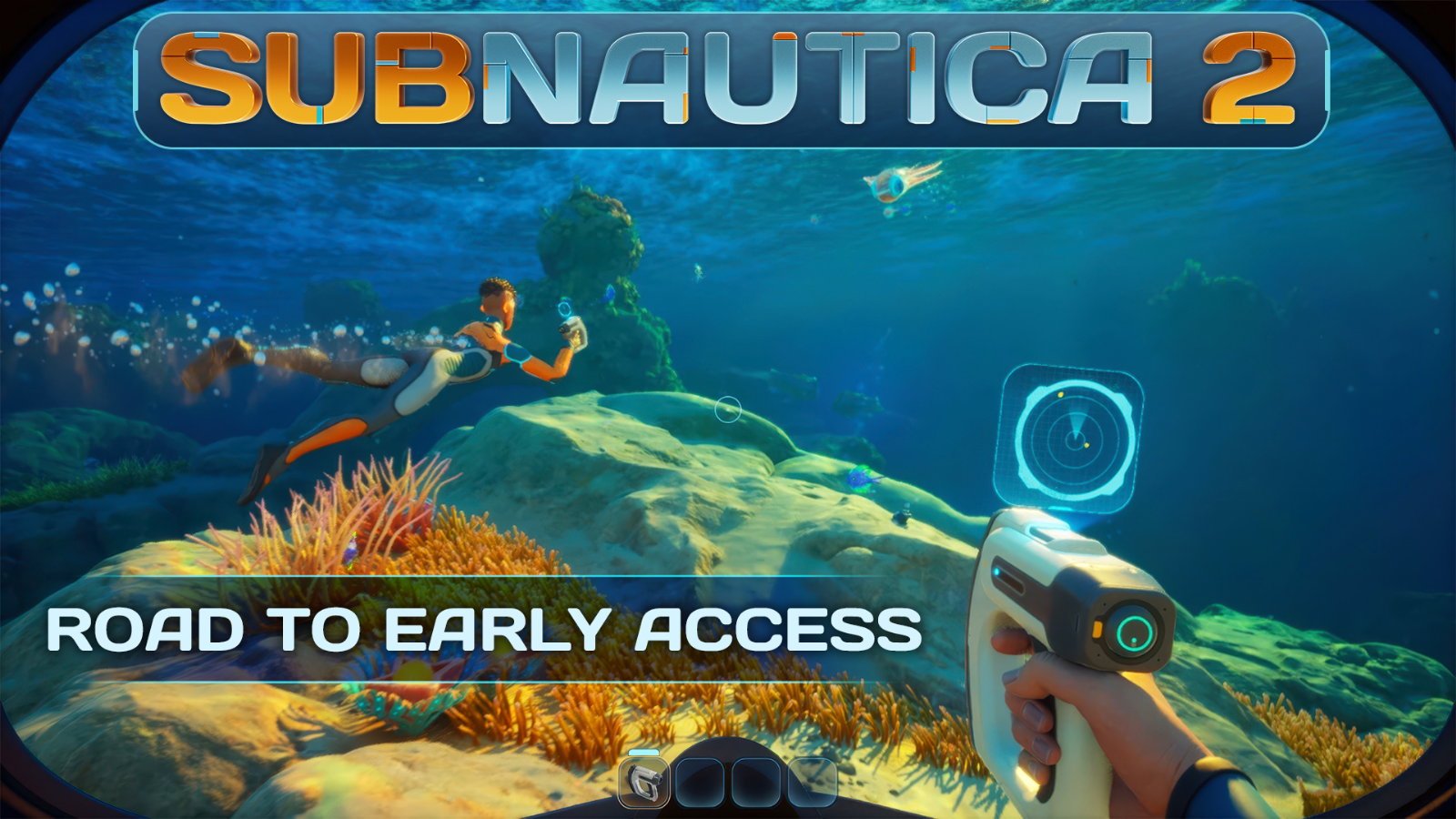
In 2021, Krafton acquired Unknown Worlds Entertainment, the developer behind the deep-sea survival game “Subnautica,” paying $500 million upfront. Attached to that was an earnout1 provision that could pay up to an additional $250 million if the studio met certain contractual revenue conditions. The sales performance of the sequel, Subnautica 2, was expected to play a decisive role in whether those conditions were met.
According to the calculation formula cited in the court ruling, once revenue crossed a baseline of $69.8 million, the company would owe $3.12 for every dollar of revenue above that threshold — capped so the additional payment could never exceed $250 million. Co-founders Charlie Cleveland and Max McGuire, along with CEO Ted Gill, were designated “key employees.” As long as even one of them remained employed, the operating rights defined in the contract stayed in force, and any termination had to meet the cause requirements specified in the agreement.
In the spring of 2025, Krafton modeled a scenario in which Subnautica 2 would launch into early access that August and sell more than 1.67 million copies by the fourth quarter. Internal estimates put the additional payout at roughly $191.8 million under the base case and about $242.2 million under the optimistic case. These were forecasts at the time, not actual sales figures or a confirmed liability. Some internal analysis even suggested the projected payout exceeded Krafton’s own internal valuation of the studio.
This earnout arrangement was a condition both sides agreed to at the time of the 2021 acquisition. A buyer can pay less upfront and spread the rest of the price across post-acquisition performance, while a seller stands to receive more if the business does well. The possibility that the payment burden could grow large was, in other words, already built into that contractual structure.
The ruling includes internal messages showing CEO Chang-han Kim expressing dissatisfaction with the terms of the acquisition. By contrast, Maria Park, who handled corporate development, warned that even if the key employees were terminated for cause, Krafton would likely still owe the additional payment once the revenue conditions were met — and that firing them would only heighten the risk of litigation and reputational damage.
ChatGPT Advice and the Internal Task Force
Around this time, CEO Chang-han Kim also asked ChatGPT for advice on how to respond. The court’s ruling notes that he asked Maria Park to contact the legal team. It would be inaccurate to describe this as a case where the company relied solely on AI with no legal review at all.
Internal messages show that ChatGPT advised the company that it would be difficult to cancel the additional payment agreement. In another conversation, it proposed a response strategy for the scenario in which renegotiations broke down. Following ChatGPT’s suggestion, CEO Kim set up a task force called “Project X.” Below is a summary of the AI’s recommendations and the task force’s objectives, as cited in the ruling:
- Send fans a message emphasizing that game quality and trust come first.
- Secure the rights to launch on Steam and console, along with access to the code and build process.
- Prepare legal materials, including contract interpretation documents and message records, for potential legal action.
- Renegotiate the terms of the additional payment or seize control of the studio’s operations.
The court noted that Krafton followed most of ChatGPT’s recommendations over the following month. A post sent to fans on June 12, 2025 stated that the co-founders were considering an offer to return — a claim the court found to be false. The studio’s management had no involvement in drafting that post. The ruling also records that CEO Kim proposed having ChatGPT draft it.
On July 1, 2025, Krafton fired all three key executives. The stated reason at the time was that they had pushed to launch Subnautica 2 despite it not being ready. In the lawsuit, however, Krafton cited different grounds — and the court found that none of them met the contractual requirements for termination.
What the Court Actually Ruled Was a Breach
I’m not a lawyer, and what follows is based on the March 16, 2026 ruling made public by the Delaware court.
Judge Lori Will of the Delaware Court of Chancery2 sided with Fortis Advisors — representing the former shareholders — on the breach-of-contract claim in the first phase of the case.
The breach the court recognized was firing key executives without the cause specified in the contract, and violating the operational authority guaranteed to them. The mere fact that ChatGPT was used was not, by itself, grounds for finding a breach.
The court ordered the following remedies:
- Reinstate Ted Gill as CEO and restore his contractual operating authority and launch-decision rights. The court did not order the reinstatement of the two co-founders.
- Immediately restore Gill’s access to the Steam platform.
- Declare the July 1, 2025 board resolution void to the extent it infringed on Gill’s operating authority.
- Extend the deadline for calculating the base earn-out payment by 258 days, to September 15, 2026. If Fortis exercises its contractual extension right, the deadline can be pushed to March 15, 2027.
Whether Krafton wrongfully impaired the opportunity to earn the additional payment, and if so how much damages should be owed, will be decided in the second phase of the case. This ruling does not reverse every action taken, nor does it confirm a $250 million payout.
The ChatGPT conversations were used as evidence of what options management had considered. The ruling also notes that CEO Changhan Kim admitted at trial to deleting some of the relevant chat logs. It’s worth pausing on the fact that asking an AI a legal question doesn’t automatically make that conversation privileged, the way a consultation with a lawyer would be.3 That said, this ruling doesn’t establish a general rule for how confidential AI conversations should be treated across the board.
Krafton argued in the litigation that the founders had effectively withdrawn from day-to-day work and that management had bulk-downloaded company files. The court found that Krafton had long known and accepted the founders’ limited role, and that the files had been retained to protect the studio’s work product and were returned while keeping them confidential. The fact that the reasons given at the time of termination differed from the reasons argued in litigation also weighed on the court’s decision.
Getting the answer you want isn’t the same as making the right call
I don’t think this incident can be explained away by the quality of the AI’s advice alone. There’s a record showing ChatGPT itself said the contract would be hard to cancel. So the question worth examining together is why management focused more on how to execute than on the warning that it was risky.
Managing public opinion, securing launch rights, preparing legal materials — each of these is a legitimate task for a company to consider. But it’s a different matter when the plan involves unilaterally stripping away rights already guaranteed to another company. Even if a list of actions looks concrete and easy to execute, whether it’s actually permitted under the contract has to be judged separately.
We need to check what information was fed to the AI, whether any contract terms were left out, and whether the answer had any legal basis. This ruling alone can’t tell us what the model knew at the time, or the internal logic behind any particular answer. What is clear is that it was management who adopted the suggestion and turned it into company action.
If you keep rephrasing the question until you get the conclusion you want, you risk accepting only the answers that support that conclusion. I think this is exactly the situation where AI can reinforce existing confirmation bias. That doesn’t mean AI always agrees with the user. What matters is how you handle it when a contradicting explanation comes up.
In this case, despite an internal staffer’s risk warning and the AI’s own answer that cancellation would be difficult, the company still moved ahead with securing operational control. That raises the question: was the process of seeking answers used to reconsider the decision — or to find justification for executing a plan that had already been decided?
Oswarld’s Lens
Reading about this case, I was reminded of consulting work. The client I watch out for most is the one who’s already decided on the answer and is only looking for evidence to back it up. Some clients, told that something is difficult, don’t reconsider the plan — they go looking for someone else who’ll tell them what they want to hear. In consulting or systems-integration work, if you say “yes, we can do it” no matter what just to win the contract, you can end up unable to handle the timeline or cost later.
With AI, it’s easy to ask the same question over and over. If you don’t like the answer, you can change the conditions and ask for a different approach. That’s useful for broadening your ideas, but you shouldn’t conclude that the review is finished just because you finally got the answer you wanted. The counterarguments — that something is impossible or inappropriate — need to stay part of the decision-making record too.
The lesson I took from this ruling is that even when the advice comes from AI, responsibility for the decision you actually carry out remains with you. The specific legal liability will vary by contract and by case, but that’s no basis for management to execute an AI’s answer without review.
Closing
What I keep emphasizing before signing a consulting contract or in lectures is something similar. Before you turn an AI tool’s answer into an actual decision, you need to decide what you’re going to verify first.
First, separate the AI’s answer from expert review. If a decision affects a contract or finances, you need someone who will review it against the actual contract language and real-world terms.
Second, check whether you’ve gathered enough counter-evidence — not whether you got the answer you wanted. Agreement obtained by asking the same question repeatedly is no substitute for new evidence.
Third, keep in mind that your conversation with an AI could become litigation material. You shouldn’t assume that asking about a legal issue automatically grants you confidentiality protection.
Under this ruling, the authority to decide whether Subnautica 2 ships has reverted to Ted Gill. Going forward, additional payments may be triggered if contractual revenue conditions are met, and separate damages issues remain unresolved. The up-to-$250 million figure is the payment cap under that contract — not a fine imposed in this ruling.
I’m also a regular viewer of Kim Sung-hoe’s G-sikbaekgwa (a Korean gaming-culture YouTube channel), and I felt this case was worth reading not just as gaming news but as a management-judgment problem. Now that the official ruling has been made public, I wanted to walk through its contents with you, my subscribers.
Keep the perspective, not the noise.
We choose one consequential shift and trace what sits beneath it, every other day.
Confirm once to finish subscribing.
Already a subscriber? Sign in to join the conversation


References & Further Reading
Primary sources
- Lori W. Will, Fortis Advisors LLC v. Krafton, Inc., Delaware Court of Chancery, March 16, 2026. The contract terms appear on pages 14-16, the ChatGPT-related timeline on pages 32-37, and the remedies and remaining issues on pages 82-91.
- Sidley Austin, Earnouts, AI, and Equitable Remedies, March 31, 2026. An analysis of the breach of contract, the restoration of operating authority, and the extension of the earnout calculation period.
Background
- Darrow Everett, From Chatbot to Chancery: How Krafton’s Subnautica 2 Takeover Plan Sank. This piece covers the practical pitfalls of using AI in contract disputes.
- Steam, Subnautica 2. Game overview and release information.

Footnotes
-
Earnout: An arrangement in which additional acquisition consideration is paid after a deal closes if specified performance conditions are met. The payment recipient, revenue thresholds, and calculation period vary by individual contract. ↩
-
Delaware Court of Chancery: A Delaware court that hears equity cases involving corporate governance and contractual remedies, among others. This case was heard by a judge without a jury. ↩
-
Attorney-Client Privilege: A protection that, under certain conditions, shields confidential communications between a lawyer and client made for the purpose of legal advice from disclosure demands. Not all law-related conversations are automatically protected. ↩
Related issues
The Real Story Behind Italy's 'Pet Sick Leave' Case
One Italian case got mistaken for law—here's what it actually shows, plus Japan's pet leave policies and Korea's numbers.
AI & TechQwen's Chief Departs as Alibaba Restructures Its AI Unit
Alibaba's Qwen tech lead resigned days before the company launched a new AI business group, Token Hub.
AI & TechGemma 4, GLM-5, and the Real Cost of Running Agents
Google's Gemma 4 and a fresh GLM-5 benchmark reopen the question of what an agent model should actually cost to run.
AI & Tech
Your take shapes the next issue
What resonated most in this issue, or where has your experience been different?