

Her TikTok Breakup Was Fake. So Was the Disclosure
A disclosure label costs no views, yet brands skip it anyway — and that choice reveals what they're really selling.
BusinessAn 11-Second Breakup, an $800 Account
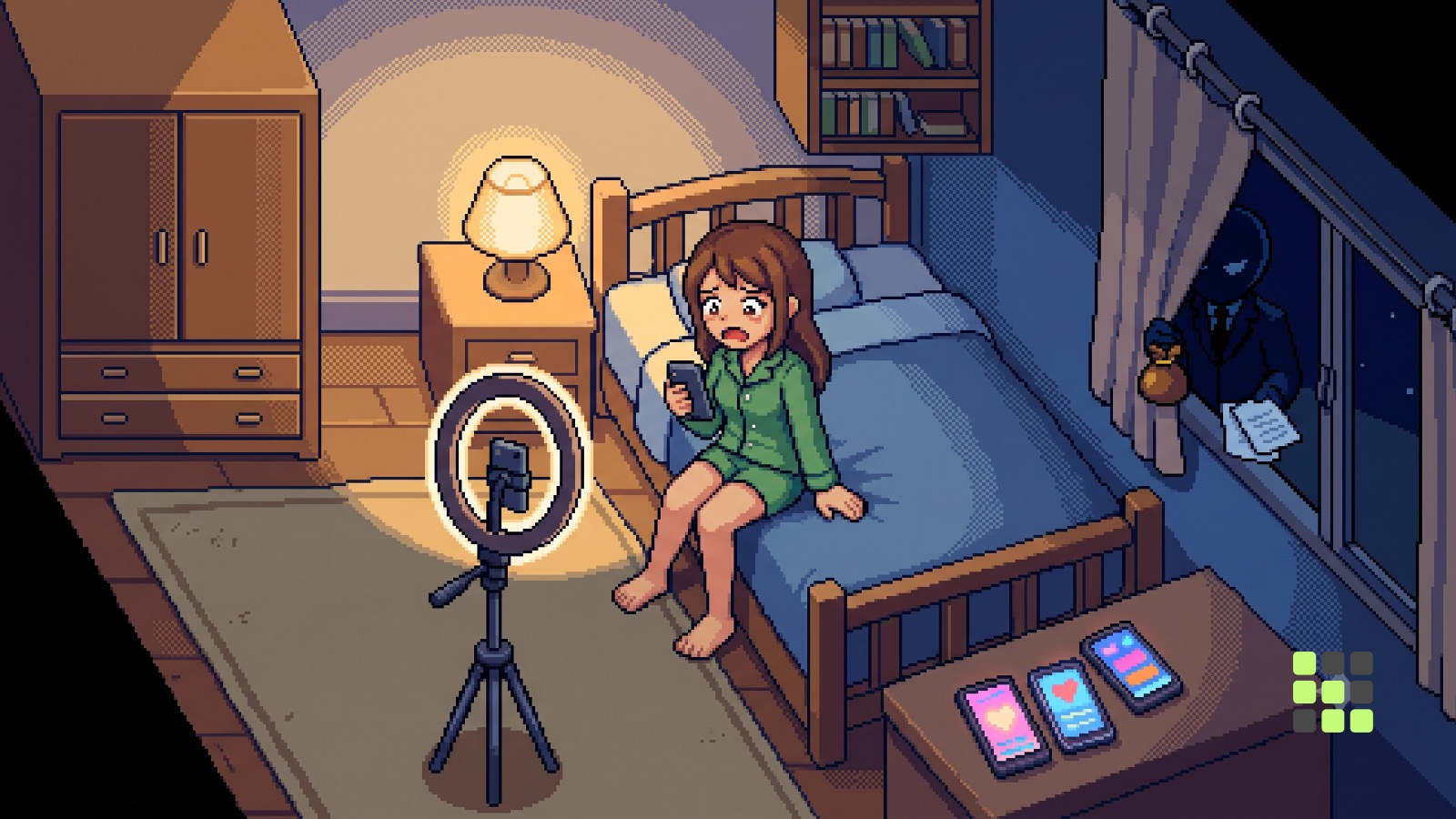
There’s an 11-second video on TikTok. A young woman named Cece reads a long breakup text off her phone, and the caption says, “You’re breaking up with me over THIS??” As she replies in a resigned voice, a small window in the corner of the screen transcribes what she says in real time. The window reads “Transcribed with Aqua Voice.” The video has over 1,000,000 views.
So far, this is a standard breakup vlog. But look through the account and something’s off. Cece keeps getting dumped on this account. Every time, for a different reason — and every time, she replies using the same transcription app.
According to a Wall Street Journal (WSJ) report from September 20, the account’s owner, Cece Baek, was happily engaged when she posted these videos and is now married. The account was a separate persona created specifically to promote the AI transcription startup Aqua Voice, and she was paid more than $800 for running it. She reportedly earns an average of $6,000 a month from this kind of work.
There was no disclosure that it was an ad. Aqua Voice’s head of marketing, Austin Zeiting, told the WSJ that the company has no formal policy on ad disclosure. He added that if something went seriously wrong, someone would flag it — and that’s when a policy would get written.
The more interesting number here isn’t the $6,000 a month. It’s that single missing disclosure line. Trace why that one line keeps getting left out, and you can see what this side hustle is actually selling.
$20 a Video, and the Brand Owns the Account
The WSJ calls this approach UGC1 marketing. UGC originally meant content users created on their own, but in this market the term has drifted. It now means brands paying for content designed to look like it came from an ordinary user.
Nick Lawton, CEO of the creator marketplace Sideshift, describes the business as building a new kind of workforce. The pitch: pay ordinary people $20 a video, and get them to post a staggering volume of them. The platform has signed up more than 1 million creator accounts. The company’s own ads are even blunter — don’t hire one influencer, hire an army of them.
Two things fueled this market’s growth. First, the AI boom has produced a flood of consumer-app startups all hunting for cheap marketing channels. Second, recommendation algorithms changed the game — feeds now surface videos based on what users are interested in rather than how many followers an account has, so even a brand-new side account with zero followers can rack up views. On top of that, brands have caught on to something viewers already knew: people trust someone who looks like them more than they trust a mega-influencer.
The reality on the creator side is concrete. Brooks Langford graduated from college last year, couldn’t find a job in his field, and now works as a barista while spending about 5 hours a week making UGC videos. That brings in $1,000–2,000 a month. He runs an account per brand, juggling two or three at a time, and gets weekly instructions that spell out the script, the attention-grabbing opening shot, and even the caption. Caryl Fagulayan, who mostly works with tech startups, had a few videos go viral and earned $11,000 in July alone — on just 5–7 hours of work a week.
It’s worth asking who actually owns the account. Some creators figured that since their contracts defined the account as a “brand-owned asset,” they didn’t need to disclose it as an ad. The face and voice belong to the creator; the account and the script belong to the brand. To a viewer, it looks like someone’s everyday life. In reality, it’s ad space the brand is operating.
If this feels familiar, there’s a reason. The fake Polymarket betting videos I covered in July — the ones staged to make it look like college students were winning big on a fake site — were, according to the WSJ, also run as UGC campaigns.
Ad Labels Don’t Actually Hurt View Counts
The usual reason people give for skipping the ad disclosure is reach — the assumption that once the “Ad” tag goes on, the algorithm will push the video less.
TikTok’s own explanation says the opposite. According to TikTok’s business help center, turning on the paid-partnership label doesn’t change how the recommendation system treats a video. The basis for that claim is an internal study comparing roughly 2,000,000 videos with and without the label, which found no difference in performance. If anything, TikTok warns that ads which aren’t properly labeled risk being kept off the For You feed altogether.
That study has its limits. It ran in Indonesia and Pakistan in 2023, and it measured exposure performance, not purchase conversion. There’s no guarantee the same holds true on American feeds in 2026. Still, once the platform itself says labeling doesn’t cut reach, the view-count excuse for skipping disclosure loses most of its force.
So what does leaving the label off actually buy you? What’s left is the viewer’s trust. A breakup video with an ad label is a skit that happens to use an app as its prop. A breakup video without one is a stranger’s genuinely rough night — who just happens to be using some app. The only difference between the two is a single belief held by the viewer: that nobody paid this person to make it. The money a brand spends on the video is, in the end, spent buying that belief.
Sesi’s account has one more layer on top of that. It didn’t just hide the payment — the breakup itself was staged. Where ordinary undisclosed advertising conceals who paid, this account manufactured the event itself.
Testimony from the field points the same way. Kasey Meyer, who’s raising two kids in Ohio, started making UGC (user-generated content, i.e., branded videos made to look like organic posts) to help make ends meet — she says the family was struggling with debt. Before posting her first video for Collect, a paid app that helps users join class-action lawsuits, she asked her campaign manager whether she needed to disclose it as an ad. The answer came back: “Just say no,” with a smiley emoji attached. She doesn’t disclose, out of fear that disclosing would cost her the payment — though she admits it leaves her a little uneasy. Langford’s account is similar: the easy money outweighs the faint sense of dishonesty.
When the Odds of Getting Caught Become the Cost
In the US, failing to disclose paid promotion violates not just the community guidelines of TikTok, Meta, and YouTube, but also Federal Trade Commission (FTC) regulations. Yet this ecosystem keeps growing across all three platforms. Rob Freund, a California advertising attorney, told the WSJ that while the FTC does act occasionally, its resources are limited, and enforcing social media disclosure rules doesn’t currently look like a priority. So many brands calculate that going without disclosure is a risk worth taking.
Reread Jiting’s words and you can see this math at work. Saying “we’ll make the rules once someone points out what we did wrong” means the cost of compliance is judged to outweigh the cost of getting caught.
The regulatory framework is tightening, bit by bit. The Guidelines on Review of Recommendations and Endorsements require that economic relationships be disclosed in the post’s title or opening section, and a 2024 revision specified that conditional phrasing like “may have received a fee” doesn’t count as a clear disclosure. In October 2025, concealing paid recommendations was added as a category under the Review Guidelines on Deceptive Representation and Advertising. Still, each year’s inspection focuses more on encouraging voluntary correction than on punishment. In Korea’s short-form UGC contracts too, there’s still room for disclosure decisions to be calculated as “probability of getting caught times the hassle of fixing it.”
Oswarld’s Lens
Trust isn’t a resource any single brand gets to hoard. The reason an ordinary person’s review outperforms an ad is that society as a whole defaults to assuming that ordinary person wasn’t paid. Undisclosed UGC borrows against that default — and never pays it back.
Fagulayan said the same thing happens with every social media tactic: people eventually catch on. Some creators already sense more comments pushing back on undisclosed videos, asking point-blank whether it’s an ad. Once that suspicion builds, the cost doesn’t land only on the brand that skipped disclosure. It spreads to the person who genuinely loves an app and recommends it for free, to the creator who got paid and disclosed honestly, and to whatever brand walks into that channel next — all of them get tarred with the same doubt. Whoever cheats first captures the gain, while everyone else splits the cost.
So here’s a question worth putting to any brand: the business analysis outlet Business Model Analyst suggests running the same creator, the same format, once with disclosure and once without, and comparing conversion. If TikTok is right that disclosure doesn’t dent reach, then whatever conversion gap shows up between the two versions is revenue that exists only because viewers didn’t realize they were watching an ad. A small gap means you were carrying all the legal risk for no real upside. A large gap means a meaningful chunk of your growth depends on customers being fooled. Either way, knowing beats not knowing.
It’s also worth asking who actually bears the risk. The account may belong to the brand, but the face on screen belongs to the creator. Advertising lawyers note that brand ownership of the account doesn’t necessarily shield the creator from liability once money has changed hands for the content. The decision to skip disclosure is made by the brand and its campaign manager — but the consequences of that decision show up on the face of someone like Meyer, who took this job in the first place just to pay off debt.
Closing
The ad disclosure is a single line. By TikTok’s own account, that one line barely touches view counts. And yet, when it’s missing, it’s worth asking once in a while what’s being sold in the gap it leaves behind.
💬 Reader, have you ever rewatched a short-form video because you suspected it might be an ad? Tell us in the comments what tipped you off.
📨 If you have colleagues in brand marketing or creator work, pass this piece along. It’s worth thinking together about what that one line of disclosure is really worth.
Already a subscriber? Sign in to join the conversation


References & Further Reading
- How Everyday Tiktokers Are Making $6,000 a Month Posting Stealth Ads (WSJ, 2026-09-20)
- About the Commercial Content Disclosure setting for creators (TikTok Business Help Center, updated April 2026)
- Stealth TikTok Ads Pay $6,000 a Month. TikTok Says the Label They Skip Costs Nothing (Business Model Analyst, 2026-09-21)
- 2024 Monitoring Results on Deceptive SNS Advertising (“Back-Ads”) Released (Korea Fair Trade Commission, 2025-03-16)
- Tens of Thousands of Undisclosed Paid SNS Reviews Rampant—FTC Says “Disclose in Title or Top of Post” (Electronic Times, 2024-08-20)
- Omitting Safety Info, SNS Stealth Ads Also Count as “Deceptive Advertising”—FTC Revises Review Guidelines (Infostock Daily, 2025-10-30)
- The Company That Manufactured 140 Million Views With Fake Bets
- The Paystub of a 30,000-Follower Micro-Influencer
- When Communities Get Paid to Post, They Become Subcontractors

📝 Glossary
Footnotes
-
UGC (User-Generated Content): Originally this referred to reviews, videos, and other content users create on their own. In recent short-form marketing, the term has stretched to cover paid promotional content that brands design to look like an ordinary user’s post. ↩
-
Dwitgwanggo (“back-ads,” or stealth ads): Recommendation or review posts for which the poster received money, products, or other economic benefits from an advertiser without clearly disclosing that fact. In Korea, the Act on Fair Labeling and Advertising bans this practice, and the Fair Trade Commission’s Review and Endorsement Guidelines specify where and how such disclosures must appear. ↩
Related issues
Solar's 42 and Mistral's 38 Used Different Rulers
Why comparing Upstage's Solar Pro 4 to Mistral Large 4 on Artificial Analysis scores falls apart under scrutiny.
BusinessA 9-Person Startup Shrank to 4
The roles cut first were very different from the ones that stayed.
BusinessQualcomm Buys Huawei's US Patents
Unpacking the undisclosed deal terms and the true flow of money behind the cross-licensing announcement.
Business
Your take shapes the next issue
What resonated most in this issue, or where has your experience been different?