

Korea's Mega AI Plan Needs Operating Know-How, Too
Comparing DeepSeek and Sakana's approaches, Korea's chip and data center investments still need real operational capability.
SocietyWhat to Check Alongside Large-Scale Infrastructure Investment
In the last two newsletters, I asked the same question of two different countries.
In the Japan edition, I looked at how Sakana AI combines existing models to boost performance — an approach where even a small tuning model can draw on the strengths of large models that have already been built. It shows that building your own large model isn’t the only option on the table.
The Researcher Who Left With ₩900 Billion (~$650M), and the 138 Who Stayed in TokyoA lab focused on combining and improving existing modelsIn the Korea edition, I examined how the country’s strong interest in using AI might translate into actual development capability — weighing investment priorities between building a homegrown model and making good use of foreign ones.
A Country That Asks Chatbots for Saju (Korean fortune-telling based on one’s birth date and time) Readings — Can It Reach the World’s No. 3 in AI?Turning enthusiasm for AI into industrial competitivenessThen, on June 29, Korea’s Ministry of Trade, Industry and Energy, together with related ministries, announced the “3 Mega Projects for Korea’s Great Leap.” It laid out a ₩800 trillion (~$580B) plan for a semiconductor production hub in the southwestern region, a first-phase ₩550 trillion (~$400B) investment by companies in AI data centers, and a plan to foster physical AI. This isn’t a single strategy meant to replace Korea’s entire AI policy — it’s a plan centered on semiconductors, manufacturing, and data centers.
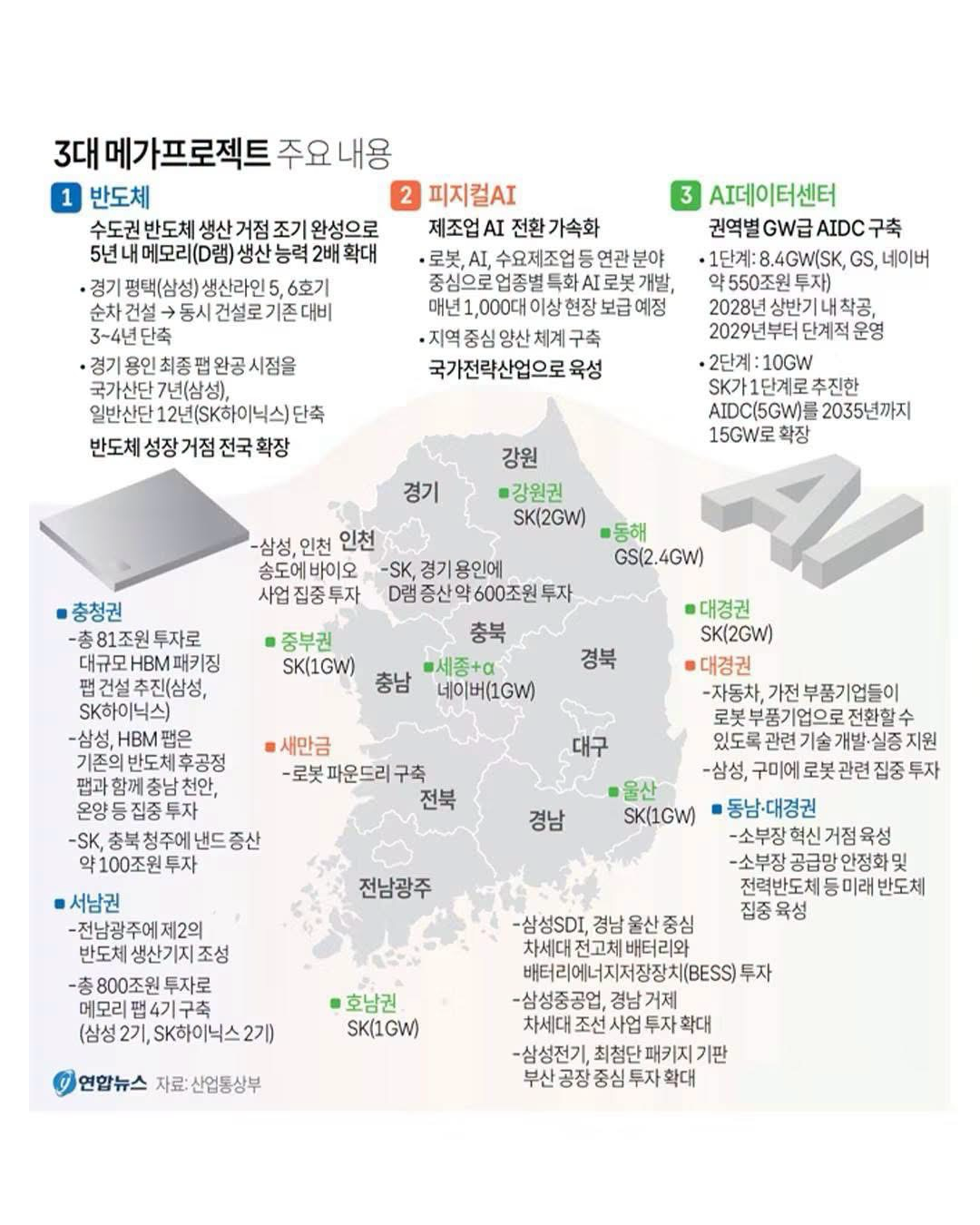
Today, following those two earlier pieces, I want to take a closer look at this plan. I’ll also revisit how DeepSeek and Sakana raise development efficiency. Without generalizing their strategies to all of China or Japan, I want to compare the options Korea might draw lessons from.
Comparing Development Efficiency, Model Combinations, and Manufacturing Infrastructure
The AI business demands many things at once — training models, cutting inference costs, combining multiple models, and building out semiconductors and data centers. Some of these substitute for one another, but many need to be improved together.
🇨🇳 DeepSeek’s Pursuit of Development and Inference Efficiency
DeepSeek drew attention for its approach to raising computational efficiency. The technical report for V3, released in late 2024, described a training configuration using 2,048 H800 GPUs. That figure is not the same as the total development resources behind R1, the reasoning model unveiled in January 2025. In April 2026, DeepSeek released V4, which supports a 1,000,000-token context window, and in June it introduced DSpark, which accelerates response generation. Even the claimed improvement of up to 85% is a result specific to certain comparison conditions.1
DeepSeek, Qwen, and GLM have all grown their user bases by open-sourcing model weights and offering cheap APIs. This is an example of how inference cost has become critical to actual service adoption. Meanwhile, some Chinese data centers have reported weak demand and low utilization rates.2 This should not be read as meaning that all of China has halted training investment, or that 80% of its data centers sit idle.
[Kwangseob Ahn’s AI Jinteje] Why American Companies Are Sending Money to Chinese AI CompaniesUber burned through its entire annual budget for AI coding tools in just 4 months. As roughly 5,000 engineers adopted agentic coding tools, the monthly fee per engineer rose from $150 to as much as…🇯🇵 Sakana’s Model-Combination Service
Sakana AI has focused on post-training3 — improving and combining already-trained models. On June 22, it launched Fugu, a service that selects and links multiple models. This reflects Sakana’s business strategy; it doesn’t mean Japan has given up on developing models directly.
Fugu selects the model that best fits a given request, while Fugu Ultra splits complex tasks across multiple models, then verifies and integrates the results. In benchmarks Sakana published, the service scored well on major coding and reasoning tests. But these are self-reported evaluations, and some of the comparison scores are figures each respective provider itself published. Fable 5 and Mythos Preview were not actually included in the list of models the service calls.4
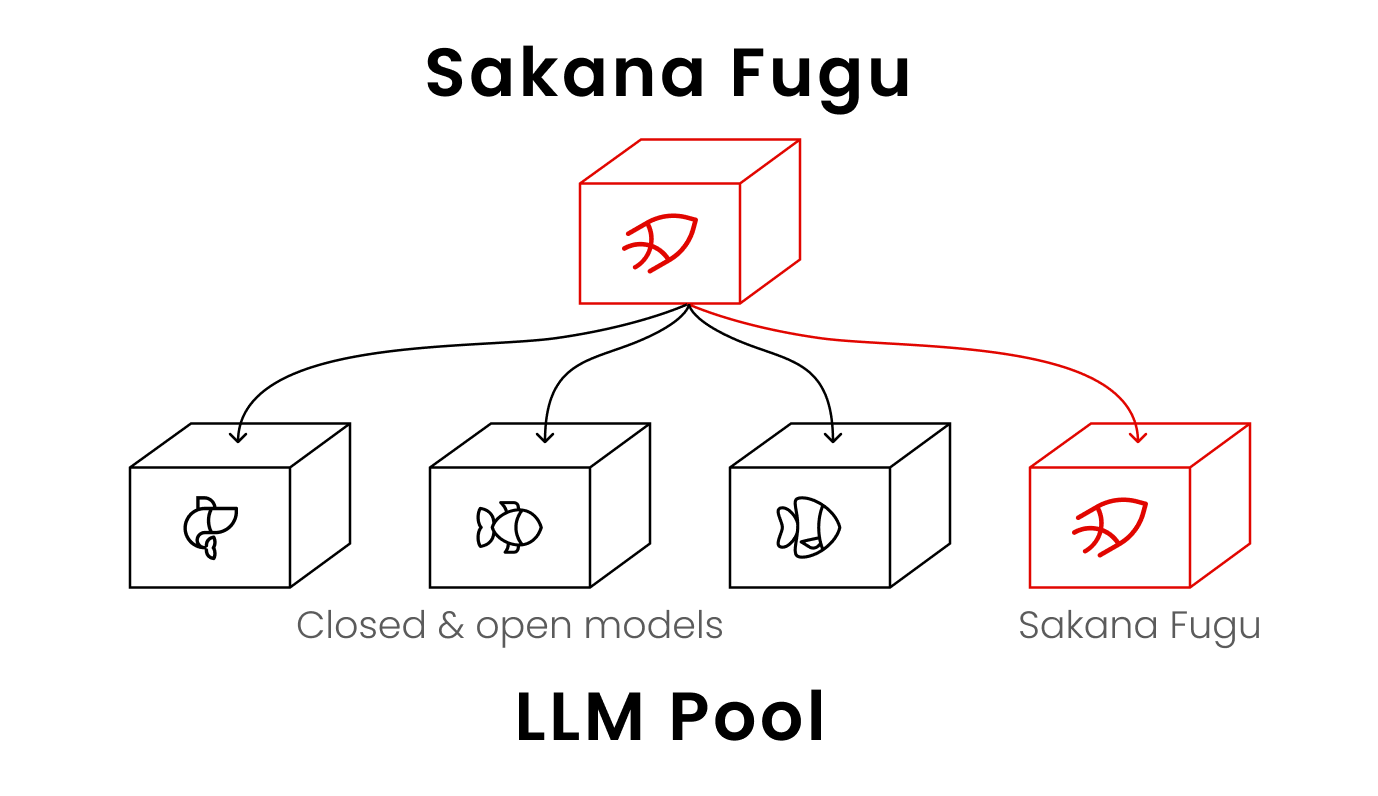
Being able to swap out the underlying models helps reduce dependence on any single provider. Still, whether performance and cost remain the same after switching models needs to be verified separately each time. And it doesn’t eliminate the possibility that multiple providers could restrict access simultaneously. The ability to combine models can be seen as one way of increasing operational autonomy.
🇰🇷 Korea’s Semiconductor, Physical AI, and Data Center Plans
The June 29 announcement centered on expanding Korea’s strengths in semiconductors and manufacturing infrastructure. Beyond hardware, it also included physical AI model development and cloud technology support.
- Semiconductors: The plan calls for building four fabs and a supplier ecosystem in the southwestern region at a cost of ₩800 trillion (~$580 billion), along with early completion of production sites in the capital region, aiming to double (2x) memory production capacity within 5 years.
- Physical AI: Support spans robots for manufacturing floors, training data, core components, foundation models, and domestic technology demonstrations, all together.
- AI data centers: SK, GS, and Naver will invest ₩550 trillion (~$400 billion) in a first phase to build 8.4GW of capacity, with further expansion targeting a total of 18.4GW. Corporate investment plans should be viewed separately from government budgets.
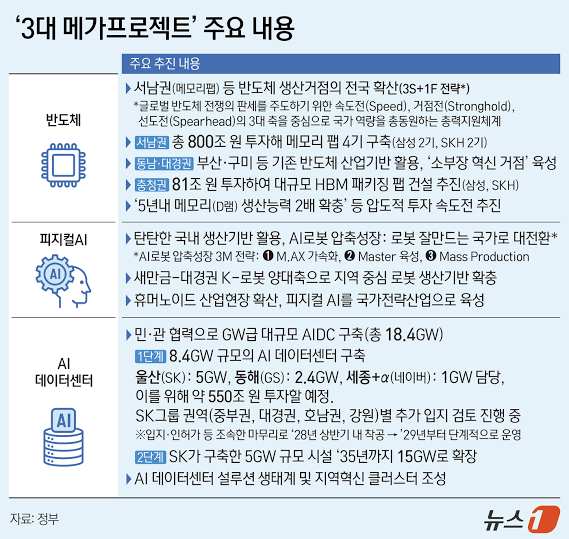
What I proposed in the Korea section was the same idea — applying AI deeply to fields where Korea is already competitive, like semiconductor process optimization or battery quality control. I see this announcement’s Manufacturing AI Transformation (M.AX) and Data Factory initiatives as aligned with that same direction.
Leveraging the manufacturing base is a direction I see positively
I see it as a good sign that Korea is trying to connect its manufacturing capabilities to AI business.
Building large general-purpose models requires enormous capital and manpower. Rather than trying to compete with America’s and China’s leading models across every domain, I think Korea needs to concentrate its investment on the capabilities it has already built up. That said, comparing figures with different scopes—like U.S. private investment versus Korea’s government budget—and treating the gap as a competitiveness shortfall isn’t a fair comparison.
In physical AI, Korea can draw on its manufacturing data, process operation experience, and existing robot deployment base. This could be a real strength. But U.S. Big Tech is also investing in robots and physical AI. This isn’t an empty market that competitors are ignoring—it’s a market where Korea has to translate its accumulated experience into actual product performance to compete.
For this direction to actually pay off, Korea also needs the capability to operate the equipment and models in real-world settings.
Development method and operating method both need scrutiny
As I read through the announcement, what I wanted to know was: by what criteria will multiple models be selected and connected? The government document covers cloud technology, the domestic NPU ecosystem, and physical AI model development plans. I wouldn’t say operating software is entirely absent. Still, it’s worth continuing to check how this support actually translates into real-world operating practices.
Sakana’s Fugu turned the practice of combining existing models into a product. Korea’s announcement also aims to develop proprietary physical AI models. Rather than treating these two approaches as mutually exclusive choices, we could compare which tasks call for in-house models and which benefit from combining external ones.
This distinction brought to mind Naver Cloud’s elimination from the proprietary AI foundation model project evaluation this past January. The government explained that the submitted model failed to meet technical and policy independence criteria.5 The use of overseas encoder weights was the point of contention, but this evaluation shouldn’t be stretched to mean Naver has no proprietary model or development capability at all.
As of June, the proprietary model project includes LG AI Research, SK Telecom, Upstage, and Motif Technologies.6 But there’s no basis for assuming the evaluation criteria from that project will apply unchanged to this physical AI project. The application conditions and evaluation methods for each project need to be checked separately.
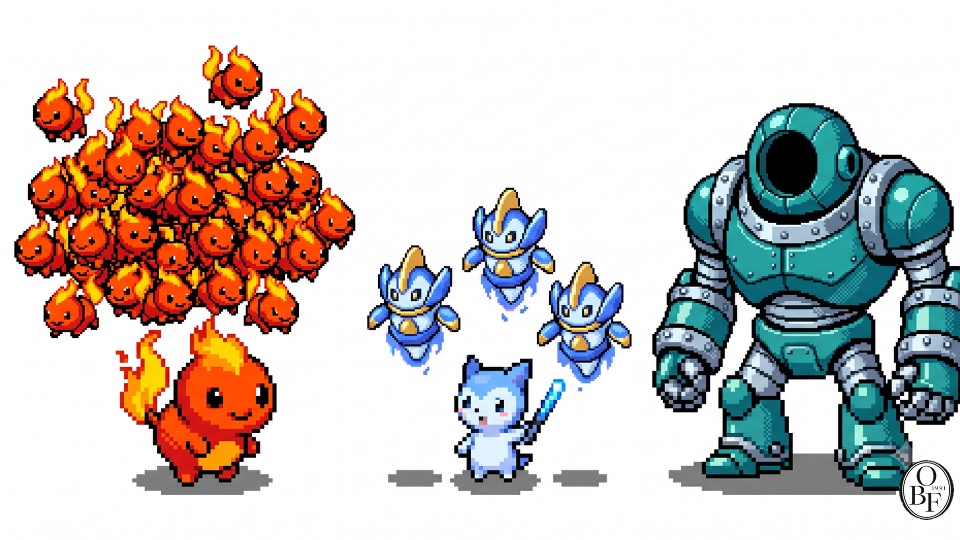
Looking at these cases, what I want to compare is the criteria behind the choice of development approach.
Sakana researched a method for connecting multiple models and launched it as a service. What matters for Korea is an environment where companies and research teams attempting similar work can actually meet real customers and iterate. National R&D projects and private-sector product development can serve different roles.
A single evaluation outcome for Naver Cloud can’t be taken to mean Korea lacks model operation technology or private research capacity. What I’m interested in is how support programs identify and build this capacity. Beyond scores for the models themselves, I think it’s necessary to also evaluate real-world accuracy, safety, operating cost, and replaceability in the field.
Facility investment and operating technology development can proceed together. Rather than locking in a single model in advance, I’d hope for the ability to choose and switch models as on-the-ground needs change.
The English draft matches the Korean source well in meaning, structure, and content. No Hangul characters, number mismatches, or omissions found. Only minor polish needed.
Oswarld's Lens
I see this plan’s reliance on manufacturing strength as a positive, but I think we need to be careful about casting too wide a net on what we build in-house.
That’s because we need to distinguish between technologies where building in-house makes sense and tasks better served by using external technology.
Working on technology management and GTM strategy, I’ve seen resource-strapped organizations struggle when they try to build everything themselves. So when it comes to developing a proprietary model, I’d want to ask about purpose and cost first. There will certainly be tasks where in-house technology is essential — for security reasons, or to guard against supply disruptions. If so, I think we should define that scope precisely and compare it against existing technology in terms of performance and cost.
This is also why Sakana’s case is instructive. Rather than building every foundation model from scratch, they focused on combining existing ones. That doesn’t mean this one product solves every manufacturing and robotics task in Korea. But I think it’s worth testing both in-house development and combination-based approaches on tasks suited to conditions on the ground in Korea.
DeepSeek’s cost reduction, Sakana’s model combination, and Korea’s production infrastructure are each distinct strengths. No single one of them completes an entire AI business on its own. What Korea needs to work out concretely is which models and services to connect to the equipment and field experience it already has.
What worries me is the scenario where good equipment isn’t matched by sufficient operational expertise and customer relationships. Using a foreign model isn’t itself the problem. The problem, I think, is being locked into a specific model, or being unable to respond when pricing and service terms change.
I don’t know who will end up capturing more profit. Supplying semiconductors or data centers is, on its own, a perfectly valuable business. I think Korea’s skilled workforce, production facilities, and infrastructure represent a significant opportunity. I’d like to see this strength leveraged while also building out the operational expertise and customer relationships needed alongside it.
The direction I’d hope for is one where Korea reliably supplies semiconductors and data centers, while also building the capability to select, connect, and operate multiple models within that infrastructure. I want to see the capacity to build equipment and the capacity to run services grow together.
Closing
Writing this series, my attention kept circling back to one question: where should Korea build its edge?
I think foundation model research should continue as a core capability, but it doesn’t need to be the centerpiece of every investment. I was glad to see this announcement widen its focus to manufacturing and infrastructure. Now I want to see how well the equipment and research output already secured actually get used in the field.
I’ve also noticed domestic companies recently announcing world-best performance on their own benchmarks. When evaluating claims like these, I don’t think citation counts or GitHub stars are enough — we need to check the comparison models, test conditions, and reproducibility. Benchmark scores need to be weighed alongside real performance at customer sites.
For the next policy announcement, I want to look at the investment figures alongside who is actually operating which models, what field results have been verified, and how they’re handling costs and outages.
I hope this expansion in infrastructure translates into stronger service competitiveness and revenue for domestic companies.
💬 What operational skills and field verification do you think Korea’s AI investment needs to support more? Let us know in the comments.
Everything checks out—headings, footnotes, links, images, and numbers all match the source. Here’s the fragment unchanged:
Keep the perspective, not the noise.
We choose one consequential shift and trace what sits beneath it, every other day.
Confirm once to finish subscribing.
Already a subscriber? Sign in to join the conversation


References & Further Reading
Primary sources
- Ministry of Trade, Industry and Energy, “National Briefing on the Three Mega-Projects for Korea’s Great Leap Forward,” press release and attached report, 2026.06.29. : This is the original document from yesterday’s announcement. It lays out the Semiconductor 3S+1F plan, the Physical AI 3M plan, and the AIDC 18.4GW plan.
- Sakana AI, “Sakana Fugu: One Model to Command Them All”, 2026. : A case study of Sakana turning a model-combination approach into an actual product.
- Ministry of Science and ICT, “Results of the First-Round Evaluation of the Independent AI Foundation Model Project,” 2026.01.15. : The original source on NAVER Cloud’s elimination and the controversy over the “from scratch” criterion.
Background
- The New York Times, “The Real A.I. Race Isn’t America vs. China”, 2026. : Argues that the real fault line in the AI race isn’t the US vs. China but state power vs. private companies — a framing that resonates with the argument running through this three-part series.
- ZDNet Korea, “[Yumi’s Pick] Jensen Huang meets LG, SKT, Upstage… Could this shake up round two of Korea’s independent AI race?”, 2026.06.09. : Covers the four-way race in Korea’s independent foundation model project and the schedule for the August second-round evaluation.
- DeepSeek, V3 Technical Report, December 2024, and V4 Preview official announcement, 2026.4.24. : Lets you distinguish training resources and release timing across models.
- South China Morning Post / IndexBox, “DeepSeek upgrades V4 with DSpark”, 2026.06. : The latest case study of China’s “scaling efficiency” strategy.

Footnotes
-
DSpark: An inference acceleration framework DeepSeek introduced in V4. Instead of generating tokens one at a time, it produces them in small batches (semi-autoregressive generation) and dynamically adjusts the amount of verification, which the company says boosts response speed by up to 85%. This is an improvement in per-user generation speed under equivalent throughput conditions, and the same gain isn’t guaranteed across all tasks. ↩
-
Data center utilization: The number of facilities and the utilization rate of computing resources are different metrics. The idle-resource ratio at some facilities can’t be extrapolated to an idle rate for data centers nationwide. ↩
-
Post-training: Rather than pretraining a model from the ground up, this stage adds further training, alignment, and tool-connection on top of an already-trained model. Sakana argues that resource-constrained countries should focus their strategy on this layer. ↩
-
Swappable Pool: A method for changing the list of models that Fugu can call on. It can reduce dependence on any single provider, but performance, cost, and data-handling conditions need to be re-verified each time a model is swapped in. ↩
-
From scratch: Training from randomly initialized weights rather than continuing from existing pretrained weights. The government hasn’t banned the use of open-source technology outright — it has set technical and policy criteria for independence, covering weight initialization, training, and operational control. ↩
-
Four-way race in Korea’s independent foundation model project: As of June 2026, four teams — LG AI Research, SK Telecom, Upstage, and Motif Technologies — are competing. One team will be eliminated in the second-round evaluation in August, with the final two selected in February 2027. ↩
Related issues
WFP Gaza App Hack Leaks 600,000 Households' Data
A hacked Gaza aid registration app exposed residents' data, raising the question of how much information relief actually requires.
SocietyKorea's AI Rankings Hide a Talent Problem
South Korea ranks high in AI models and patents per capita, but struggles to retain research talent and scale industrial results.
SocietyFable 5: Blocked Worldwide Just 3 Days After Launch
A US government directive abruptly cut off access to Fable 5 and Mythos 5, exposing the operational risks of depending on a single AI model.
Society
Your take shapes the next issue
What resonated most in this issue, or where has your experience been different?