

Mouth Taping for Sleep: What the Research Actually Shows
Results vary widely by study population and conditions, so it's hard to call mouth taping a reliable general sleep habit.
AI & TechWould Taping Your Mouth Shut at Night Actually Change Anything
When I first came across mouth taping, I thought, “maybe I should try this too.” The testimonials — people taping their mouths shut at night and reporting they slept better — were easy to relate to, and the method itself looked simple. Even someone who works with data all day can find their judgment wobble in front of a well-packaged personal anecdote.
Mouth taping is a technique where you put tape over your mouth before sleeping to keep it closed. On social media, claims about it improving snoring, sleep quality, and bad breath — and even reshaping your jawline — all get lumped together. But each of these effects needs to be checked separately. A reduction in snoring doesn’t mean your facial structure or overall health has improved too.
That’s exactly what I focused on when I went through the research papers: who was studied, under what conditions, and what specifically improved. Once I looked closely, the evidence turned out to be too thin to recommend mouth taping as a general sleep habit.
The Review Covered 10 Studies

A systematic review published in PLOS ONE on May 21, 2025 gathered and examined relevant research against set criteria. The research team was affiliated with institutions including London Health Sciences Centre in Canada and the University of Saskatchewan.
The literature search covered February 1999 through February 2024. Of the 120 studies initially identified, duplicates and those not meeting the criteria were excluded, leaving 10 studies and 213 participants for final review. The scope wasn’t limited to studies of taping alone — it also included mouth-closing patches, chin straps, and combinations with other treatments.
That figure of 213 is the number of participants included in this particular review. It’s not a cumulative total across all research on the topic, nor does it come from one large-scale clinical trial testing a single product and method. The research team noted that because the subjects and methods varied and the studies had quality limitations, the results are difficult to generalize.
Some studies did show improvement. For instance, a 2022 study of 20 patients with mild obstructive sleep apnea found that the median AHI — a measure of how many times per hour breathing stops or is reduced during sleep — dropped from 8.3 to 4.7.
But this was a small study that specifically selected mild cases. It also had selection criteria that excluded people who have trouble breathing through their nose. These results can’t simply be extended to people with nasal congestion or more severe sleep apnea. And a lower number doesn’t mean the long-term health benefits and safety have been fully established.
Studies paired with medical devices need a separate reading
Research kept coming out even after the literature review’s search cutoff. A study published in December 2025 looked at 62 sleep apnea patients who breathe through their mouths while using a CPAP machine. A CPAP (continuous positive airway pressure) device is a treatment tool that uses air pressure to keep the airway open.
Participants went through a 30-day period with tape and a 30-day period without it. In this randomized crossover trial, CPAP usage time rose by about 52 minutes a day on average during the taping period. Symptoms like sleepiness and dryness of the mouth and throat also improved, and side effects were reported as well.
This study is about a supplementary method for reducing mouth air leakage during CPAP therapy. It is not a study showing that tape alone, without a CPAP machine, can treat sleep apnea. We need to distinguish between using tape to support treatment for a diagnosed patient and claiming it as a daily habit worth adopting for healthy people too.
A separate literature review, published online first in December 2024, calls for similar caution. It found that some benefit had been reported in certain sleep apnea, snoring, and ventilation treatment contexts, but concluded that inconsistent study methods left no real consensus on effectiveness. It also included a study on asthma that found no benefit at all.
Looks good — no issues found. Here’s the fragment as-is:
Going viral on social media doesn’t mean the effect is proven
One literature review on mouth taping also looked at TikTok videos. It analyzed the claims made in the first 50 videos from a search that met the study’s selection criteria, and the most common claims were about improved sleep and oral health. The researchers pointed out that few of the benefits touted in these videos had actually been evaluated by real studies.
This same gap shows up around other health topics too. In a study published in 2024, a research team at the University of Chicago analyzed TikTok videos found under sinusitis-related hashtags on a given day. About 44% of that sample contained information that didn’t match the facts. This finding applies only to the sinusitis-related video sample — it doesn’t mean 44% of all health videos on TikTok are wrong.
When I read studies like this, I think the scope of the investigation matters more than the size of the number. Any critique of mouth taping’s popularity should hold itself to the same standard. View counts only show how many people watched something — they’re no substitute for clinical results that actually confirm an effect.
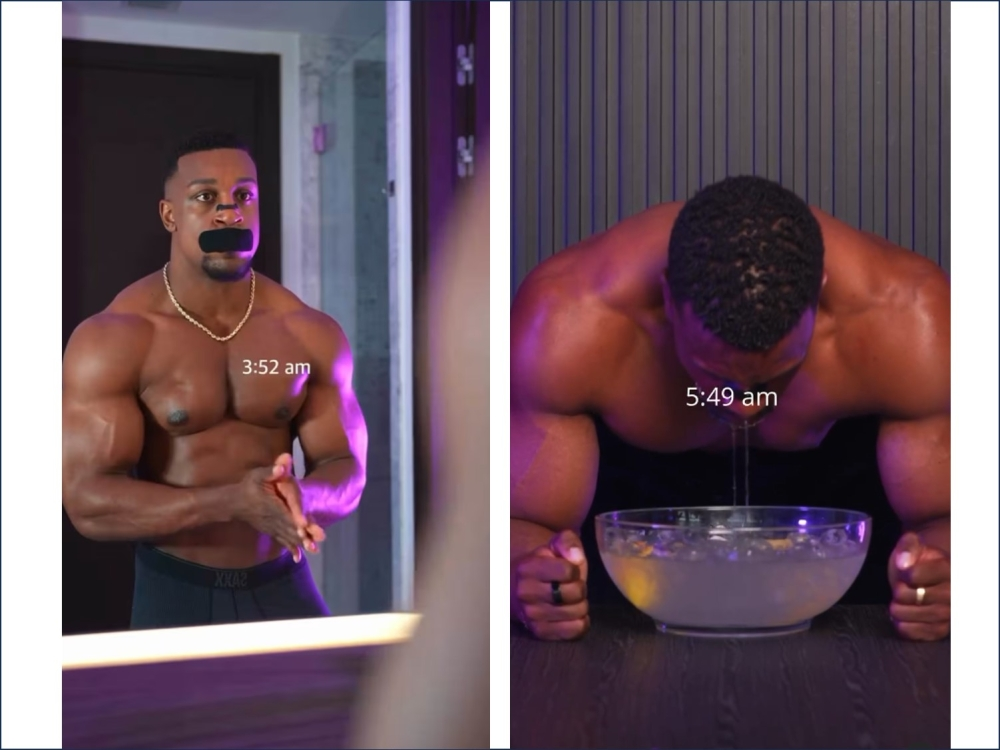
A video showing someone’s personal habits and a study verifying a treatment’s effectiveness serve different purposes and operate under different conditions.
If you have nasal congestion or sleep apnea, get the cause checked first
A PLOS ONE review pointed out that blocking your mouth while you already have nasal congestion can make breathing difficult. The 4 studies it included discussed how covering the mouth in situations involving nasal blockage or stomach contents refluxing upward could pose a suffocation risk. That doesn’t mean 4 suffocation incidents actually occurred in these studies.
What worries me more is people who have severe snoring or episodes of stopped breathing during sleep, but who assume the tape has fixed things and delay seeing a doctor. Just because the noise is quieter or your mouth feels less dry in the morning doesn’t mean it’s safe to conclude that sleep apnea has been resolved.
The US National Heart, Lung, and Blood Institute (NHLBI) explains that after evaluating symptoms and risk factors, a sleep study is used to determine the type and severity of sleep apnea. Depending on your condition, this test can be done at a sleep center or with at-home equipment. Which test you need is something to discuss with your healthcare provider.
If you snore, have been told you stop breathing during sleep, or experience severe daytime sleepiness, it’s best to get a sleep evaluation to identify the cause. If you’re already on CPAP therapy, let your care team know about any discomfort so they can make adjustments. It’s not a good idea to change your treatment on your own based on something you saw on social media.
Oswarld’s Lens
The desire to sleep better is universal. I was drawn in myself by the promise that a simple trick could fix my sleep. But even after reading the research, I don’t want to chalk this trend up to people simply being gullible.
Personal testimonials are concrete and memorable. Studies, by contrast, come loaded with things you need to check — subject criteria and exclusions, observation periods, which metrics actually improved. Short videos tend to leave those conditions out, and viewers are left expecting the same results for themselves.
I try to hold the expectations a video creates up against what the actual research says. Were the study subjects similar to me? Was this used alongside other treatments? Does it disclose side effects and limitations?
Hearing that nasal breathing has benefits doesn’t mean forcibly shutting your mouth is good for everyone. If someone breathes through their mouth because they can’t breathe through their nose, the underlying cause needs to be addressed first.
The research so far suggests possible benefits for specific patients under specific treatment conditions, but efficacy and safety haven’t been established well enough for ordinary people to adopt this for better sleep or appearance. Beyond just asking “who says this works,” I want to make a habit of asking “under what conditions was this actually confirmed.”
Keep the perspective, not the noise.
We choose one consequential shift and trace what sits beneath it, every other day.
Confirm once to finish subscribing.
Already a subscriber? Sign in to join the conversation


References & Further Reading
- Jess Rhee et al., A systematic review of the effectiveness and safety of mouth taping, PLOS ONE, May 21, 2025. The review covered 10 studies and 213 participants from literature searched through February 2024.
- Sarah K. Fangmeyer et al., Nocturnal mouth-taping and social media: A scoping review of the evidence, American Journal of Otolaryngology, Jan–Feb 2025 issue, published online December 2024. It reviewed 9 studies and 50 TikTok videos meeting its criteria.
- Avika Meksukree et al., The role of mouth tape for CPAP use in patients with mouth breathing and OSA, Journal of Clinical Sleep Medicine, December 2025. A randomized crossover study of 62 patients using CPAP machines.
- University of Chicago, Health information on TikTok: The good, the bad and the ugly. Explains the methods and findings of a study on sinusitis-related videos.
- NHLBI, Sleep Apnea Diagnosis, Sleep Studies. Public health information explaining symptom assessment and testing methods.

Related issues
How Power Users Delegate to AI Agents—And Still Intervene
Anthropic's Claude Code data shows auto-approvals and mid-task interruptions rising together—here's what that actually measures.
AI & TechWhy Only the Community Manager Ends Up Posting
Startups keep repeating the same community-building mistakes — here's what actually determines whether members stick around.
AI & TechWhat SaaS Stock Crashes Reveal About Growth, Not Just AI
Software stocks are sinking, but the real story started before AI fears—it's about how SaaS pricing models stopped scaling.
AI & Tech
Your take shapes the next issue
What resonated most in this issue, or where has your experience been different?