

How Roblox's Small Games Reach Millions of Players
Fisch and Grow a Garden's success owes as much to Roblox's tools and recommendations as to gameplay itself.
BusinessA Teenage Developer’s Game Took Off
Nate Colley, 19, built the fishing game “Fisch” on Roblox. In a March 6, 2026 article, Bloomberg reported that he’s now earning $400,000 a month from it. He grew up playing Roblox and built the game while juggling homework and a part-time job at a Chinese restaurant.
Stories like this bring to mind all the talk these days about building apps or games with vibe coding and hitting it big. I wanted to use this topic to look at how small teams reach users, and at the conditions that are easy to overlook when we look at success stories.
Roblox’s farming game “Grow a Garden” is also worth a look. A 16-year-old developer reportedly built the early version in just a few days. The game revolves around planting seeds, growing crops, and harvesting them—it’s not built around complicated controls or flashy combat.
According to Roblox’s Q2 2025 shareholder letter, the game had about 22 million concurrent users in July of that year. The company said this surpassed the concurrent-user record it had set in June. That figure describes concurrent usage at a specific moment—it doesn’t mean that many people logged on every single day, or that the same number of people each bought one copy of a paid game.
It’s worth separating the fact that the first version was small from the scale of operations that followed. Keeping a service running for tens of millions of concurrent users requires servers, payments, updates, and user support. On Roblox, developers don’t have to build all of that from scratch themselves.
The English draft matches the Korean source accurately in meaning, structure, numbers, and formatting. No corrections needed.
A Platform That Provides Both Development Tools and Distribution
Roblox is a platform that lets people offer the games and content they’ve made to other users. Roblox Studio, the creation tool, is free, and the platform handles functions like server operation, storage, distribution, and payments. This structure lowers the barrier for individuals or small teams just starting out.
Developers can build a game and revise it based on how users respond. Since there are already people looking for games inside Roblox, the conditions are different from launching an independent service and having to gather users entirely from scratch.
“Grow a Garden” also benefited from recommendations. The company explains that both personalized recommendations and “Today’s Picks,” a curated recommendation list, played a role together. After launching on March 25, 2025, it became the top game on the platform by user spending within a month. It wasn’t just the game’s content and updates — the platform’s role in helping people discover it mattered too.
This approach differs from the model where a large studio invests development costs upfront and then sells a finished game. Multiple development teams can try their hand, and users can gather around whichever games get traction. That said, developers’ time and effort are still required, and Roblox itself spends money on servers, recommendation systems, and user safety. Having free creation tools is a different thing from there being zero cost to making a game.
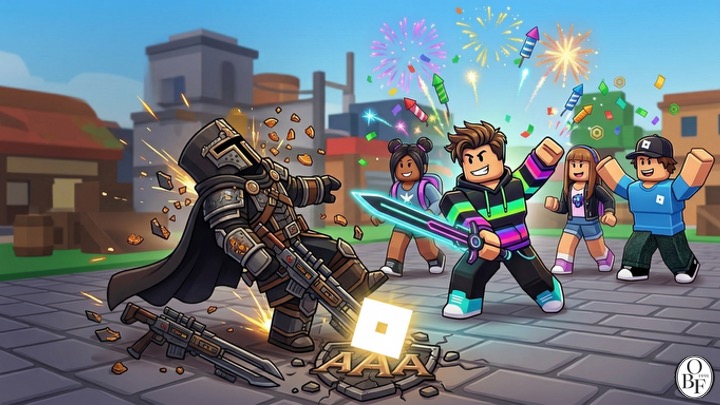
Roblox’s growth is a case showing that small development teams can have a shot. It doesn’t mean it replaces every major game.
Big Budgets Don’t Guarantee Players Will Show Up
Cost overruns and failed projects have become impossible to ignore in big-budget gaming. Sony’s “Concord” launched on August 23, 2024, and was pulled from service on September 6 — just 14 days later. On October 29 of that year, Sony announced the closure of developer Firewalk Studios and the game’s permanent shutdown.
This case shows how hard it is to sustain a live service when it fails to attract players, no matter how much time and manpower went into it. That said, the $400 million development cost widely cited online isn’t a figure Sony has officially confirmed, so it shouldn’t be treated as such.
EA signaled a major shift of its own. In September 2025, the company announced it would be acquired by an investor consortium including PIF, Silver Lake, and Affinity Partners at a valuation of roughly $55 billion. The announced deal included commitments for $20 billion in debt financing, with $18 billion of that slated to be raised at closing. The acquisition announcement itself isn’t evidence of business failure or a confirmed restructuring, but it does mark a shift toward operating under new ownership and new financial obligations.
Job insecurity in the industry is also documented. In GDC’s 2026 survey, more than 2,300 game industry workers responded, and 28% said they had experienced a layoff in the past two years — a figure that rose to 33% among U.S. respondents. These numbers reflect the experiences of survey participants, not a layoff rate for Western game developers as a whole.
My own view: if you’re going to spend that much to make a game, you need just as compelling a reason for that many people to buy it and keep playing for a long time. Spending more money on better graphics and more content doesn’t mean players end up having proportionally more fun.
Successful developers’ earnings aren’t the average outcome
Roblox has grown substantially in scale. In Q4 2025, daily active users averaged about 144 million, and 2025 annual revenue came in at roughly $4.89 billion. Creator earnings for the same year totaled around $1.5 billion.
That doesn’t mean developers earn comparable amounts, though. Roblox stated that its top 1,000 creators averaged $1.3 million in earnings in 2025. This figure can include not just individuals but teams and businesses as well. You shouldn’t read this as “1,000 teenage developers each earning that much.”
It’s worth looking beyond the top tier, too. According to figures the company disclosed separately, the median annual payout for creators participating in the 2024 cash-out program (DevEx) was $1,575. A median is the middle value when amounts are ranked in order. The year and population differ from the 2025 top-tier average, but the gap reveals something important: you can’t infer typical earnings from famous success stories alone.
This is where the concept of “survivorship bias” becomes useful. When only successful games and developers get widespread coverage, while those who earned little or nothing remain invisible, people end up overestimating the odds of success. As someone who works with data, I want to keep the stories of high earners separate from the outcomes of developers as a whole.
Earnings are also shaped by platform policy. Robux spent by users doesn’t convert one-to-one into equivalent cash earnings. It passes through revenue-share terms that vary by transaction type and cash-out conditions, and developers must also meet eligibility requirements for the exchange program. The company raised the exchange rate applied to earnings generated after September 2025 by 8.5%. Policy changes like this one can alter what developers actually take home.
Oswarld’s Lens
What catches my attention is the approach of building something small first, then improving it based on the response. It connects with what practitioners call “lean GTM.” Rather than equipping everything with a huge budget from the start, it’s an approach of putting something into the market in a form that lets you check whether people actually want it.
That said, if you strip away the story of “Grow a Garden” being built in just a few days, you miss the conditions behind it. It needed a platform with an already-gathered user base, exposure through recommendations, and continuous updates, all working together. Anyone can use the same tools, but that doesn’t mean anyone gets the same response.
Large-scale games have their own distinct value too. There are experiences that only large-scale production can deliver, like GTA or Elden Ring. It’s less about every game needing the same production budget and the same sales model, and more that a small, simple game can also give people a reason to keep coming back.
If you’re a parent interested in your child making games, you might see it as an experience of learning to code and observing user reactions. Still, I’d rather people understand the effort behind revenue-sharing and operations, rather than treating a famous developer’s income as some kind of target to hit.
Since this is a service with many young users, safety needs equal attention. Roblox has made age verification mandatory before using chat, starting January 2026, in regions where chat is offered. But the fact that such a safeguard exists isn’t the same as saying every risk has been resolved. Even the company itself notes in its disclosures the possibility of age-verification errors or workarounds.
The lesson from small games’ success is clear. What I want to take away isn’t the expectation that “you can easily hit it big,” but rather the approach of starting small, checking the actual response, and continuing to iterate. Along the way, we also need to look at how dependent this is on the platform, and how revenue and costs shift as a result.
Keep the perspective, not the noise.
We choose one consequential shift and trace what sits beneath it, every other day.
Confirm once to finish subscribing.
Already a subscriber? Sign in to join the conversation


References & Further Reading
- Cecilia D’Anastasio, Roblox Is Minting Teen Millionaires, Bloomberg, March 6, 2026. Covers Roblox creators including the developers of Fisch.
- Roblox, 2025 Form 10-K, Q4 2025 Shareholder Letter. Confirms user, revenue, and creator-payout figures along with platform operating structure.
- Roblox, Q2 2025 Shareholder Letter. Details the launch of Grow a Garden, its recommendation boost, and concurrent-user records.
- Roblox, Annual Roblox Economic Impact Report, September 2025. Includes the median payout for 2024 DevEx participants.
- EA, $55 Billion Acquisition Agreement Announcement, September 29, 2025.
- PlayStation, Concord launch announcement, service shutdown announcement, studio closure announcement, 2024.
- GDC, 2026 State of the Game Industry survey results. Details respondents’ layoff experiences and survey scope.

Related issues
Why AI's Productivity Gains Don't Show Up in GDP Yet
Individual speed, organizational throughput, and economy-wide productivity are three different things worth separating.
BusinessWhen Meetings and Approvals Stall Work: Lessons from a 1944 Manual
Reading the OSS sabotage manual, I revisited the unnecessary meetings and approvals I've seen in consulting.
BusinessAnthropic's AI Jobs Report: What 74.5% Really Means
I read Anthropic's March 2026 report and found the 74.5% figure measures something very different from job-loss risk.
Business
Your take shapes the next issue
What resonated most in this issue, or where has your experience been different?